

Growing Turmeric Indoors or Out, for Home or Market
If you’re looking into how to grow turmeric, chances are it’s because you’re already familiar with the powerful health benefits of turmeric.
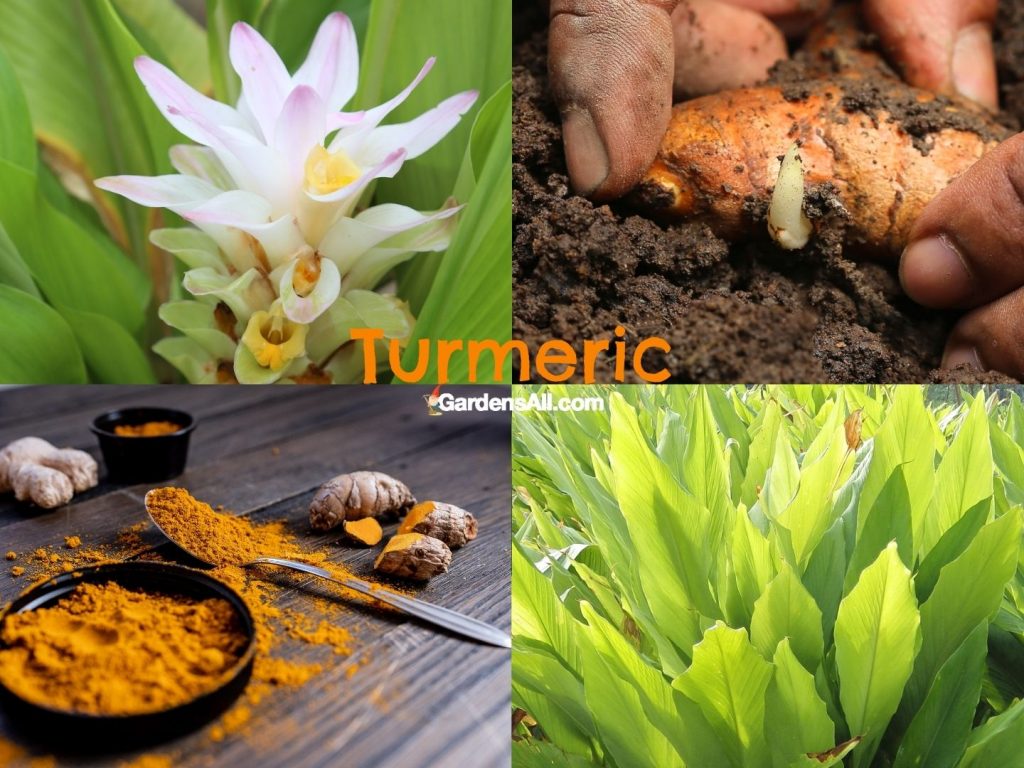
The good news is that turmeric is easy to grow as an attractive flowering plant with large green leaves. All parts of the turmeric plant are edible for food, tea and herbal medicinal remedies with potent nutrients.
You can grow turmeric in containers in hardiness zones 5-11, or in the ground in grow zones 8-11. Turmeric, like ginger, grows well in pots, with larger pots producing more than double the harvest yield of smaller pots.
Turmeric is a perennial plant in tropical and subtropical climates. It can also be a perennial plant in non-tropical environment if grown in containers and brought indoors before first frost. While many think of turmeric as a root, like ginger, the turmeric root is actually called a rhizome, which is a horizontally growing stem that produce roots below and shoots above.
While turmeric is a tropical plant, it will grow well in pots indoors for colder climates.
Turmeric Plants are Shade Loving Plants
When you think of the tropics it probably brings to mind rainforest jungles and tropical canopies. Nature goes wild and grows wild in the idyllic tropical climate. But you won’t need a super sunny spot for your turmeric plant. Just 2-5 hours of sunlight will suffice for this hardy plant.
This lush growing environment of the tropics means that many understory plants, so called because they’re growing in dappled sunlight under the canopy adapt to indirect light. Tropical plants like turmeric are also adept at flourishing around many other varieties of plants. This applies to plants like turmeric and ginger as well, so if you have partial shade in your yard in areas under and around other trees and plants, that’s where your turmeric plant will want to be.
If you don’t have shade areas in your yard, perhaps you have a lanai, patio or balcony area with partial shade.
So while the tropics are often sunny with mild temperatures, there are also many plants and trees that create the perfect growing environment for more tender heat-sensitive plants to thrive. Turmeric grows best in partially shaded areas of the garden for natural growth, higher nutrient density and to avoid burnt leaf tips.
Turmeric needs only 2-5 hours of sun daily and can grow in pots on patios, decks and balconies.
HOW TO GROW TURMERIC
Turmeric grows best in warm, humid climates. However, if your hardiness zone isn’t tropical, you can still plant turmeric. You can grow turmeric in colder climates indoors in pots.
Just be sure to keep the soil moist and the turmeric leaves misted for happy turmeric plant. We use a humidifier in our sunroom for our tropical plants and it makes a more pleasant indoor winter environment for plants and for people!
Starting Turmeric
Whether you’re planting your turmeric in pots or outdoors in temperate climates, you may wish to get your turmeric started indoors in starter trays.
Turmeric, rhizomes must have green buds that are sprouts of the leaves showing for best success in planting. where the aboveground leafy part of the plant starts growing from the rhizome.
To initiate sprouts, place a 1.5” piece of rhizome in potting media with ample moisture in a warm, humid location between 72-80F° for 4-6 weeks.
You can use a grow tray with a plastic dome on a grow mat if you’re in a cooler climate and need extra help keep that temperature.
How to Grow Turmeric in Pots
The larger the pot, the larger the rhizomes to harvest if you’re growing your turmeric for the beneficial roots. Turmeric seeds are slow to start growing
SOURCE turmeric roots, call rhizomes, preferably organic ones that aren’t sprayed with growth retardant and pesticides.
Steps for Growing Turmeric
If you’re a green thumb lucky with plants and impatient to skip to the quickest route, go straight to planting turmeric in pots. However, for best results and to obtain the highest production from all seeds, you might want to put in the extra steps up front.
If you’re like us, you’ll want to do some of both. We love to try more than one way and then see which one works best overall, but we haven’t tested that yet with turmeric.
Prepping Rhizomes for Planting
- CUT 2″ fingers of the rhizomes, (called seeds), that have several buds and/or “eyes” on it.
- SOAK seeds in warm water overnight or a few hours before planting. This isn’t required but may help to give them a head start. [Optional, but helpful].
- STERILIZE the raw cut surfaces of the seeds with a 10% bleach solution to prevent fungus [Optional, but helpful]
- INITIATE sprouting of buds and leaf growth in plant trays in a growing medium. This can take 4-6 weeks, and should ideally start 9 months before harvest, which would also be before your first frost. E.g., plant in January for an October harvest.
- Spread the coir out in the tray and water to moisten. You’ll want about 2 inches of soil or growing medium.
- Create evenly spaced indentations in the soil and place turmeric seeds there and cover with medium
- Place tray on a plant heat mat and top off with a plastic dome to help keep the soil moist.
- We often use recycled clamshell salad containers with lids, although many are starting to ship with a soft plastic cover, so keep your old ones while you can!
- Exposure to light will cause the turmeric rhizomes to sprout a couple weeks earlier than without.[1]https://www.cabi.org/gara/abstract/20193213028
Planting Turmeric Seeds in Pots
If you’re planting directly in the ground, you can skip to this section growing turmeric outdoors.
- PLANTING: Fill a large pot about 2/3 full of humus rich loose potting soil. You can mix in some good organic matter to help keep the soil rich, loose and moist, such as:
- PLACE 2″ rhizome fingers by laying horizontally 2 inches deep IN rich, loose potting soil.
- WATER your turmeric plant 2-3 times a week, as needed to keep soil damp.
- TEMPERATURES are best from 68ºF to 77ºF for growing turmeric plants.
- HUMIDITY – turmeric thrives in a humid environment, so for indoor growing in winter, a humidifier helps keep the plant from being too dry.
- MOUNDING: The extra space left at the top of the pot is for mounding up soil as the plant grows to encourage larger growth. Add potting soil with plenty of organic matter:
- 45 days after planting
- 90 days after planting
NOTES:
NOTE 1: INITIATING BUDDING: You can skip this step and go directly to planting in pots, especially if you’re planting in a warm tropical zone. However, the preparatory work can help your rhizome seeds to bud and root sooner.
NOTE 2: MEASUREMENTS: In the “how to” outline above, the measurements are an average, not an exact. For example, you can most likely grow a healthy turmeric plant from a 1/2″ seed, or from a 3″ or more in rhizome “seed”, so long as there are bud on it.
Turmeric plants can grow to an average size of 3′ x 3′.
Growing Turmeric Video
If you prefer a visual presentation on how to grow turmeric, this is a great, to the point, easy to follow video by Jeff of The Ripe Tomato Farm in Vancouver, Canada. The main thing we did differently is to not pack down soil and to allow space at the top 1/3 of the pot to make room for mounding as the turmeric grows.
We did not find Jeff’s Part 2 video, but part 1 has pretty much everything you need to know for growing turmeric.
How to Grow Turmeric Outdoors in the Ground
For growing turmeric outdoors, start by following the same instructions as for growing turmeric in a pot in the outline and/or video above.
While your baby turmeric seeds are coming to life, you can work on preparing the ground or bed where they’ll be planted. A soil test to identify what nutrients you may need to amend is a good idea, and often your extension service provides such tests or test kits for the respective county for free.
Once you have a couple leaves on each plant, instead of repotting into a larger pot, you can place them directly into your prepared beds.
Growing Turmeric Outdoors
Once your turmeric seedlings are leafing out with at least a couple leaves, you can begin to harden them off before planting by taking your plants outside 1-2 hours per day. Gradually increasing that time over the next couple weeks before transplanting outside after the last chance of frost.
Planting Turmeric in the Ground or Raised Beds
Once you have your soil test results, you can amend your beds as needed. Turmeric grows well in the ground in and around other trees and plants, in rows and in raised beds. The main thing is to be sure it has enough shade to protect the leaves from sunburn.
Soil for Growing Turmeric
- Turmeric prefers slightly acidic soil pH
- Amend soil with lime as needed along with a slow-release balanced fertilizer before planting. Most vegetable garden fertilizers will provide enough phosphorus, potassium, nitrogen and calcium.
- Apply nitrogen several times through the growing season, before planting and then every 6-8 weeks during.
- Keep your turmeric growing in the ground as long as possible, for optimum maturity at harvest before the first frost.
When to Harvest Fresh Turmeric Roots
In fall before frost (in frost regions), turmeric plants are dug up, rhizomes divided, and part of the rhizome is kept for use and other parts are reserved for replanting.
Turmeric harvest time depends on intended end use of the roots, as outlined below.
RESOURCE: NCU Caldwell County Extension Service
Harvesting Turmeric Rhizomes (Roots)
- FRESH RHIZOMES – harvest at 5 months of growth, to enjoy fresh turmeric, more as a vegetable
- CURED TURMERIC RHIZOMES – harvest 5-7 months, most of the turmeric root sold at retail
- DRIED TURMERIC ROOTS – harvest at 7 or more months for drying for making turmeric powder and essential oils
To harvest, loosen the soil around the plant with a shovel or garden fork and lift the plant out of the soil. If you plan to continue growing turmeric indoors through winter, you can divide the turmeric roots you wish to keep to harvest and return a few from each plant to a pot for continuing to grow indoors in pots.
Cleaning Turmeric
The rhizomes have lots of nooks and crannies. You can spray them off with a high powered spray and drop them in a bucket of water. Swish them around a bit, and let them soak for a few minutes to a few hours.
After soaking the roots in water, spray them again with the high powered hose nozzle. If there’s still dirt stuck in the cracks and crevices, using a scrub brush, scrub and swish in the bucket of water until all debris is released.
Large containers work best. We harvested only 0.8 pounds of rhizomes per plant of ‘Hawaiian Red’ turmeric in 2-gallon pots, whereas yields were 2.2 pounds per plant in 16-gallon pots.
~Greenhouse Growers
Storing Turmeric
After thorough washing and drying, it’s time to process and store your prized turmeric rhizomes. can be cut into pieces, (1.5″ on average, is a good size) used fresh as well as frozen and dried for longer term storage.
- CURED – some recommend boiling for a minimum of 45 minutes to cure before drying. However, we need to do more research on this method when using turmeric for food and nutrient value for boiling compromises nutrients of most foods.
- Benefits of Curing Turmeric include:
- Reduced drying
- More even color
- More even texture that’s easier to polish
- Sterilizes the rhizomes before drying[2]https://www.appropedia.org/Turmeric_(Practical_Action_Brief)#Harvesting
- Benefits of Curing Turmeric include:
- DRIED –
- best sliced thin and dried in a dehydrator
- can be oven dried but best at under 140°F, but not all ovens go that low
- use dried slices in foods, smoothies, etc.
- grind dried turmeric to powder[3]https://deepgreenpermaculture.com/2020/10/09/the-easiest-way-to-dry-and-process-turmeric-root-to-make-turmeric-powder/
- FRESH – harvest, wash and use. You can get more fresh than that! Can store in fridge longer than most say.
- REFRIGERATED – can be refrigerated in a zipper back for up to a month or more, much like ginger.
- FROZEN – place in a freezer bag or vacuum sealed bag; can generally last a year or more.
Turmeric Shelf Life
NOTE: Most turmeric shelf life info cited six months in the freezer and a few weeks in the fridge, however that is an estimate without citing research to validate that we have found thus far. Since one study shows that turmeric rhizomes can be stored in a cool, dark environment for 20 weeks and still sprout, it’s reasonable to hypothesize that the turmeric root has an enve longer shelf life than the typical 6 months figure.
Further, turmeric is used as a preservative agent for extending shelf life in food and cosmetics, and curcumin supplements tend to have a three year shelf life. Therefore, there is room for additional research and experimentation on the longevity in storage of turmeric.
Turmeric rhizomes can be stored for 5 months at an average 55°F / 13°C without significantly affecting the quality and antioxidant property of the rhizomes.
SOURCE: 2019 study – by Zuniega, J. S.; Esguerra, E. B published in the Philippine Journal of Crop Science
Growing Turmeric – Community Contributions
Growing Turmeric in Grow Bags
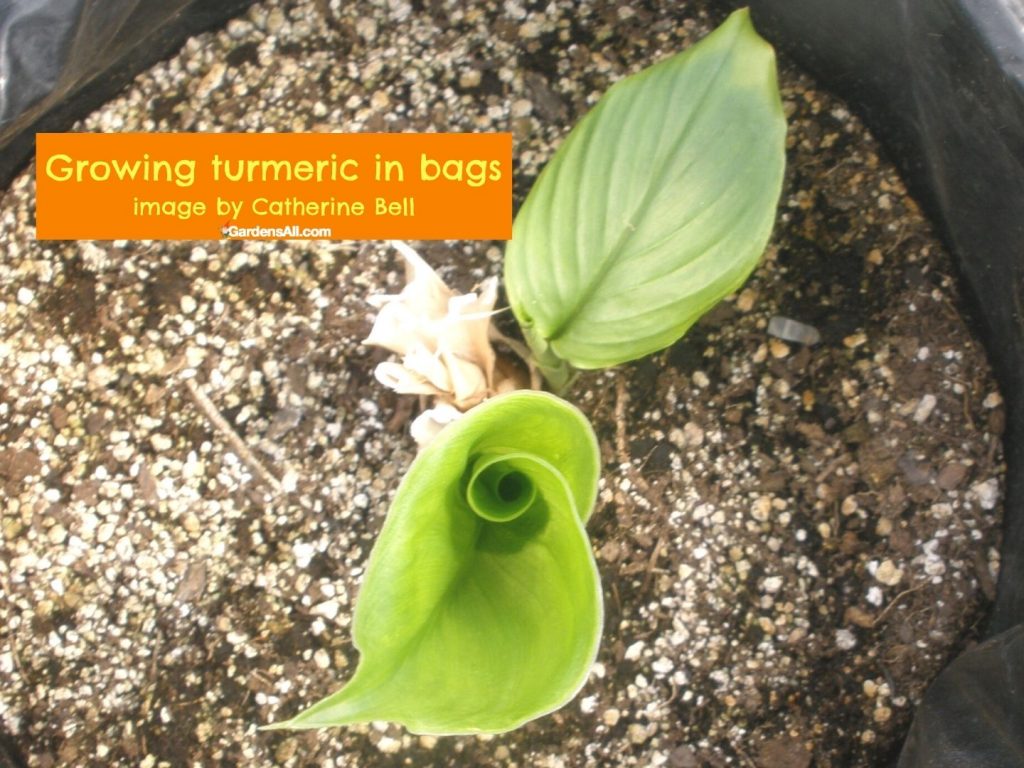
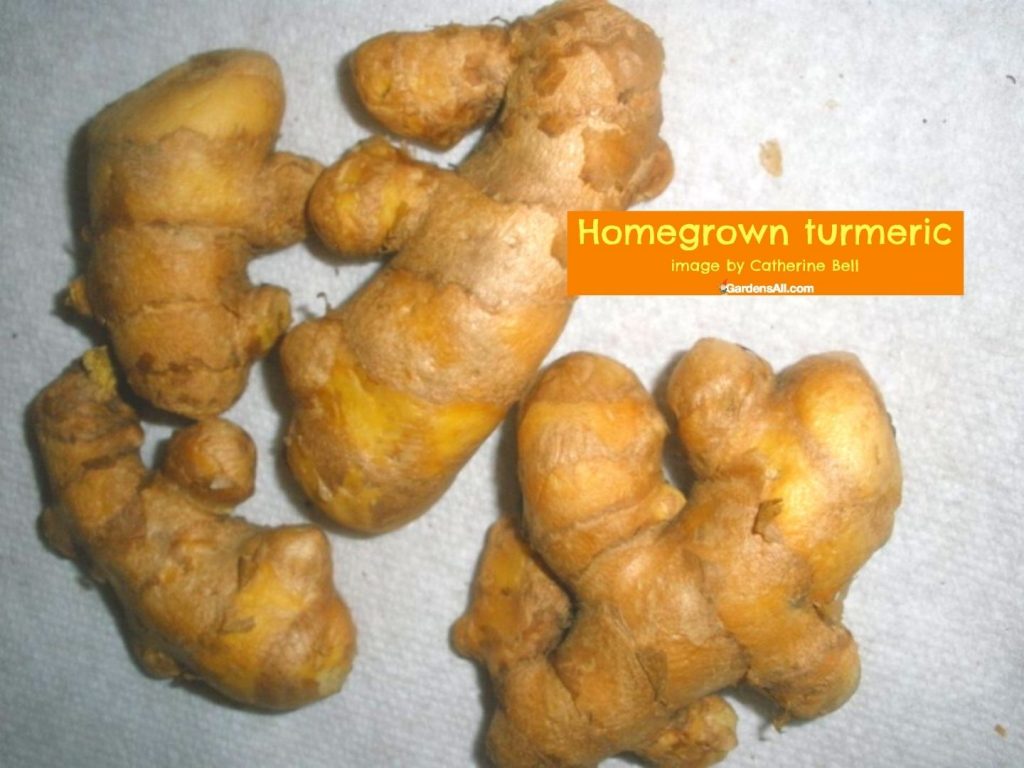
I tried growing some turmeric in Vermont. I planted one root in a large bag in my little hoop house, and moved it inside when the weather got cold. The leaves died back in the spring and I harvested about 8-9 new roots and replanted about half for next year. Now I have about 5-6 plants in the greenhouse, that look about like the one in the picture.
~Catherine Bell
Where to Buy Turmeric to Grow
NOTE: We at GardensAll are NOT affiliated with any growers directly, so these links are provided as a courtesy to you. We do however, receive a small affiliate commission for purchases from Amazon, (which includes Whole Foods) through our links, at no charge to you.
All prices cited are approximate averages as of January, 2022.
Buy Retail Turmeric Rhizomes
Turmeric rhizomes are the root or underground horizontal stems from which sprout randomly spaced new lateral growth that begin as buds.
As of January, 2022, the current average retail price for organic turmeric is $14 per pound for and $12 per pound for non-organic.
- Amazon
- Asian markets
- Indian markets
- Grocers
- Wholefoods
Buy Wholesale Turmeric Root (Rhizomes)
As of January, 2022, the current average wholesale price for organic turmeric is $12 per pound, and $12 per pound for non-organic.
- White Rabbit Organic Florida Produce
- 1.5 pound box: $25 ($16.67/lb)
- 5 pound box: $55 ($11.00/lb)
- 10 pound box: $95 ($9.50/lb)
- 30 pounds: $260 ($8/67/lb)
- Fiji Fresh / HABP Global on Amazon
- 5 pounds for $37 ($7.40/lb)
- Hawaiian Organic Ginger
- 5 pounds for $64 ($12.80/lb)
Buy Turmeric Plants
Prices cited are approximate averages as of January, 2022.
- Amazon (2 plants for $32; no plant size cited)
- A Natural Farm (2 plants for $50; 6″ pots)
- Fast Growing Plants (1 plant for $42; 1 gallon pot)
- The Growers Exchange (1 plant for $14; 3.25″ pot)
[Look for coupon; when we visited they had a 20% off coupon featured at the top of the page] - Spring Hill Nursery, (1 plant for $24; 4″ pot)
Buy Turmeric Powder
If you want to begin enjoying some of the many benefits of turmeric powder, the most economical way is to buy it in bulk from your local health food store or from Amazon.
Growing Turmeric for Profit
For market gardeners or those looking to get into growing plants for profit, the demand and uses for turmeric are many and varied. Turmeric can be grown in a greenhouse environment with good results
You may enjoy this article for some of the many benefits of turmeric powder and turmeric golden paste.

I’m LeAura Alderson, a garden, herb and plant enthusiast with a passion for discovering the many edible and medicinal benefits of the plants all around us, including the weeds, while transforming the land through regenerative permaculture practice. I am also a writer, editor and media publisher (now mostly retired due to replacement by AI), but which now allows more time to build our regenerative permaculture homestead farm.
References