

We’re seeing the mayapple plant all throughout our woods in spring and it seems especially widespread this year.
The Mayapple plant, scientific name of Podophyllum peltatum, is a herbaceous perennial is native to eastern North America. It has an umbrella-like structure with one or two large, palmately-lobed leaves that can grow up to 20 inches wide. The plant typically stands about 12-18 inches tall.

Mayapple Plant Description
- SCIENTIFIC NAME: Podophyllum peltatum
- COMMON NAMES:
- ground lemon
- indian apple
- mandrake
- mayapple
- raccoon berry
- umbrella plant
- wild food
- MAYAPPLE PLANT:
- 1-2 feet tall
- 1-2 leaves per stalk
- 1 flower & 1 fruit per 2-leafed, forked stalks
- FLOWERS:
- 1-2 inches in diameter
- typically grows only on the 2-leafed plants in the crotch of the forked branches
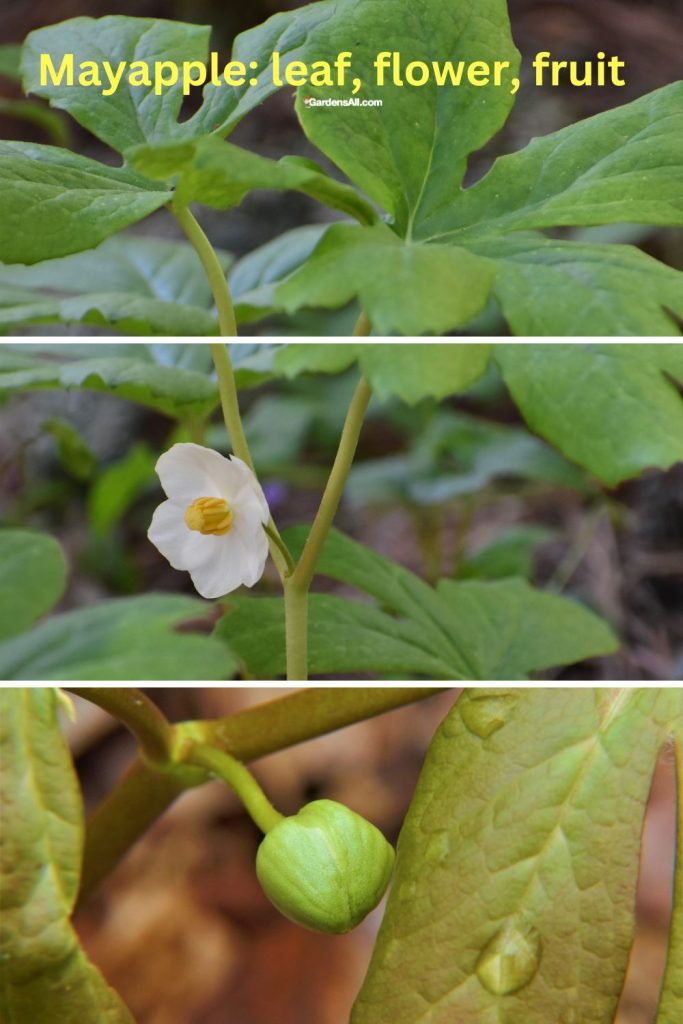
- waxy white or cream-colored flowers
- 6-9 petals
- blooms early spring to early summer
- flowers are followed by the fruit
- FRUIT:
- 1-2 inches in diameter
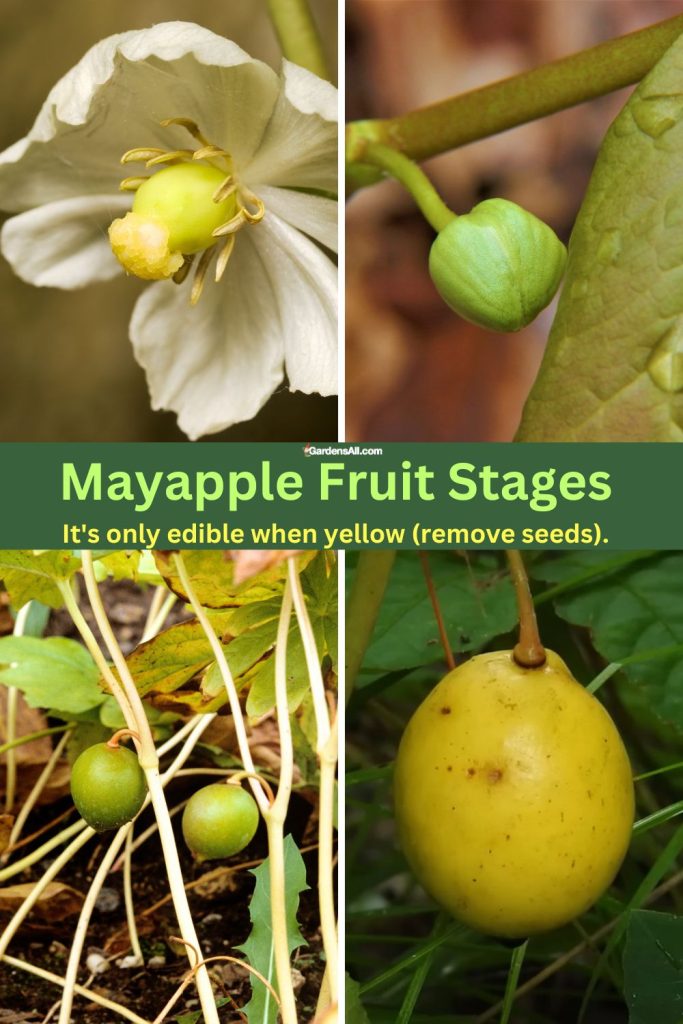
- greenish-yellow
- green – when unripe
- yellow – when ripe
- ripe mayapple tastes and smells sweet and tropically fruity
- egg shaped
- the fruit follows the flower and grows in the “V” of the forked stem, mostly only on the 2-leafed plants
- LEAVES
- 1-2 umbrella like leaves
- one stalk with one leaf
- one stalk that branches into two leaves
- 1 foot long by 1 foot wide
- broad, flat, hairless; the leaves cover the flowers and fruit
- deeply lobed with 5-9 lobes
- 1-2 umbrella like leaves
- SOIL: American mayapple grows in various soil types:
- with a pH range of 4.6 to 7.6
- clay, sand and silt in widely varying percentages[1]https://journals.ashs.org/hortsci/view/journals/hortsci/44/2/article-p349.xml
The Mayapple plant blooms in early spring to early summer, producing a single white or pink flower that is roughly 1-2 inches in diameter. The flower is typically located at the fork of the two leaves, and is followed by a greenish-yellow, egg-shaped fruit that is approximately 1-2 inches in diameter.

Is the Mayapple Fruit Edible for Humans?
Yes, the mayapple fruit is edible when yellow, softer and fully ripe.
The ripe yellow mayapples taste and smell is reminiscent of a tropical fruit smoothie, with a texture similar to
While the fruit of the Mayapple plant is edible, it is important to note that the seeds and roots are toxic and can cause serious health issues if ingested. The ripe fruit has a sweet and juicy taste, and is often used in preserves or jams using the strained juice of the mayapple fruit.
How to Eat the Mayapple Fruit
The only edible parts of the mayapple plant is the ripe yellow fruit pulp and pith. The mayapple fruit skin and seeds may cause stomach upset.
- Only eat the soft ripe yellow mayapple; the skin may be slightly wrinkled or marred.
- Remove the seeds from the gelatinous pulp
- Spoon the pulp out of the skin in order to eat.
- Do NOT eat the seeds or the skin of the mayapple as they can cause stomach upset.
It’s important to only consume the ripe fruit pulp in moderation, as excessive consumption may have a laxative effect.
Mayapple Plant Medicinal Uses
The Mayapple plant also has a long history of medicinal use in traditional medicine. So while parts of the mayapple plant and unripe fruit are toxic, it is used as a potent medicine by those well trained in its use.
The roots and rhizomes of the plant contain compounds that have been shown to have anti-cancer properties and may be useful in treating certain types of tumors.
Additionally, the Mayapple plant has been used in the treatment of a variety of other conditions, including constipation, liver disease, and skin disorders. The plant has also been used as a purgative and as a topical treatment for warts and other skin growths.
Pharmaceutically, the drugs etoposide and teniposide are made from mayapple. Etoposide is used to treat testicular and small-cell lung cancer, and teniposide is used in conditions like brain tumors and infancy leukemia.[2]https://www.eattheweeds.com/podophyllum-peltatum-forgotten-fruit-2/
CAUTION: The mayapple plant should only be used under the guidance of a qualified healthcare practitioner, as improper use can be dangerous.
What Wildlife Eats Mayapple Fruit?
Reportedly, mayapple leaves are toxic to animal and humans alike, and so are instinctually left alone. However, several types of wildlife consume the ripe fruit of the Mayapple plant, including:
- Birds such as:
- American robin
- cedar waxwing
- eastern bluebird
- Mammals, such as:
- deer (if other food sources are scarce, they may consume the ripe fruit)
- opossum
- raccoon
- squirrels
- Pollinators (see below)
However, it is important to note that the unripe fruit, as well as the leaves, stems, and roots of the plant, contain toxic compounds and should not be consumed by humans or animals.
In addition to being a food source for wildlife, the Mayapple plant also provides habitat and cover for a variety of animals, including ground-nesting birds and small mammals. The large leaves and dense growth habit of the plant provide shelter and shade for animals.

What Pollinators Are Attracted to Mayapple Flowers?
Mayapple flowers are pollinated by a variety of insects, including bees, wasps, and flies. The flowers are typically located at the fork of the two leaves, and are large and showy, with six to nine petals arranged in a star-like pattern.
The flowers of the Mayapple plant produce nectar and pollen, which attracts pollinators to the plant. Bees and wasps are particularly attracted to the flowers, as they are a rich source of nectar and pollen. Flies, including hoverflies and syrphid flies, are also known to visit Mayapple flowers.
In addition to providing food for pollinators, Mayapple flowers also provide habitat and cover for a variety of other insects, including beetles and butterflies.
See also more pollinator flowers.
Are Mayapple Plants Beneficial to the Soil?
Yes, Mayapple plants can be beneficial to the soil in several ways.
First, the thick mat of rhizomes produced by Mayapple plants help to stabilize the soil and prevent erosion. This can be particularly beneficial in areas with steep slopes or other erosion-prone areas.
Secondly, as an herbaceous perennial, the Mayapple plant helps to improve soil structure by adding organic matter to the soil over time. As the plant dies back each year, the decaying plant material adds nutrients to the soil, improving soil fertility and promoting healthy plant growth.
Finally, Mayapple plants can also help to improve soil moisture retention. The large leaves of the plant provide shade and reduce evaporation, helping to conserve soil moisture and reduce water loss.
Mayapple Plant in Landscape
Overall, the Mayapple plant can be a valuable addition to the landscape, providing not only aesthetic value but also contributing to the health and sustainability of the soil and ecosystem.
And remember, while the Mayapple plant can be a beautiful addition to a garden or natural landscape, it is important to use caution when handling and consuming the fruit, and to seek guidance from a qualified healthcare practitioner before using it for medicinal purposes.
EDITOR’S NOTE: We’ve provided this information based on our personal experience and deep research. If you have any addition tips and information, or, notice any mistakes, we appreciate all input and feedback.
Exploring Mayapple – Interview with Carol Gracie
Foraging Mayapple With Adam Haritan of Learn Your Land
We always enjoy Adam Haritan’s knowledgeable and enthusiastic sharing on foraging native plants.


Another favorite edible plant to grace the woods in spring is ramps vegetable. We love these and while it’s a naturally growing wild richly nutritive vegetable and delicious herb for seasoning if you like garlic and onions, you can also plant your own!

I’m LeAura Alderson, a garden, herb and plant enthusiast with a passion for discovering the many edible and medicinal benefits of the plants all around us, including the weeds, while transforming the land through regenerative permaculture practice. I am also a writer, editor and media publisher (now mostly retired due to replacement by AI), but which now allows more time to build our regenerative permaculture homestead farm.
References