

Is it a pumpkin? Is it a tomato…? No! Pumpkin on a stick is actually an eggplant!
Seeds arrived in the mail from GardensAll Facebook community member, Kathlyn Pykosz Cairns, so we had to grow some! Gardeners with seeds in hand… #planted!
It’s been fun learning more about these and to see ours developing from lumpy green fruit to more and more resembling their namesake: Pumpkin on a stick plant.
Ornamental Eggplant – Solanum Integrifolium
Also called “ornament eggplant”, our pumpkin on a stick plants are doing very well. Whatever has nibbled the leaves hasn’t been a problem. Likely because the leaves are large enough to sustain the photosynthesis necessary for the fruit to be able to develop.

Solanum Integrifolium Common Names
- Chinese Scarlet Eggplant
- Pumpkin Bush
- Pumpkin on a Stick
- Turkish Eggplant
- Turkish Orange Eggplant
- Pumpkin Tree

A Favorite for Fall Decor – Pumpkin on a Stick
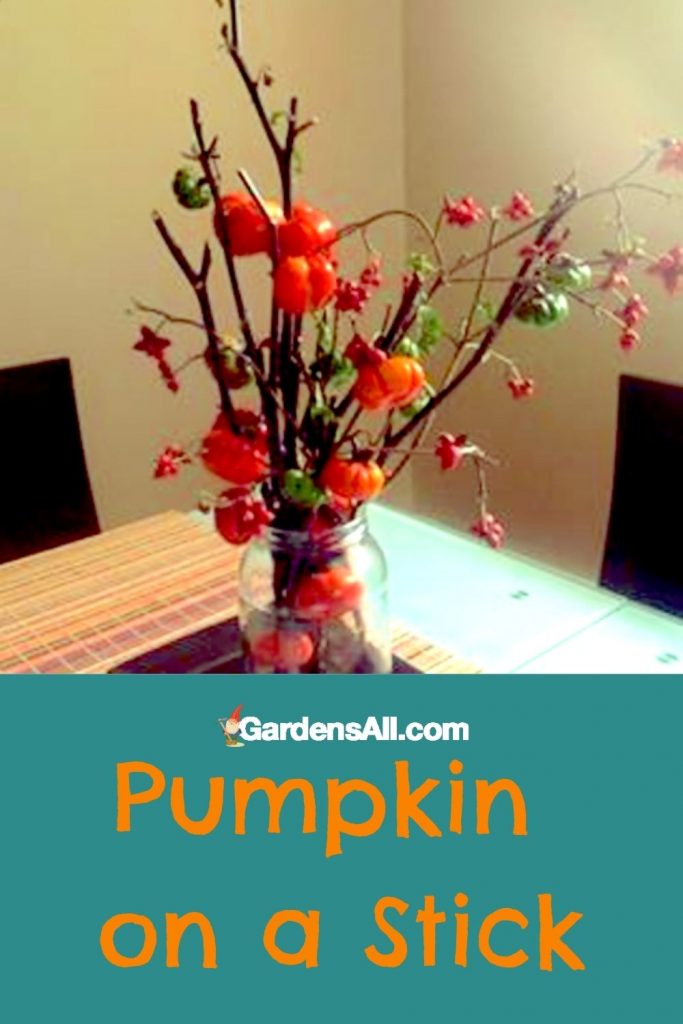
Also common to Asia and South America, in North America, this nightshade eggplant is more often used as an ornamental, where people trim the branches “sticks”, strip the leaves and allow the fruit to dry on the stem. These bright colored “pumpkin sticks” are then used as decorative accents to flower arrangements, especially in fall.
For ornamental pumpkin sticks, allow the fruit to dry on the stem.

Solanum Aethiopicum – a Close Cousin to Solanum Integrifolium
Although the fruit looks a bit like a pumpkin… or a fire orange tomato, it’s actually an eggplant. The botanical name is Solanum integrifolium and it is sometimes confused with a close African “cousin”, solanum aethiopicum. There’s a lot of cross-over in the common names (see list below), as well as the uses for the fruit of each plant.
The primary difference in the two types of Solanum plants is the cold hardiness and growing zone.
Often confused for Solanum integrifolium, these are some of the more common English names for the African cousin, solanum aethiopicum.
Common Names for Solanum Aethiopicum (a close relative of Solanum integrifolium)
- Gilo / Jilo
- African aubergine
- African scarlet eggplant
- Bitter tomato
- Chinese scarlet eggplant
- Ethiopian eggplant
- Ethiopian nightshade
- Garden egg
- Golden apple
- Love apple
- Mock tomato
- Pumpkin on a Stick / Pumpkin Stick
- Ruffed tomato
- Scarlet eggplant
- Silverleaf nightshade
- Tomato-fruit eggplant
The the bitter eggplant is a fruiting plant of the genus Solanum mainly found in Asia and Tropical Africa. It is also known as Ethiopian nightshade, garden eggs, and mock tomato.
The Main Difference Between Solanum Integrifolium and Solanum Aethiopicum
There’s little difference in appearance between these two Solanum varieties. The main difference seems to be the USDA Growing Zone.
Pumpkin on a Stick (Solanum) – Growing Zone
- Solanum Aethiopicum – USDA Growing Zones 10-12
- Solanum Integrifolium – USDA Growing Zones 9-11 (although ours grew fine in summer and fall in hardiness zone 7a)
How to Grow Pumpkin on a Stick
- Botanical Name: Solanum integrifolium
- Soil: pH 5.5 to 6.5
- Blooms: same as eggplant – Late summer to early fall
- Flower Color: Orange
- USDA Hardiness Zones 9-11
Organic Gardening
Below are some photos of our pumpkin on a stick plants. We’re gardening organically, which means that plants, leaves and fruits are often not picture perfect.
Here, the leaves of our ornamental eggplant bush have been mottled by flea beetles, a common garden pest and particular enemy to nightshades. This can be helped by natural pest control but we’ve gotten a bit behind on garden maintenance in this busy season.
Time to get some more beneficial nematodes [#affiliatelink]!
However, appearance aside, the fruits are producing beautifully and appear unaffected by the straggly leaves. Perhaps it has allowed more energy to flow into the fruits in much the way some people advise trimming the leaves from tomato plants.


The leaves of the ornamental eggplants have wicked thorns ALL OVER!

Are Pumpkin Sticks Edible?
Yes! You can eat the fruit of pumpkin sticks, and the green fruit extract. In particular, the leaves of the solanum integrifolium has been proven to have anti-inflammatory benefit, however, some varieties have many sharp thorns all over the leaves and stems.[1]https://www.ncbi.nlm.nih.gov/pmc/articles/PMC4123553/#sec5title
The leaves of the Solanum aethiopium are more commonly use in African countries.
After all, it’s eggplant, named “ornamental” in the west where it’s not a familiar taste or food. These fruits of these vegetables can be bitter, and most people in the western parts of the world prefer to use these ornamentally, especially in fall.
Surprisingly, the Younger Green Fruits Are Sweeter
Native to Africa, the fruits are typically eaten when young and green when they’re sweetest, or when orange and fully ripened, which is when this particular fruit becomes more bitter. However, they’re also used in recipes good for bitter fruits when they’re bright and ripe. Bitter foods are popular in some cuisines and can certainly be an acquired taste, and is totally dependent on how you prepare them.
The tender shoots and leaves as well as the roots are consumed for food and medicine in parts of Africa. There is a study indicating medicinal benefit of the fruit, as green extract, however, alway use caution and properly researched information, and if traditional healing or folklore, verify and validate carefully.
We’ve found a simple Brazilian pumpkin on a stick recipe.

Pumpkin on a Stick Recipe
Brazilian Jilo Recipe
Recipe from ThePerfectPantry.com
- 1 Tbsp Olive oil
- 6 African eggplant, sliced or chopped
- 1-2 Onions, sliced or chopped
- Garlic, minced
- Salt
- Pepper
Sauté onions, add garlic in olive oil. Stir for a couple minutes on medium heat. Add eggplant, continue to sautéing until onions are lightly browned. Add salt and pepper to taste.
If you’re growing these and/or have made recipes using this exotic vegetable, we’d love to hear about it.
And if you love creative pumpkins, you’ll enjoy these pumpkin planter ideas.
If you’re in a fall pumpkin recipe mode and love cheesecake, try these scrumptious pumpkin cheesecake bars.

Creative Pumpkin Fun – Pumpkin Activity Book
Wishing you great gardens and happy harvests!

I’m LeAura Alderson, a garden, herb and plant enthusiast with a passion for discovering the many edible and medicinal benefits of the plants all around us, including the weeds, while transforming the land through regenerative permaculture practice. I am also a writer, editor and media publisher (now mostly retired due to replacement by AI), but which now allows more time to build our regenerative permaculture homestead farm.
References