

Between Sambucus Canadensis and Sambucus Nigra?
Elderberry plants are both ornamental and functional. The edible elderberries, Sambucus Canadensis and Sambucus Nigra species of elderberry, are well known for their immunity boosting properties, however, they have other traditional uses as well.
Genus: Sambucus
Species: Canadensis and Nigra
These elderberry varieties are the best edible elderberries species.
It’s no wonder that nurseries are cultivating patented and increasingly beautiful versions of this amazing wild shrub. In this article, we’re focusing on the “common elderberry” as it is the most functional and beneficial plant with edible berries and flowers.
The American Elderberry and Black Elderberry
The American or Common Elderberry, Sambucus canadensis, and European or Black Elderberry, Sambucus nigra, are important plants. These highly nutritious berries and flowers are so potent for boosting the immune system, that there are many over-the-counter medications named after this genus of plants.
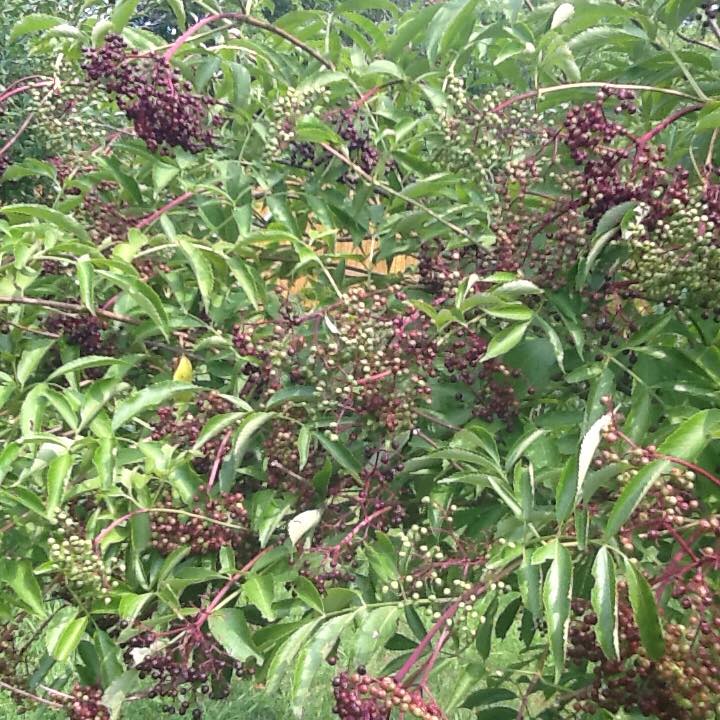
The Canadensis, is a native North American shrub, growing wild in the northeast and northwestern states. The ripened berries are a deep purple-tinged black, held clustered by a lovely contrasting violet colored stem.
Elderberry Sambucus Canadensis for Dietary, Medicinal and Accoutrements
The elderberry shrub is increasingly cultivated as a living edible hedge, landscaped into permaculture yards. As a common ornamental shrub, elderberry brings wonderful nutritional and medicinal value from the elderberries and elderflowers.

Historical Uses of Elderberry
The Cahuilla Native American Indians Uses for Elderberry
ACCOUTREMENTS
- Flutes and whistles – made by boring holes into stems hollowed out with hot sticks
- Clapper sticks – for dancing ceremonies, made by splitting the stem and clapping the two halves against each other.
- Tender for fire – the pith of the stems was used as tinder
- Firestarter – and the stem itself was employed as a twirling stick for starting the fire
BASKETRY & DYES
- Elderberry twigs & stems
- Fruit for creating dyes
Stems are dyed a very deep black by soaking them for a week or so in a wash made from the berry stems of the elderberry (Barrows 1967).
SOURCE: Plants.usda.gov/plantguide
FOOD
- Edible Elderberries
- Raw or dried
- Cooked
- Syrups
- Wine
- Elder Flowers, AKA Elderflowers
- Raw or dried
- Cooked
- Tea
MEDICINE
- Immunity
- Nutrient dense
WEAPONS
- Elderberry branches are strong and were used to make the shaft of arrows
- Hollowed-out elderberry stems can be made into squirt guns 😉
SOURCE: PlantsUSDA.gov
About the American Elderberry and Black Elderberry
These common elderberries are the best edible elderberry species.
Genus: Sambucus
Species: Canadensis and Nigra
Elderberry plants are both ornamental and functional. It’s no wonder that nurseries are cultivating patented and increasingly beautiful versions of this amazing wild shrub. In this article, we’re focusing on common elderberry as it is the most functional and beneficial plant with edible berries and flowers.
The American or common elderberry, Sambucus canadensis, and European or black elderberry, Sambucus nigra, are important plants. These highly nutritious berries and flowers are so potent for boosting the immune system, that there are many over-the-counter medications named after this genus of plants.
The Canadensis, is a native North American shrub, growing wild in the northeast and northwestern states. The ripened berries are a deep purple-tinged black, held clustered by a lovely contrasting violet colored stem.
The elderberry shrub is increasingly cultivated as a living edible hedge, landscaped into permaculture yards. As a common ornamental shrub, elderberry brings wonderful nutritional and medicinal value from the elderberries and elderflowers.
Historical Uses of Elderberry
The Cahuilla Native American Indians Uses for Elderberry
ACCOUTREMENTS
- Flutes and whistles – made by boring holes into stems hollowed out with hot sticks
- Clapper sticks – for dancing ceremonies, made by splitting the stem and clapping the two halves against each other.
- Tender for fire – the pith of the stems were used as tinder (pit
- Firestarter – and the stem itself was employed as a twirling stick for starting the fire
BASKETRY
- Elderberry twigs & stems
- Fruit for creating dyes
Stems are dyed a very deep black by soaking them for a week or so in a wash made from the berry stems of the elderberry.
SOURCE: Barrows 1967 – Plants.USDA.gov
FOOD
- Berries
- Raw
- Cooked
- Dried
HEALTH
- Immunity
- Nutrient dense
WEAPONS
- Elderberry branches are strong and were used to make the shaft of arrows
- Hollowed-out elderberry stems can be made into squirt guns.[1]https://www.nrcs.usda.gov/Internet/FSE_PLANTMATERIALS/publications/mipmcpg9776.pdf
Where to Buy Edible Elderberries
Now if you don’t have elderberries in your yard or growing wild in your area, don’t worry. You can buy elderberry plants to plant, and you can also find berries and flowers online.
We got our elderberry plants from a local nursery and also from EdibleLandscaping.com. You can also order them through Amazon:
When do Elderberries Ripen?
- Elderberries ripen in July and August in zone 7a, (so adjust up or down for your growing zone).
- Elderberry flowers, aka, elderflowers, continue blooming during the first ripening of berries.
- By late July and August, it’s just berries, and lots of them!

How to Harvest Elderberries
As you can see from our photos here, the elderberries are tiny. So it takes some time to cull them from the stems and they’re also a bit delicate.
How to Remove Edible Elderberries from the Stems
The fastest way we’ve found to get all the many tiny elderberries off the stems quickly and without crushing, is to freeze them on the stem. Once they’re frozen, it’s easier to roll the berries off the stems without damaging the tender berries.
This is especially beneficial if you cannot process the berries right away into whatever delectable or medicinal concoctions you’ll be making.
You can then defrost to use in your favorite concoctions, including jams, jellies, syrups, juices, extracts, and baked goods. Please share your harvesting tips with us and we will add them to this article to help folks. You can submit via email.
If you snip the berry stem off just freeze and shake in a ziplock bag or covered bucket. Comes right off.
~Debie Baugher
Are Elderberries Edible?
Edible does not necessarily include raw. While some people can tolerate moderate amounts of the American and Black Elderberries, others may not, so please read and heed this section carefully.
NEVER EAT the Stems, Roots, Green Berries or Red Elderberries, Raw or Cooked!
The stems, leaves, and roots of the Black Elder, Sambucus nigra, are all poisonous to humans, as are the seeds of the Sambucus racemosa, red elderberries, especially if eaten raw.
SOURCE: Plants.USDA.gov
The Sambucus canadensis berries (dark ones) are much less toxic though some experience ill effects from eating raw. Best to cook them too.
SOURCE: Oregon State Univ.
Some people say they’ve eaten elderberries their whole lives without issue. However, it’s advisable to approach any raw dark elderberry very carefully (a few at a time).
Historically, Spaniards and also the Cahuilla Native American Indians ate the berries in large quantities, both raw, dried and cooked. However, they lived from the lands, knew their plants well and were well adapted to it.
SOURCE: USDA Plant Guide
The red berries of the of Sambucus racemosa are toxic. Do NOT eat them.
Beware the Red Elderberry!
Leave them alone!
The green unripened berries or the ripened red variety of elderberries contain a cyanide-inducing glycoside, and should never be ingested raw.
REMEMBER: RED ELDERBERRIES MEANS “STOP”… DON’T EAT THEM RAW!

Caution When Harvesting
It’s entirely possible that one of the reasons some people have reacted to things made with raw elderberries has to do with the harvesting. Since the berries are tiny, it could be easy to end up with bits of stems and/or leaves in the mix.
The leaves and stems contain high concentrations of the toxicare So be very careful when processing since those parts are poisonous.
SOURCE: CDC.gov
For Safest Results, Cook the Dark Edible Elderberries Before Consuming
Excerpt from Norm’s Farms:
“The fruit of the Black Elderberry should always be cooked before consumption.
~Norm’s Farms
Other sources differ, but in general, the cook-before-consuming approach is the safer route. And the good news is that cooking elderberries actually enhances some of the health benefits of edible elderberries.
“Cooking the berries destroys the glycosides present in the seeds, making the berries with their seeds safe to eat. And… Research indicates that exposing elderberry to heat actually concentrates the polyphenols and anthocyanins.”
~Norm’s Farms
“The fruit of the elderberry is a tiny berry, about 1/8 to ¼ inch in diameter, and about 50% of the berry is seed.
~Norm’s Farms
The safest way to consume the dark edible elderberries is to cook them first.
EDIBLE ELDERBERRIES ARE PURPLISH BLACK
Sambucus Canadensis and Sambucus Nigra
NEVER EAT THE LEAVES, STEMS OR ROOTS OF ANY ELDERBERRY BUSH
You can eat the dark ripe berries and flowers of the Sambucus canadensis and Sambucus nigra.
However, some people may experience nausea from the raw elderberries, so best to cook and/or separate the pulp from the seeds, which contain trace amounts of cyanide.
THE NON-EDIBLE ELDERBERRIES
- Green, unripened elderberries – DO NOT EAT
- Raw red berries of the Sambucus racemosa – DO NOT EAT
- Roots, leaves or stems of any elderberry bush – DO NOT EAT

REMEMBER: RED ELDERBERRIES MEANS STOP… DON’T EAT THEM RAW!

Avoid the Elderberry Seeds
The majority of the elderberry plant can be toxic, and yet the berries of the edible Sambucus species: canadensis and nigra, are highly nutritious. Interestingly, the roots, stems and leaves of elderberry plants also have medicinal benefit, externally applied.
The small black berries of the sambucus canadensis are picked and eaten raw or dried and should never be picked and eaten green. The red elderberries should not be eaten raw either, unless you’re knowledgeable on how to consume them and separate out the cyanide laced seeds.
Sambucus canadensis and Nigra elderberries, are reportedly safe to eat when ripe. However, many people experience nausea from the raw berries, so best to cook them.
Best Use of Edible Elderberries
Elderberries are best used for the juice alone, and/or cooked, where the cooking apparently burns of the toxicity content of the berries.[2]https://www.pfaf.org/user/plant.aspx?latinname=sambucus+nigra
Many people say they’ve eaten the elderberry fruits and seeds all their lives with no ill effect. However, whenever these things are shared, it’s unclear which varieties they’re speaking to, so it’s best to be safe than sorry.
If you plan to consume the elderberry fruit without separating it from the seed, consult with experts first. Contact your local ag extension office to be sure you’re eating the safe variety and for specific information on how to prepare them.
Meanwhile, if you do hiking or camping and are into survival foods in the wild, elderberry is a good one to know and be able to identify.
There are many health benefits to elderberries, so let’s review those next. If you don’t have fresh elderberries on hand, you can still make your own concoctions with dried elderberries.

Elderberry Nutrients
Nutrient dense elderberries from the honeysuckle family, are considered a superfood like blueberries, due to their high concentration of antioxidants.
They also have beneficial amounts of Vitamin A, calcium, thiamine and niacin.
ONE CUP of Elderberries Contains:
- Vitamin C – 87% RDA
- Vitamin A – 17% RDA
- Iron -13% RDA
- Calcium – 6% RDA
- Vitamin B6 – 17% RDA
- Potassium – 12% RDA
- Vitamin B1 – 7% RDA
Source: MomPrepares.com[3]https://momprepares.com/the-health-benefits-of-elderberries/
Now most of the time you wouldn’t consume an entire cup of elderberries at a time. Rather, a sprinkling of the edible variety of elderberries in and on complementary foods is enough. Most people cook them. However, some people are sensitive to them cooked as well.
Some people are even sensitive to the cooked fruit, most likely due to the seeds. If that’s you, you should be able to enjoy elderberry juice or syrup, which is extracted to separate it from the seeds.
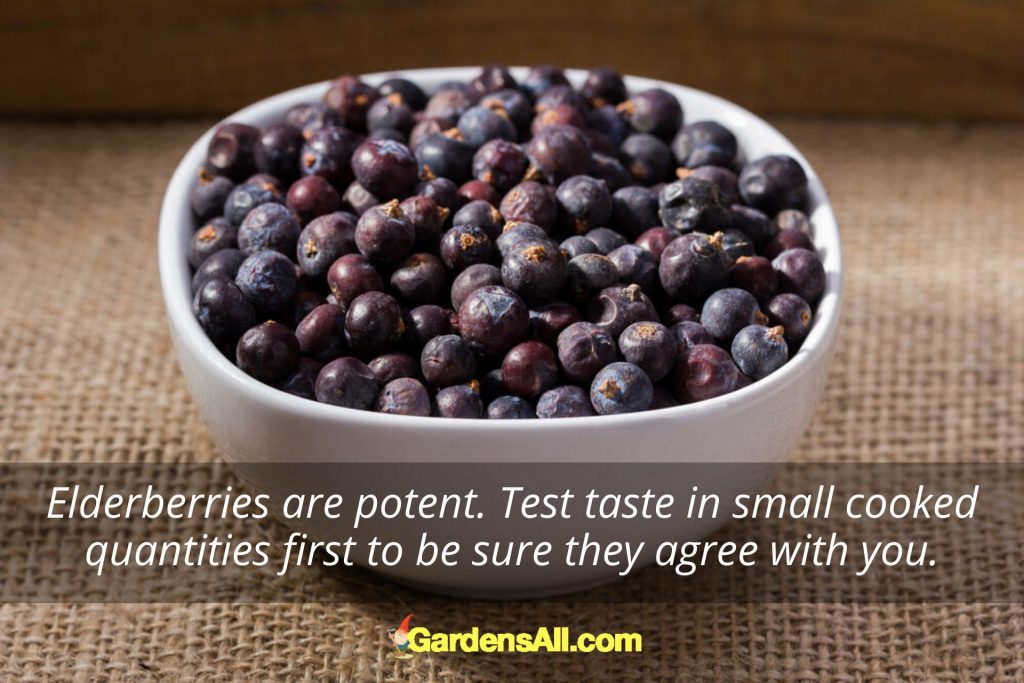
Best to test a small amount of the edible variety of elderberries as they can make some people nauseous, especially if consumed raw.
Berry Nutrition Comparison Chart – based on 1/2 cup (100g)
Elderberries Ranked #1 most nutritious of the 17 most common berries.
This ranking, was created by Midwest Elderberry Coop, who says that they’ve arrived at the assessment using only edible berries.
“To rank them, we stacked up their nutritional content. Areas like total carbohydrates and calories worked against their ranking, while vitamins A, B6, C, potassium, iron, and fiber counted toward a better ranking. All the berries were counted in 1/2-cup increments in their raw form.”
SOURCE: Midwest-Elderberry.coop[4]https://www.midwest-elderberry.coop/health-nutrition/

Health Benefits of Elderberries
(NOTE: Health benefits of elderflowers are covered further below).
Excerpted from OrganicFacts.net
- Digestive aid, high in fiber
- Lowers cholesterol
- Cardiovascular Protection
- Respiratory system – expectorant, plus soothes inflammation and irritation
- Boosts immunity – antibacterial, anti-infectious, antioxidant and immune strengthening
- Regulates insulin and glucose levels beneficial for diabetes
- Anti-inflammatory, for painful joints, arthritis and sore muscles
- Bones – Essential minerals strengthen bones and induce new growth
- Skin – bioflavonoids and antioxidants plus high vitamin A helps keep skin youthful
Source: OrganicFacts.net[5]https://www.organicfacts.net/health-benefits/fruit/elderberries.html
Next is a video showing how to identify, pick and harvest elderberries, followed by recipes for elderberry syrup.

Identifying, Harvesting, Eating and Using Elderberries
By Green Deane of EatTheWeeds.com [6]https://www.eattheweeds.com/elderberries-red-white-and-blue/
Green Deane talks about both black and red elderberries, how to identify, harvest and eat them and also what to avoid.
This is important to help be sure you are safe when identifying elderberry in the wild, so tune in to see which elderberries you can eat and which you should definitely avoid.
Once you’ve collected the fresh black-purple berries, you’ll be wanting to find recipes for them.
Which Elderberries Can You Eat?
WARNING: Do not eat any of the elderberry wood, stems, leaves or green berries, and never eat the seeds of the red elderberries.[7]https://www.eattheweeds.com/elderberries-red-white-and-blue/ (I know we’re being redundant here, but it’s important enough to be sure you didn’t scroll past it and miss it earlier).
For more on growing elderberries, for yourself or for a business, you may enjoy this article and interview with Roger Lendhardt of Norm’s Elderberry Farm.
One of our favorite traditional and medicinal herbal experts is Rosemary Gladstar. In this video, Rosemary gives a great summary of all things elderberry.
In my family, we have three favorite ways to enjoy elderberries.
Ways to Use Elderberries in Food
- JAM / JELLY: Elderberry jelly
- SYRUP: Elderberry syrup (see recipe below)
- PANCAKES: Elderberry pancakes (add fresh or frozen berries to your favorite pancake recipe)
- WINE: Elderberry wine – (Amazon doesn’t appear to sell wine anymore, but you can get directly from the maker)
Elderberry Forms and Uses for Health and Immunity Support and Prevention
- Capsules – good as supplemtns
- Extracts / tinctures – good for supplements
- Gummies – favored by children
- Lozenges – an enjoyable throat soother
- Powders – great for smoothies
- Syrups – take by teaspoon or add to beverages
- Tea –
- elderberry tea
- elderflower tea
(We’ve written more about how to make elderberry tea here).
Next are a few recipes to get your taste buds primed and ready. After that, we have more information on the amazing elderflowers, which are just as phenomenal.
Learn about the amazing and healing properties of elderflowers after the recipes.

Elderberry Recipes
Now for some recipes using elderberries! Yum!!

Elderberry Pie Recipe
Recipe from Food.com
INGREDIENTS
8 Servings
- 4 cups elderberries
- 11⁄4 cups sugar
- 6 Tablespoons flour (use your favorite flour or gluten free flour)
- 2 Tablespoons lemon juice
- 1⁄2 teaspoon cinnamon
- 2 Tablespoons butter
- 9-inch pie crust – homemade or store bought (we often use gluten free pie crusts)
DIRECTIONS
Next: Elderberry Dumplings recipe.
Elderberry Dumplings
Elderberry Dumplings Recipe from MotherEarthNews.com
BERRY MIXTURE
- 2 cups berries
- 3/4 cup sugar (to avoid refined sugar, we substitute with half as much maple syrup, honey)
- 1 Tbs flour (we use gluten free flour)
- 2 Tbs lemon juice
- 3/4 cup water
Combine all the ingredients, heat gently, and keep them warm while you make the dumplings.
DUMPLING MIXTURE
- 3/4 cup flour, sifted (we use gluten free flour)
- 1 1/2 tsp baking powder
- 1/2 tsp cinnamon
- 1/2 tsp salt
- 1/4 cup milk
- 1 egg
- 1/4 cup sugar
- 1/4 cup lemon peel, grated
Add the other dry ingredients to the sifted and measured flour. Mix the milk and the egg in a small bowl and stir them into the flour combination until the dough is just blended. Now pour the hot berry mixture into a casserole and drop in small spoonfuls of the dumpling batter. Bake the dish at 400 degrees Fahrenheit for 25 to 30 minutes until the pastry balls are lightly browned. Serve the dessert warm with cream or vanilla ice cream.
Recipe from Mother Earth News[8]https://www.motherearthnews.com/real-food/elderberry-recipes-zmaz73jazraw.aspx?PageId=2#axzz3NJN4DHSv
Next: The ever popular elderberry syrup recipe!
Elderberry Syrup Recipe
- 1/2 cup dried or 1 cup fresh Elder Berries
- 3 cups filtered water
- 2 -3 cloves
- 1 cinnamon stick
- Optional: 1 slice of fresh ginger or a pinch of dried ginger
- Measure 1 cup local honey, raw and unfiltered, into a 1 quart measure cup
- After the syrup has cooled, strain it into add the honey. stir well and bottle.
Back to Basics Gal – Elderberry Syrup Video
Here are a few helpful videos to get you started.
How to Make Elderberry Syrup
A mouthwatering video on how to make Elderberry syrup, that makes you want to try some right away! A wonderful tasting syrup that has been used over the years as a treatment for cold and flu, and as a preventative.
If you don’t have access to fresh elderberries, you can actually use dried elderberries, available from Amazon.
We have LOTS MORE below on how to make elderberry syrup using a juice extractor steamer.
Contributions from the Community
Laura Stubbs – Maine, Zone 5
One of our GardensAll community members, Laura Stubbs shared her elderberry photos and juice-making information.
This morning I picked my first batch of elderberries, before the birds get them all. I took them off the stems, ( forgot how long that takes lol) I rinse them in water and a little vinegar to clean and get any bugs off. So I got 12 cups of berries, steaming the juice out and as you see it’s running. Grapes will be done next month.
Make sure they’re about 20 feet apart. I haven’t done anything special to mine. They’re about 6 yrs old. Producing a lot of babies this year, so I think next year I’ll transplant a few.
I’ve never cut it back, but have taken out old dead branches, although there haven’t been many. I’m no expert. I’m just a backyard gardener , and I google everything.
~Laura Stubbs, Gardener, Maine, zone 5


Laura is using a juice steamer to extract the juice from the berries.

Juice steamers function like this schematic from Cook N Home which you can find on Amazon:

Laura Stubbs continues:
I’m in Zone 5, Maine. Elderberries are ripening. I’ll be selling 100% juice in quart jars for $10. I’ll be dehydrating some and of course jelly and cough syrup. This is my favorite thing to harvest!
If you’re interested in learning more about growing elderberries for profit as a business, you can check out an interview and article on our sister site, PlantingForRetirement.com.
For more on making elderberry syrup using dried elderberries, you may enjoy this video from the Back to Basics Gal.
Elderflower Blossoms – Identifying, Harvesting, Drying and Preparing Elderberry Flowers
Did you know that the flavor from elderflowers actually comes from the pollen in the elderflowers?
I’m conflicted about elderflower tea. My dilemma is that the flowers make lovely tea and other recipes, but if we harvest the flowers that prevents that cluster from becoming berries. However, there are many reasons to also harvest the flowers.
Beyond delectable edibles that can be made, elderflowers are also very nutritious.
Find more on how to make elderberry tea here.
Nutritional Benefits of Elderflowers
Elderflowers are beautiful, layered lacy sprays of cream colored flowers, that pack as much a nutritional punch as the elderberries.
Whether for teas or tinctures, extracts or sodas, supplements or syrups, elder flowers are hugely popular for many things.
Health Benefits of Elderberry Flowers
- Antiseptic
- Analgesic – Triterpenoids
- Antibacterial[9]https://www.ncbi.nlm.nih.gov/pmc/articles/PMC7185606/
- Antiviral – quercetin, isoquercitrin and anthocyanins
- Anti-inflammatory – Triterpenoids[10]https://www.ncbi.nlm.nih.gov/pmc/articles/PMC5372600/
- Antioxidant – bioflavonoids, flavones and flavonols
- Respiratory issues, such as cold and flu
- Diuretic
- Laxative[11]https://bmccomplementalternmed.biomedcentral.com/articles/10.1186/1472-6882-10-17
- Alleviates allergies – contains chlorogenic acids, such as cinnamic acid
- Reduces pain and swelling associated with arthritis (externally applied)
- Used to stop bleeding
- Antiseptic as a mouthwash and gargle
- Elderflower reduces blood sugar levels
- Effective at killing MRSA and other common hospital pathogens [12]https://www.ncbi.nlm.nih.gov/pmc/articles/PMC7185606/
- Anti-cancerous – Triterpenoids
That’s quite an amazing list… no wonder it’s considered a superfood from which many supplements are made!
How to Take Elderflower
Elderflowers can be consumed raw and fresh in food or tea or by itself, or dried for food storage and later use. Always avoid consuming the leaves, twigs, and roots as they’re are toxic and can lead to the build up of poisonous cyanide in the body.
All but the black elderberries contain cyanide and should not be consumed raw. Some people say they consume the black variety of elderberries raw and other say it should be cooked prior to avoid nausea and other stomach and intestinal problems.
Elderflower Supplements
Elderflower supplements are available alone or in combination with other herbs. Supplements can be found as dried and cut flowers, in tea bags, in tinctures and concentrates, and in liquid tea concentrate and capsules.
Tune into this brief video for more on how to identify, harvest and use Elderflowers, fresh or dried.
Elderflowers
NOW… if the word, “elderberry”, triggered for you the old BBC Monty Python TV show and this quote? “Your mother was a…. and your father was a…. you might enjoy a quick trip down memory lane.
Consume elderberry juice, syrup and tea to boost immunity and health!
Pros and Cons of Elderberry – a Doctor’s View
It’s not uncommon for there to be mixed views on any kind of remedy or medicine. We humans are test tubes in the earth lab and what works for one, may or may not work for another. Naturally, this complicates medicine and healing, and leads to confusion and misinformation.
So it’s important for us each to do our own research and take careful note of what seems to work well for us and what doesn’t. It really comes down to doing our homework, assimilate what makes sense to us and learn through trial and error.
One way to do this is to tune into experts that speak to more than one side of an issue. From there we can observe, reflect and go toward the perspective that makes the most sense to us.
When it comes to elderberry, you might find Dr. Patrick Flynn’s perspective helpful.
Dr. Patrick Flynn on Elderberry Pros and Cons
“There is no protocol that’s the same for everybody.”
~Dr. Patrick Flynn D.C., author, founder-The Wellness Way

DISCLAIMER: No information on this website is intended to be or replace medical advice. This information is from a combination of folklore and traditional remedies, researched information and scientific studies, however, no such compilation of information here can be construed as medical advice. Always use good judgement and seek proper professional guidance and attention.
REMEMBER: RED ELDERBERRIES MEANS STOP… DON’T EAT THEM RAW!
Wishing you great gardens and happy harvests!

I’m LeAura Alderson, a garden, herb and plant enthusiast with a passion for discovering the many edible and medicinal benefits of the plants all around us, including the weeds! I’m a writer, editor and media publisher for our family of websites.
While I was certified in fitness and life coaching, I am NOT a health practitioner. However, I’m a lifelong health enthusiast, with a keen interest in healthy, organic foods and making home remedies and the content we share is from our own experience and usage as well as that extracted from scientific research so that you can explore further on your own.
Always seek the advice and guidance of your health practitioners first and foremost.
As a family we’re steadily expanding our gardening, experimentation and knowledge around all things gardening, edible landscaping, fresh organic foods and self sustainability with farming in our future. I also own and manage iCreateDaily.com, a site all about transformation through creation, and the power of positivity, optimism and mindset.
References