

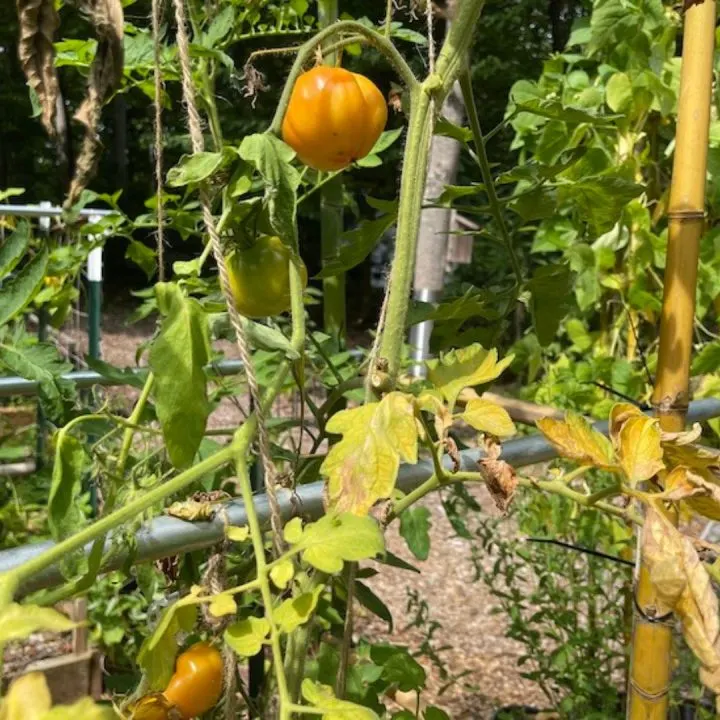
Handle Early Tomato Blight Before It’s Too Late.
Does your plant have tomato blight early in the season? Early blight is sometimes call tomato wilt, but there are a number of different tomato wilts. So let’s dial it in and check out the cause and treatments for early tomato blight.
The good news is that there are treatments to help your plant and this fungal blight is not nearly as awful as the late tomato blight responsible for around one million deaths during the Irish potato famine between 1845-1852.
Before spending your time on information and remedies, let’s see if your plant’s symptoms match this fungal blight.
What Does Early Tomato Blight Look Like?
So you’ve been pruning your tomatoes of those ragged looking tomato plant leaves. Then one morning you go out and it’s more than a pruning issue. Now, your tomato plants look like they’re dying. It can happen almost overnight, but there are treatment options to try.
Signs of Tomato Blight
These symptoms are listed in order of first to worst:
- Mottled splotches on leaves resembling concentric circles
- Dark spots on leaves
- Yellow leaves
- Brown, curled and dried out leaves
- Stems with dark spots
- Tomatoes that may be soft and squishy
You can find more on this and other tomato plant diseases here.

What Causes Early Blight?
This tomato blight is a fungal pathogen called Alternaria solani that infects stems, leaves and fruits of nightshades like tomatoes, potatoes and eggplant.
The perfect environment for Alternaria solani is humidity and heat. So when you’ve had conditions of lots of rain and lots of heat, be on the lookout for tomato blight early.
By knowing the conditions that are ripe for it, you can treat and mitigate against the damage of this fatal tomato fungus.
Early Tomato Blight Prevention
When it comes to disease resistant varieties, there’s much benefit in choosing newer disease resistant varieties of tomatoes.
One of the most important things you can do to protect your plants against blight is to choose disease resistant varieties and avoid heirloom seeds. Unfortunately, heirloom varieties are not blight resistant. For this reason after this year of losses, we will avoid them.
We just sprayed all of our affected plants. We should’ve actually caught it earlier, instead of just pruning off the bad stems.
But in summer when you get so busy with everything in the garden growing and producing, it’s easy to overlook a needed pruning over an ailing plant. But best not to. If you can catch tomato blight early, you can keep it from destroying your plants.
Organic Tomato Blight Treatment
- Copper fungicide spray
- Pruning
- Mulching
Spray
One of the best treatments for the Alternaria solani tomato fungus is copper fungicide. But first, you need to remove all the infected parts.
Whenever you have a large area to spray, we really like using the battery powered sprayer.
Prune
Trim and prune away all infected parts of the plant. Then spray the remaining healthy parts with the copper fungicide. Do not place infected parts into compost or mulch. It’s best to burn them. For that, we keep an old 50 gallon drum in the garden for burning diseased or pest riddled plant parts.
RELATED: Pruning tomato plants
Mulch
Fungus spores are everywhere in the ground and air. The right conditions encourage it so the best thing is to minimize the risk. Fresh mulch helps nourish the soil and cover up fungus spores that could become airborne.
Find more on this and other tomato plant diseases here.

I’m LeAura Alderson, a garden, herb and plant enthusiast with a passion for discovering the many edible and medicinal benefits of the plants all around us, including the weeds, while transforming the land through regenerative permaculture practice. I am also a writer, editor and media publisher (now mostly retired due to replacement by AI), but which now allows more time to build our regenerative permaculture homestead farm.