

There are several plants that resemble wild lettuce and can be mistaken for it. The important thing is to be aware that some wild lettuce look alikes are poisonous or have toxic parts, and some are not.
We share a few examples in this article, as well as a link to our edible wild lettuce article.
We do our best to do deep and thorough research over and beyond our personal knowledge and experience, so that we can bring you dependably accurate and helpful information. However, mistakes can happen, so if you notice anything that needs editing or correcting, or have your own experience to add to this article, we’d really appreciate hearing from you.
What Are Some Poisonous Wild Lettuce Look Alike Plants?
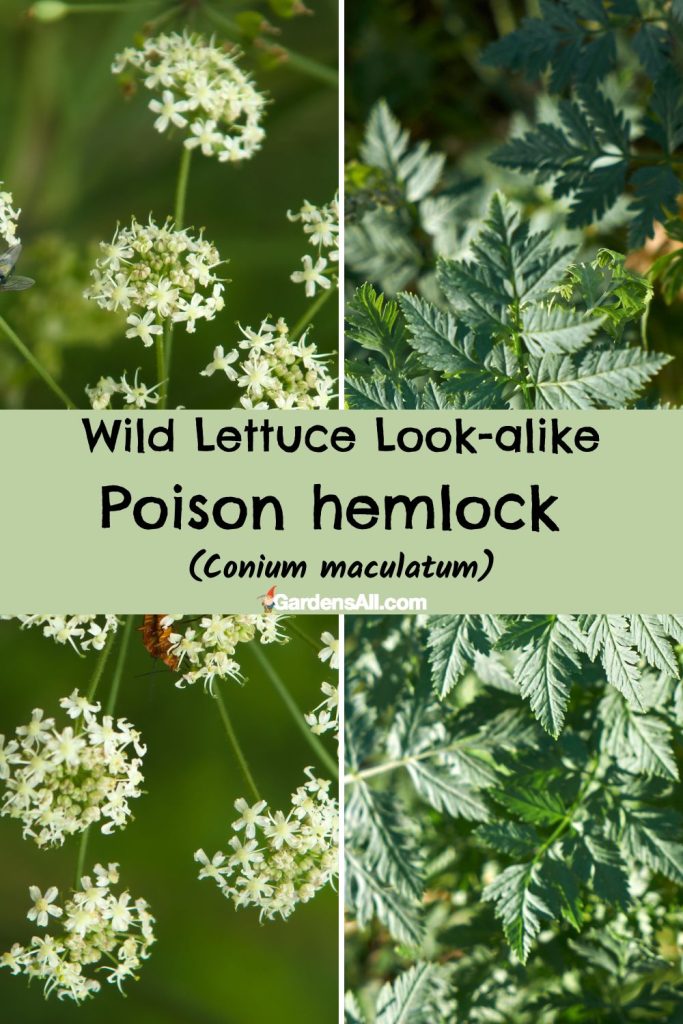
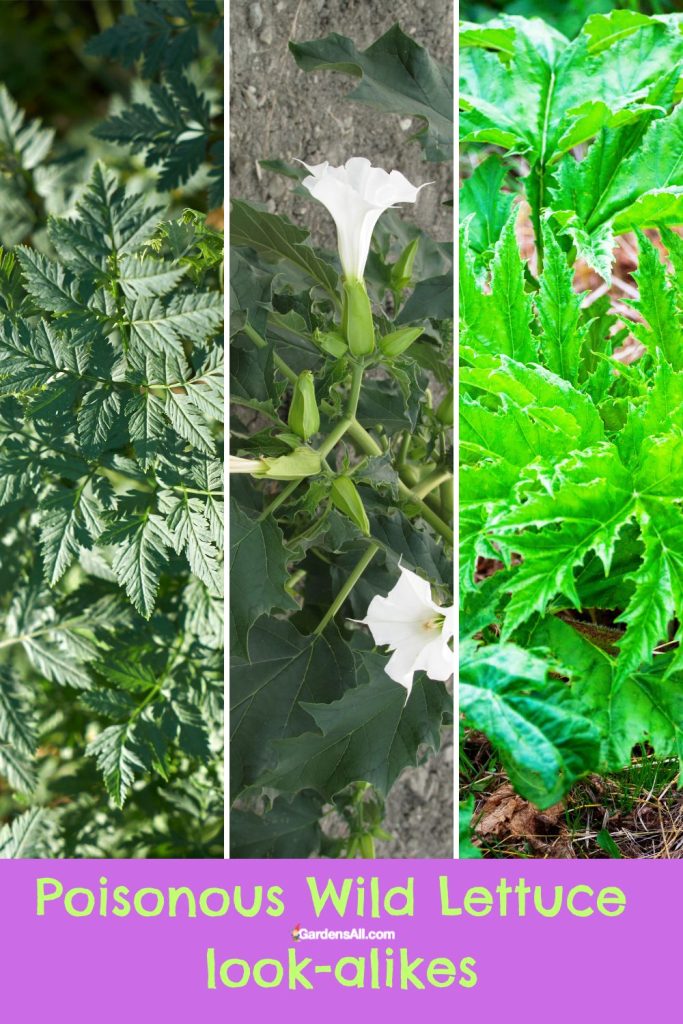
Poison hemlock (Conium maculatum)
Poison hemlock is a tall, erect plant with small, white flowers that grow in clusters. The leaves are fern-like and the stem is hollow and purple-spotted.
It can be confused with wild lettuce because it has similar leaves and grows in similar habitats. However, all parts of the plant, especially the roots, are highly poisonous and can be fatal if ingested.
Giant hogweed (Heracleum mantegazzianum)
Giant hogweed is a large plant that can grow up to 15 feet tall. It has large, umbrella-shaped flowers and leaves that resemble those of wild lettuce, but can cause severe burns and skin irritation if touched.

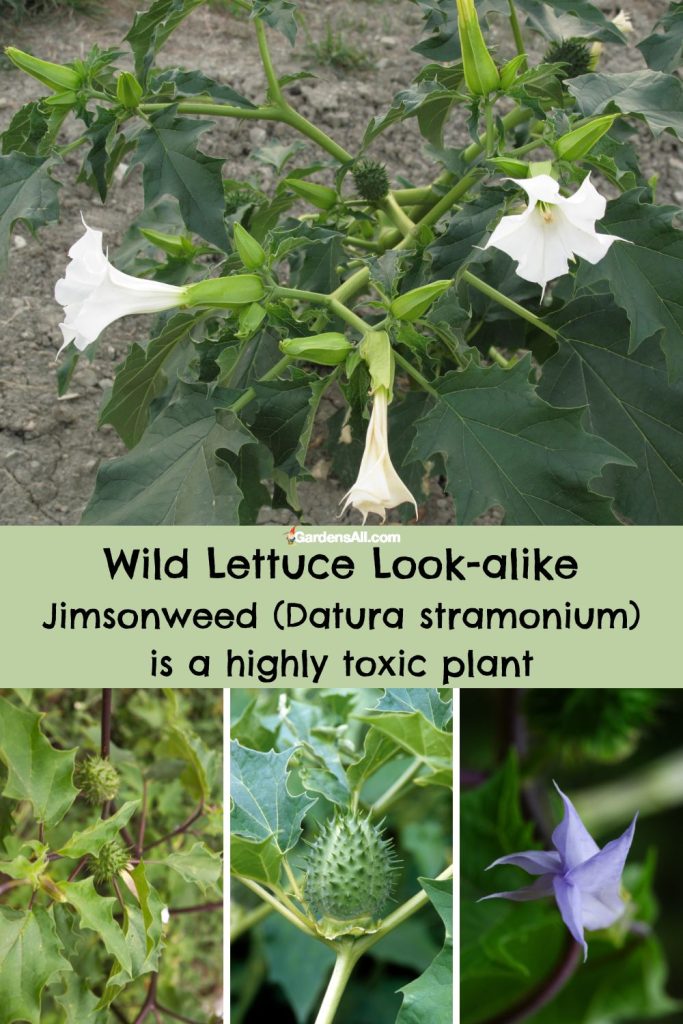
Jimsonweed (Datura stramonium)
A tall, branching plant, Jimsonweed (Datura stramonium) has with large white or purple trumpet-shaped flowers that bloom in the summer. The leaves are also large and have irregular lobes.
Jimsonweed can be mistaken for wild lettuce because of its similar leaves and size. However, all parts of the plant, especially the seeds, are highly toxic and can cause hallucinations, delirium, and death if ingested.
Cautionary Words
It is important to properly identify any plant before consuming it, as mistaking a poisonous plant for an edible one can have serious consequences. If you are unsure about the identity of a plant, it is best to consult a field guide or an expert in plant identification.
What Are Some Non-Poisonous Wild Lettuce Look Alike Plants?
There are a number of non-poisonous plants that resemble wild lettuce enough to be mistaken for it by the untrained eye.
4 Non-poisonous Wild Lettuce Look-alikes

Chicory (Cichorium intybus)
A popular blue flowers with deeply lobed and toothed, chicory is commonly found in fields and along roadsides.
Chicory can be mistaken for wild lettuce because of its similar leaves and size. However, it has a more upright growth habit than some wild lettuce and its leaves have a slightly different shape.

Common Mullein (Verbascum thapsus)
Common mullein is a tall, biennial plant with fuzzy leaves and a tall, upright stem that can grow up to six feet tall. The leaves are oval-shaped, fuzzy, and can be up to a foot long.
This plant can be mistaken for wild lettuce because of its similar size and leaves. However, it does not have the milky sap that wild lettuce has and its flowers are yellow.

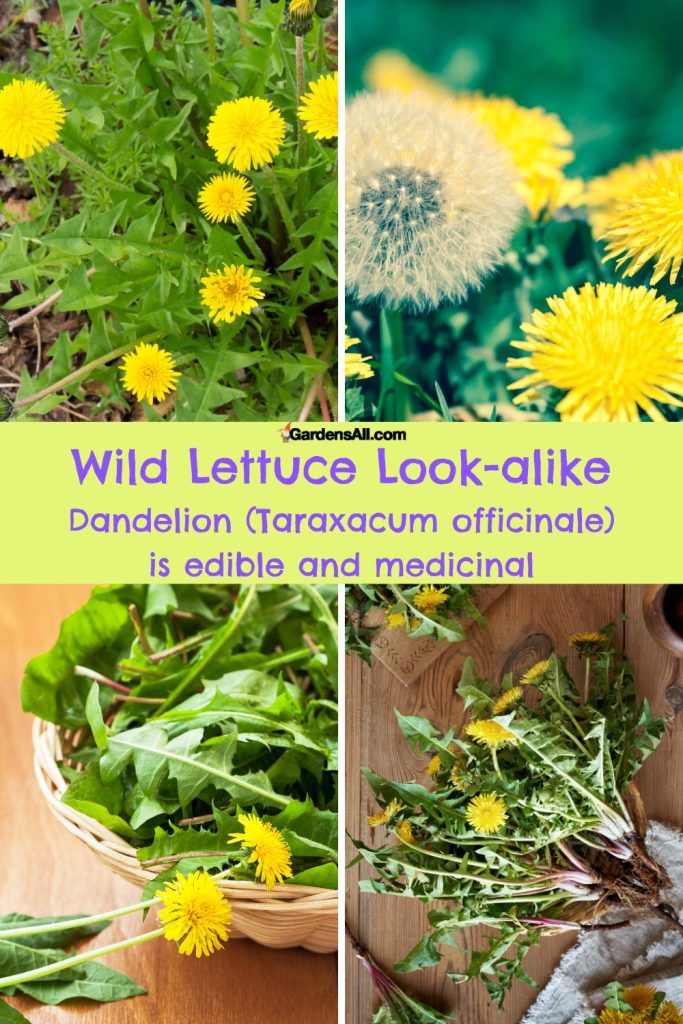
Dandelion (Taraxacum officinale)
One of our favorite wild edible plants is dandelion. It’s a common weed found in lawns and fields, with bright yellow flowers and deeply lobed and toothed leaves.
Dandelion can be mistaken for wild lettuce because of its similar leaves and size. The dandelion stems also have the milky latex sap that wild lettuce has, but the edible dandelion flowers are bright yellow.
We love dandelion and are growing dandelion on purpose! You can read about the many uses and benefits of dandelion here.
Plantain (Plantago spp)
Plantain is can be mistaken for the non-lobed Lactuca virosa variety of wild lettuce, especially in the early stages of growth where the plantain leaves are less defined. You an read more on Plantago Major and Minor here.

In Summary
It is important to properly identify any plant before consuming it, as mistaking a poisonous plant for an edible one can have serious consequences. If you are unsure about the identity of a plant, it is best to consult a field guide or an expert in plant identification.

I’m LeAura Alderson, a garden, herb and plant enthusiast with a passion for discovering the many edible and medicinal benefits of the plants all around us, including the weeds, while transforming the land through regenerative permaculture practice. I am also a writer, editor and media publisher (now mostly retired due to replacement by AI), but which now allows more time to build our regenerative permaculture homestead farm.