

We were delighted to discover edible brassica flowers!
This year we’ve begun devoting more garden space to flowering plants. And at least for a few weeks, we’re allowing the brassicas to show off their blooms once they start bolting.
Versatile Brassica Plants
What started off as an oversight and a delay in proper garden maintenance has evolved into a really cool discovery. We now have realized the benefits to letting our brassicas and other cruciferous vegetables proceed with bolting and producing lovely and delicious edible flowers.
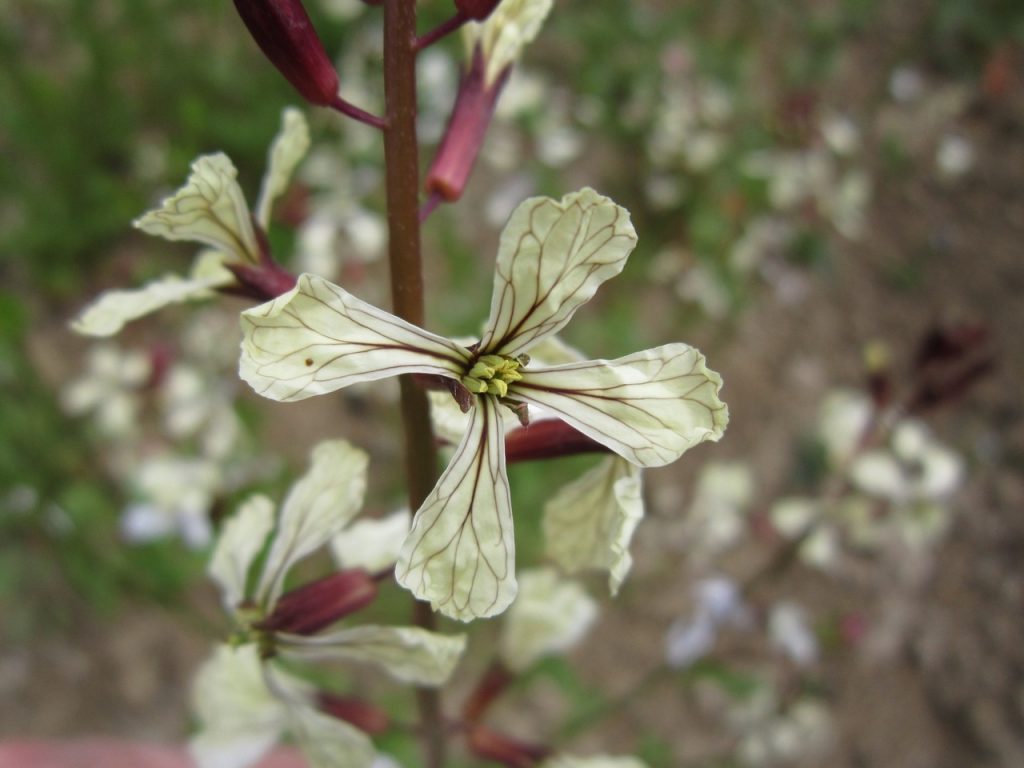
The arugula blossoms, in particular, are quite tasty and attractive as a garnish or in salads, soups, pizza. Arugula blossoms go very well with different types of cheeses and balsamic flavors.
Of course, when we eat broccoli or cauliflower or brussel sprouts, we are indeed eating the premature florets, the flowers, before they open up. We were surprised that when we harvested the yellow broccoli flowers, they were quite pleasant tasting.
The flowers are all four-petaled, cross-shaped, which is where the name, cruciferae — after the family name — originates. Some brassica flowers are dainty and yellow, while others like that of the arugula are quite eye-catching.
The Biodynamic Garden – Veggies, Blossoms and Leaves
For many gardeners, when the brassicas and other cruciferous plants start to bolt, it’s game over and we look to replace these cool weather loving plants with the summer varieties. Until I fell behind and decided to experiment by sampling several brassica blossoms and shoots only to find they were entirely edible and quite tasty.
So here’s the thing. We no longer need to remove these cool weather crops immediately upon their coming into flower. In fact, we can continue to harvest the topmost parts (the leaves also) for several weeks into the warm season.
An added bonus is that there are lots of little flowers that attract a host of pollinators who help to fertilize the new crops coming on. The visitors also include the imported white cabbage butterfly, Pieris rapae, whose larvae feed voraciously on all types of brassicas.
We’re hopeful that the brassicas kept over the flowering stage will act as decoys in a biodynamic gardening kind of way. Time will tell.
UPDATE: Some of the white butterflies, AKA, cabbage moths are still laying eggs on our kale, so we can’t say for sure whether leaving spent brassicas to flower has helped reduce the number of cabbage worm incidents.
However, even if it hasn’t helped, we still enjoy seeing the splashes of cheerful flower colors, The pollinators are well provided for and we enjoy, and clipping a few to enjoy in our salads.
To protect our brassicas from the dreaded cabbage worm, we deploy organic pest control methods.
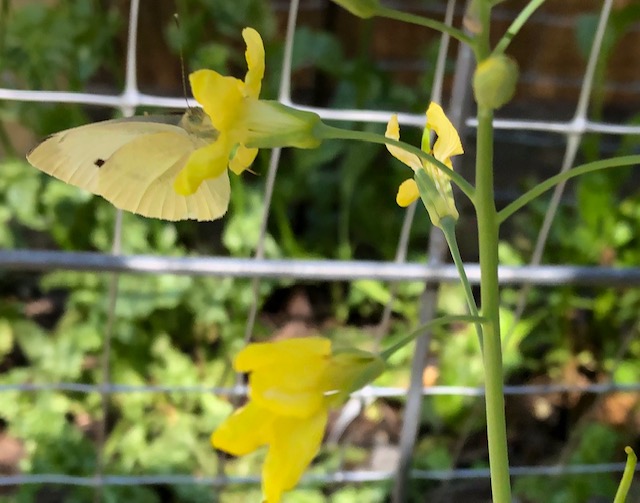
Such blossoms add color, variety, and attract pollinators. Many are specified as companion plants, such as marigolds, which deter certain pests of tomatoes, cabbage, cucumbers, and numerous other crops The built-in reference guide in The Garden Planner does a great job of listing companion plants best suited for each other.
Edible Flowers and More
The bonus feature of having a flower-spangled garden, with bees, hummingbirds, and butterflies fluttering about is that many of these have edible flowers. More than that, there are many edible leaves of vegetable and fruit, as we as edible tree leaves!
So enjoy the broccoli blossoms and that of other brassicas. We’re chopping the greens up into daily salads and also steaming or roasting them.
We sure hope your garden ventures are faring well and that you’re enjoying the best home grown harvests ever. Please, do let us know how your Little Eden is growing for you. Pics, comments, questions and tips are always welcome.
Learning as we grow, and growing as we learn!

I’m LeAura Alderson, a garden, herb and plant enthusiast with a passion for discovering the many edible and medicinal benefits of the plants all around us, including the weeds, while transforming the land through regenerative permaculture practice. I am also a writer, editor and media publisher (now mostly retired due to replacement by AI), but which now allows more time to build our regenerative permaculture homestead farm.