

Asparagus Grows in USDA Hardiness Zones 3-8
Humans have been growing asparagus spears for over 2,000 years, and for good reason. It’s a perennial vegetable that can produce for up to 20 years or so! Now THAT’S a great reason to dedicate a “forever asparagus bed” to the amazing asparagus plants, (and presuming you and your family also enjoy eating it)!
Delicious, nutritious and versatile, this wonderful perennial vegetable takes awhile to grow up to its full capacity. However, once it does it will serve your family for many years to come.
However, if you’re interested in growing asparagus commercially, as a market gardener or farmer, it’s recommended to clear your asparagus fields after 10 years. Apparently, the yield begins to decline after a decade of production and as the plant roots grow more dense, they become more susceptible to fungal pathogens such as Fusarium spp., which cause the roots to rot and can spread to crown rot.[1]https://www.ncbi.nlm.nih.gov/pmc/articles/PMC7022954/#B19-metabolites-10-00017
Asparagus can produce for 15-30 years in the home garden, and for 10 years as a commercial crop.
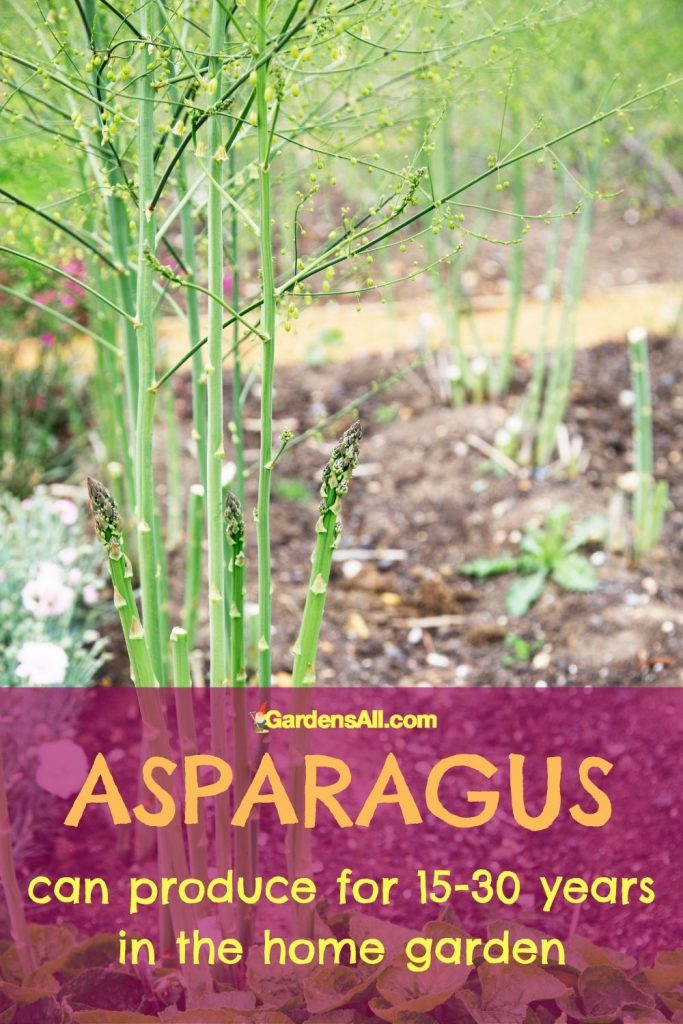
Asparagus can produce for 15-30 years in the home garden, and for 10 years as a commercial crop.
GROWING ASPARAGUS
How Long Does it Take Asparagus to Grow?
It takes four years for asparagus to reach its full production capacity. However, you can reduce the time to fuller harvests by planting one year old crowns or two year old male crowns. [#affiliatelink]
Until then, you can harvest lightly beginning in the second year. Once in full production, one asparagus plant can produce up to a half pound per week for up to eight weeks.
We’re growing asparagus and just added a second asparagus bed this year, (2021). It turns out we didn’t have nearly enough to satisfy our family’s love of this unique vegetable. And given the long-lived production plus high nutrients, it’s a no-brainer to give this perennial vegetable a permanent home in our little garden.
If your family wants to munch on asparagus regularly in season, you’ll want to plant around 10 plants per family member.
Sure, you have to be patient when growing asparagus, but it’s so worth it for this perennial vegetable will continue producing for an average of 20 years. Plant it once, practice a little patience then reap the rewards for many years to come.
It takes 4 years for asparagus to reach its full production capacity. For best results, plant 2 year old crowns.
Favorite Varieties of Asparagus
- Jersey Giant – hardiest and highly productive medium to large spears and is especially good asparagus for colder climates
- Jersey Knight – highest quality yield of the Jersey asparagus varieties and highly disease resistant
- Mary Washington [#affiliatelink] – purple tinged tips with heavy yields; long lasting tight buds
- Sweet Purple [#affiliatelink]- sweet deep burgundy spears with 20% higher sugar content especially good for raw salads or as crudités
When to Plant Asparagus
In our NC zone 7a, we plant asparagus in winter, from mid-January to mid-March, while the plants are dormant.
Plant Asparagus in Winter to Early Spring
Regardless of your growing zone, a good rule of thumb is to plant asparagus roots in late winter or early spring as soon as the soil is not frozen and is dry enough to dig an 8 inches deep by 12 inches wide trench.
Where to Plant Asparagus
- In sandy soil, 8″ deep x 12″ wide rows
- Raised beds or rows with good drainage and free of perennial weeds
- Full sun (partial shade tolerant)
Raised garden beds work well for asparagus, for they thrive on deep, rich, well-drained soil. We’re growing asparagus in our hugelkultur bed as well as a wood frame raised garden bed. Raised beds can also facilitate earlier planting time without having to wait for the idea soil temperature and structure.
While asparagus can tolerate partial shade, you’ll get the best production and healthiest growth if you can plant asparagus in full sun. For best results, plant asparagus in sandy soils that have been well amended.
How to Plant Asparagus in 8 Steps
Plant asparagus from the roots of male plants. For vegetable gardening, plant only male asparagus plants as they are more productive in food value.
The female plants add ornamental value with their bright red berries that can add color interest and fern texture to edible landscapes and foodscaping. However the asparagus female plants do not produce as much in edible spears because they use up a lot of their energy making beautiful — but inedible — berries.
If asparagus roots (called crowns) are dry, soak them in water at least 30 minutes before planting. For best results, add recommended amendments.
We like to put mix the compost together with the amendments in a 5 gallon bucket or wheelbarrow, then shovel (or scatter from the bucket) the amendments into the bottom of the trench.
- SOAK asparagus crowns if dry
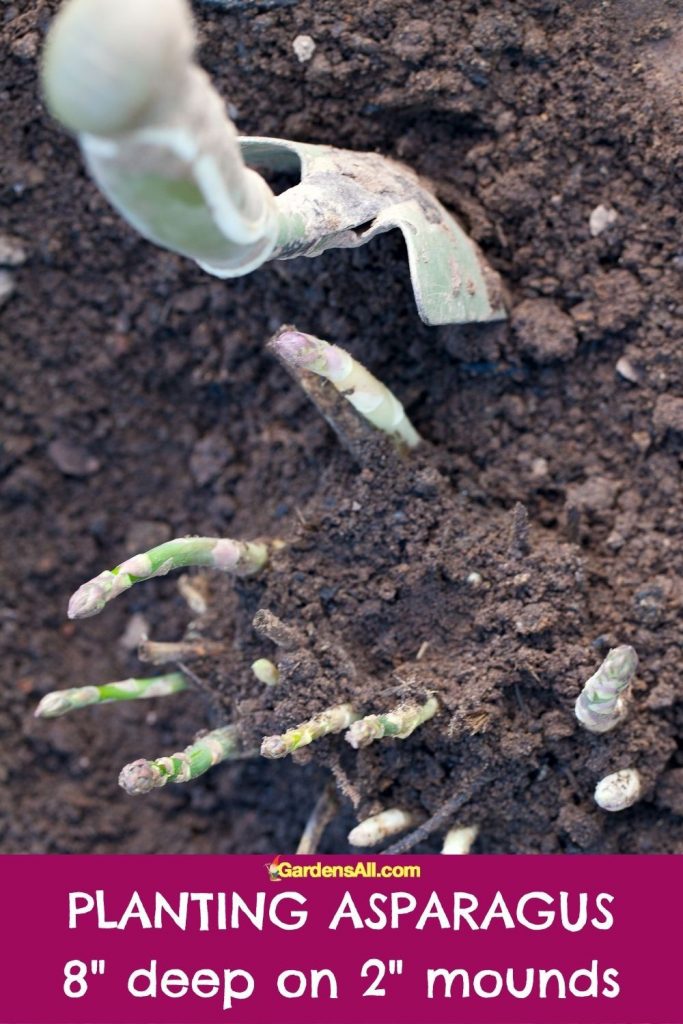
- DIG a 8″ deep by 12″ wide trench in row or raised bed
- MIX compost with soil amendments as indicated below
- SHOVEL amended compost mixture into 3-4″ mounds at bottom of trench at 12″ intervals
- PLANT crowns by placing an asparagus root upright on each mound at about 2″ below ground level or what will be the top of your raised bed or row.
- TOP with 2 inches of soil that’s roughly 70% compost mixed with 30% amendments to 2″ over the top of asparagus crowns
- WATER your new bed
- MULCH is optional and has its pros and cons.
If you choose choose mulch to help with weed control, use good organic mulch such as the deep mulch gardening method. We use free wood chips for our garden, and prefer a mulched garden for a cleaner pathways and fewer weeds, however the downside of mulch is that it gives more places for pests to hide and reproduce.
As with many things in the garden, there’s no one right way and sometimes we have to choose the one with fewer negatives, or that which suits our preferences and circumstance.

Soil Amendments for Planting Asparagus
- Organic compost
- Test soil pH a minimum of 7 days prior to planting;
- ideal pH is 6.5
- add lime if soil pH is below 6.0
- Add 2” of compost in the trench along with lime and bone meal, (according to package instructions)
- Mix backfill soil with ~30% compost
When to Fertilize Asparagus
Fertilize your asparagus plant in mid spring with two to three pounds of 10-10-10 fertilizer [#affiliatelink] or organic compost and amendments per 100 square feet.
When to Water Asparagus
Asparagus is happiest with moist soil and a weekly deep watering. Asparagus roots grow down to ten feet deep, so deep watering helps to insure that all of the roots are being watered.
Stages of Growing Asparagus
- GERMINATION: 21 days or more
- TRANSPLANTING: ~3.5 weeks to reach 2″ for transplanting seedlings to the garden
- MATURITY:
- ~3.5 years
- Can produce for 20 years on average after year 4
- YIELD (average):
- ½ pound / week x 8 weeks per season from years 4-20
- 4 pounds of asparagus per plant per season
- 64 pounds of produce for the life of the plant for 16 years of optimal production.
Common Asparagus Pests
- Beetles –
- Asparagus beetle
- Spotted asparagus beetle
- Slugs
- Snails
- Worms –
- Armyworms
- Cutworms
Apply beneficial nematodes in the fall to help set protect your asparagus come spring. Beneficial nematodes can overwinter deep in the soil and surface hungry and looking to devour asparagus beetles and other pests.
Common Asparagus Disease
- Cercospora
- Fusarium Wilt
- Gray mold
- Rot –
- crown rot
- root rot
- Rust / needle blight
When to Harvest Asparagus?
- HARVESTING ASPARAGUS:
- Late April-July
- Harvest asparagus spears at six to eight inches tall
- Young plants produce for 2-3 weeks
- Mature plants produce for 6-8 weeks
- Harvest Asparagus:
- Harvest sparsely in year 1, at less than 20% of spears, which helps stimulate more growth.
- Full harvesting begins in 3rd year, clipping at the base of plant.
- Harvest 7-9″ stems every 2-4 days, including skinny spears.
- Leave 2-3 spears minimum on each plant during growing season.
- Late April-July
- PRUNING: Cut back asparagus ferns after foliage dies back fall