

Metal Hummingbird Feeders Are Lovely, but Potentially Harmful
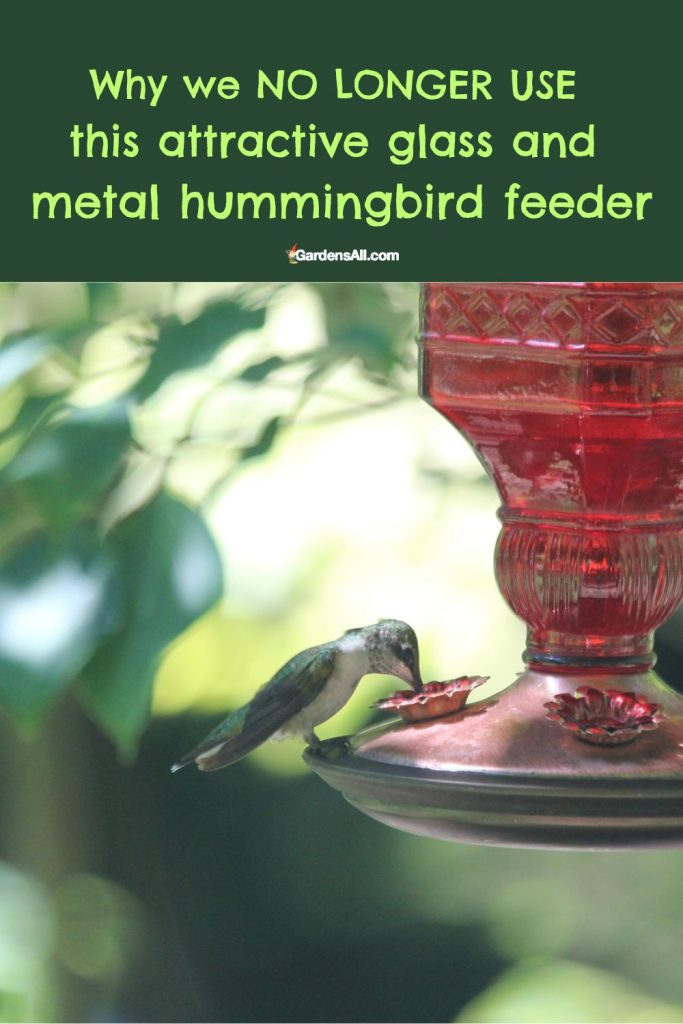
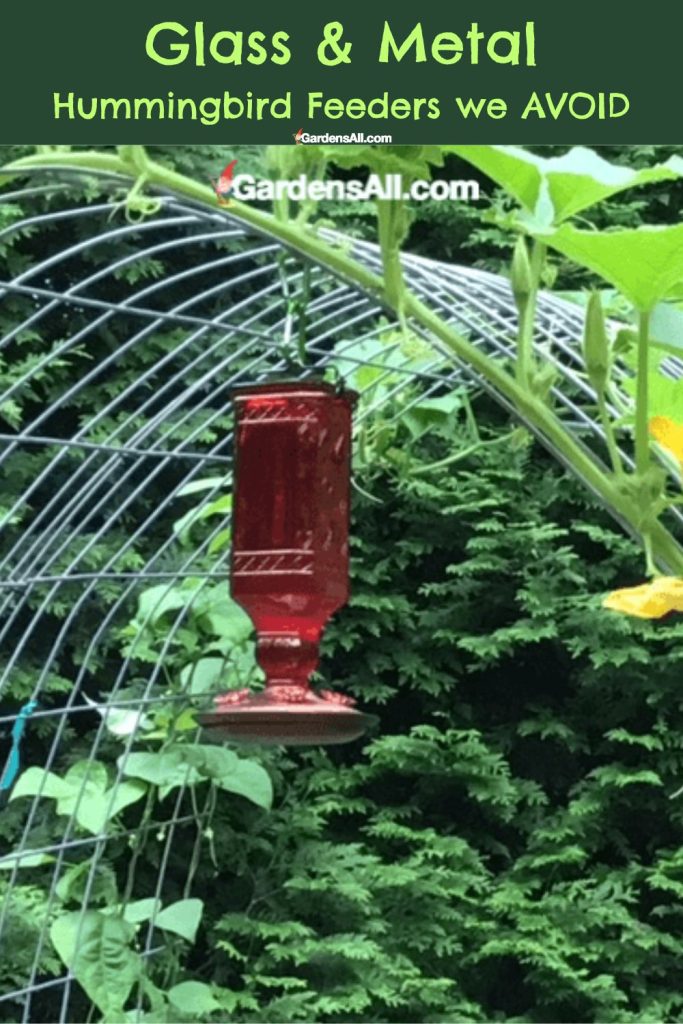
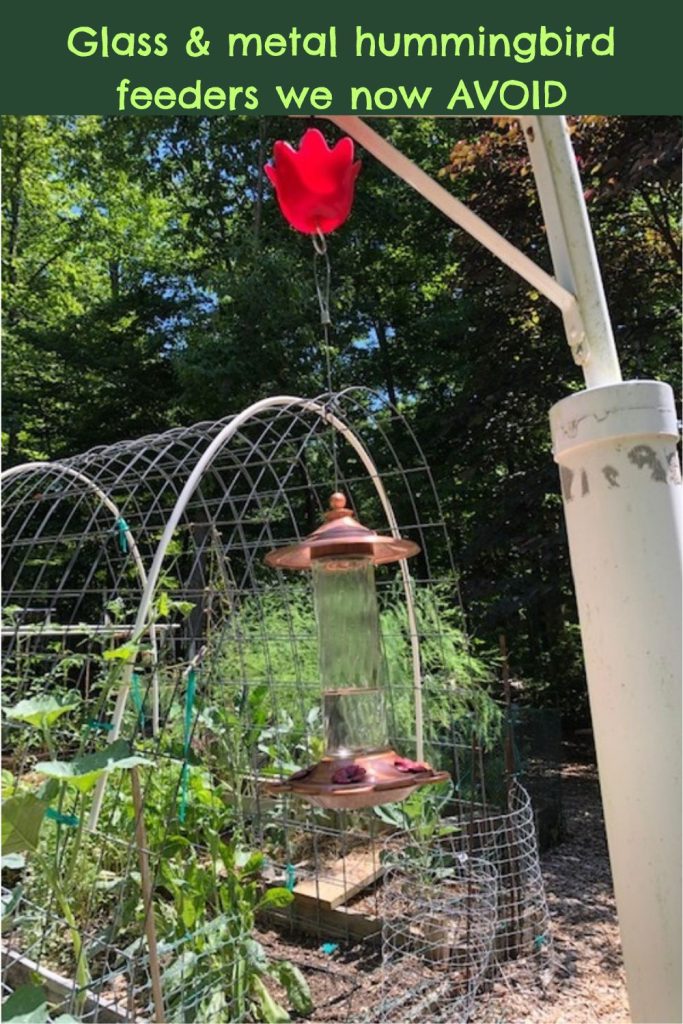
We’ve been using the attractive glass and copper hummingbird feeders, until now. We’ve changed them out just this weekend after discovering an issue that caused us to research whether metal hummingbird feeders are safe for our beloved hummers.
We’d even written another article about our favorite hummingbird feeders and why we liked the glass and metal hummingbird feeders over the other ones. We’ll be updating that one next with this update so that others can also be better informed as we now are.
The Joy of Feeding Hummingbirds
Hummingbirds are among the most admired species in the bird kingdom, known for their dazzling colors, rapid wing movement, and seemingly tireless energy. Bird enthusiasts often seek to attract these avian gems to their yards with feeders designed specifically for them.
While all who feed hummingbirds are well intended nature lovers, not all realize the hazards of metal hummingbird feeders. Now that we know better, we’re sharing with you and hope that you will pass it on too.
Besides the joys of springtime for gardening and planting food to grow, is the equal joy at our first hummingbird sighting.
Problems With Metal Hummingbird Feeders
While there are numerous feeder designs on the market, metal hummingbird feeders are one type that should be avoided. In this article, we will discuss the reasons why metal hummingbird feeders might not be the best choice for these remarkable creatures.
Risk of Injury
Hummingbirds are small and delicate, and their high-speed flying nature can easily lead to injuries. Metal feeders have the potential to cause harm in a number of ways. For instance, sharp edges or points on the feeder could lead to cuts or abrasions. In addition, during the hot summer months, metal can heat up to temperatures that could burn a hummingbird’s tongue or feet.
We’ve rescued many birds and a few hummingbirds. One was stuck in the metal grid of a grill top when we were on vacation in Costa Rica. It was exhausted trying to escape. Fortunately, we were able to free it and allow it to rest in our hands and drink water from a bottle cap while it recovered enough to fly away.
The other we share in a YouTube video near the end of this article.
Corrosion and Toxicity
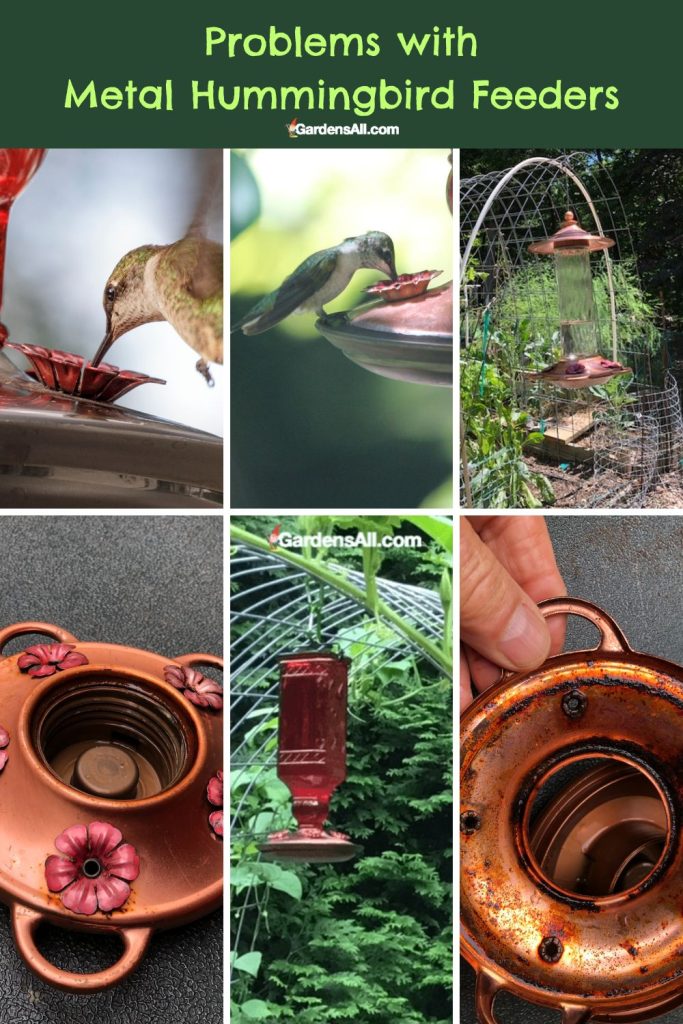
Metal feeders, particularly those not made of stainless steel or not adequately coated, are prone to rust and corrosion over time. Rusting is accelerated with contact of metal to sugar water, the common hummingbird food placed in feeders.
The worst situation is how rust can contaminate the nectar solution, which could harm the hummingbirds. Some metals can leach harmful substances when they come into contact with the sugar solution, posing a risk of poisoning the birds.[1]https://data.usgs.gov/datacatalog/data/USGS:589b6a61e4b0efcedb72d364[2]https://thegabrielfoundation.org/wp-content/uploads/2012/11/HeavyMetalToxicosis-in-Birds-LafeberVet.pdf
REFERENCE: Also reference Frederick, H., Dierenfeld, E., Irlbeck, N., and S. Dial. 2003. Analysis of nectar replacement products and a case of iron toxicosis in hummingbirds.[3]https://nagonline.net/wp-content/uploads/2014/02/03NAG_pp38-43.pdf
An early sign of this corrosion may be a slow down or stoppage of visits to your feeder. Practically speaking, who would want to drink out of a rusty metal cup?
Metal toxicity is the greatest concern when using metal hummingbird feeders.

Spoiled Food From Heat Conductivity
Metal is an excellent conductor of heat, which can be problematic for hummingbird feeders. In hot weather, the nectar solution in a metal feeder can quickly become too warm, causing it to ferment and spoil faster. Spoiled nectar can make hummingbirds sick and deter them from returning to your feeder.
Spoiled nectar can make hummingbirds sick.
Difficulty in Cleaning
Hummingbird feeders need to be cleaned regularly to prevent the growth of mold and bacteria that can harm the birds. Metal feeders can be more challenging to clean than plastic or glass ones, especially if they have complex designs with crevices and corners that can harbor bacteria while being hard to reach.
Compounding these issues, aggressive scrubbing to remove stubborn residue tends to cause scratching and damage, leading to further corrosion and rust.
Plastic hummingbird feeders tend to be easier to clean.
Lower Visibility and Attractiveness
Hummingbirds are attracted to bright colors, particularly red, which signals the presence of nectar in flowers. Metal feeders, typically in more muted tones, are less visible and attractive to hummingbirds than their brightly colored plastic or glass counterparts. This could result in fewer hummingbird visits to your feeder.
Hummingbirds are attracted to bright colored feeders, especially red or bright yellow.
Cost and Durability
The last issue on our list is how metal hummingbird feeders tend to be more expensive than plastic or glass ones. While they might be kinder to the environment for those seeking to use less plastic, in this case, the potential harm to the hummers is the greater concern, especially since plastic recycling is so readily available these days.
Metal hummingbird feeders are typically more expensive, but may not last as long.
Bird Rescue Stories
We love birds and have performed many bird rescues over the years. Most of those were birds hitting our windows, so for that we’ve tried bird deflectors of various kinds.
If you love bird rescue stories, you may also enjoy this cardinal rescue as well as this bird in a hand story of a kinglet and a hawk.
And here is one of our favorites:
Hummingbird Rescue
In Summary
While metal hummingbird feeders may seem like an appealing choice due to their aesthetic appeal and potential durability, the potential risks and disadvantages associated with them make other materials like plastic, ceramic, and glass a safer and more practical choice.
As bird enthusiasts, our primary goal is to create a safe and welcoming environment for our fine feathered friends, and this includes selecting the appropriate feeder design and material.

I’m LeAura Alderson, a garden, herb and plant enthusiast with a passion for discovering the many edible and medicinal benefits of the plants all around us, including the weeds, while transforming the land through regenerative permaculture practice. I am also a writer, editor and media publisher (now mostly retired due to replacement by AI), but which now allows more time to build our regenerative permaculture homestead farm.
References