
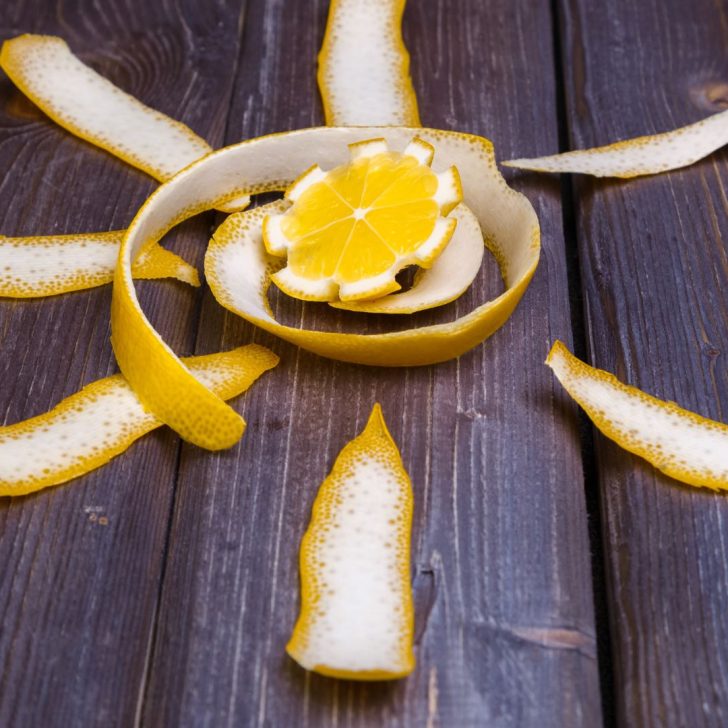
Did you know that not only can you actually eat lemon peels, but that it’s really good for you? There are also many health benefits of lemon peels — as well as other practical uses — to make and enjoy whenever you’re using fresh lemons.
In my family, for many years now, we start each morning with a full glass of water with a squeeze of a fresh lemon wedge. If we’re out of fresh lemons, we use a few squirts of organic lemon juice. (Then comes the coffee)! ☕️
One morning, after eating the fruit from the lemon wedge left in my glass, I started to toss the peel in the compost as usual. But then I wondered about the health benefits of lemon peels.
So I looked it up and was delighted to discover that, yes, you can eat them, and there are indeed a number of wonderful health benefits of lemon peels (and the seeds)!
WOW…. 🤦🏼♀️ [facepalm]! So… ALL THESE YEARS… we’ve been throwing away potent nutrients?!? It’s almost like opening a vitamin bottle and throwing away a few vitamin pills each time we toss away the peel!
At least they’ve gone into making organic compost up until now, but still, to discover the health benefits of lemon peels, expands our awareness and application of more uses for lemon peels!

Edible Lemon Peels!
We use lemon zest and lemon peel in cooking, salad dressings, tea and tea blends, so I wondered: can you eat lemon peels, and if so what are the benefits of lemon peels?
Part of the year we can use our own homegrown organic dwarf Meyer lemons that we grow indoors in winter and outdoors from spring through part of fall.
These are our favorite for eating the peels raw, as they’re thinner, softer and less bitter. After my water glass is empty, I tip the glass to let the lemon wedge drop into my mouth, fruit, peel, seeds and all. When it’s chewed up that way, as a whole, the fruit counters the bitterness of the peel some and together it’s a well rounded “vitamin peel” that I’ve actually grown to enjoy.
You rarely see Meyer lemons at our grocery stores, but this past year in last fall, Costco was actually selling bags of them, so hoping they’ll do that again next season, for our two little trees can’t keep up with our demand.
But if you can’t tolerate them raw, there are other ways to enjoy the health benefits of lemon peels that we’ll get into.
What Are the Health Benefits of Lemon Peels?
There are many benefits of lemon peels thanks to significant amounts of vitamins, minerals, and antioxidants. They are also a good source of fiber, especially when eaten raw.

Lemon Peel Nutrients: Nutritional Comparison Between Lemon Peels and Lemon Pulp
Here is a comparison chart on the differences between Lemon Peel versus lemon pulp. As you will see, lemon peel is as — or more — nutritious than lemon pulp in the majority of nutrients.
| Nutrient | Lemon Peel (100g) | Lemon Pulp (100g) | % Difference (Peel vs. Pulp) |
|---|---|---|---|
| Calories | 47 | 29 | +162% |
| Carbohydrates | 16 g | 9.3 g | +172% |
| Protein | 1.5 g | 1.1 g | +136% |
| Total fat | 0.3 g | 0.3 g | 0% |
| Dietary fiber | 10.6 g | 2.8 g | +379% |
| Sugars | 4.17 g | 2.5 g | +167% |
| Calcium | 134 mg | 26 mg | +515% |
| Iron | 0.8 mg | 0.6 mg | +133% |
| Magnesium | 15 mg | 8 mg | +188% |
| Phosphorus | 12 mg | 16 mg | -75% |
| Potassium | 160 mg | 138 mg | +116% |
| Sodium | 6 mg | 2 mg | +300% |
| Vitamin C | 129 mg | 53 mg | +243% |
What the Percentage Difference Means
Note that the percentage difference column shows the percentage difference in nutrient content between lemon peels and lemon pulp. The positive values indicating that lemon peels have a higher content than pulp, and negative values indicating that lemon pulp has a higher content than peels.
Both the pulp and the peel of citrus fruits are valuable sources of macro and micronutrients. Their content in the peel of most of the fruits tested far exceeds their quantity in the pulp.
REFERENCE: Scientific study on the Mineral Content of the Pulp and Peel[1]https://www.ncbi.nlm.nih.gov/pmc/articles/PMC6944645/#CR11

Proven Health Benefits of Lemon Peels
- Antioxidant: Lemon peel has been proven in many studies cited throughout this article as containing powerful antioxidant / free radical scavenging properties.[2]https://www.scielo.br/j/cta/a/cgmC9fCcZJ6sZ5YLv6FBQdk/
- Arthritis: Studies on ethanolic extracts of lemon fruit peel, lemon leaf and hot pepper leaf effectively controlled arthritis development.[3]https://www.sciencedirect.com/science/article/pii/S2090989614000071
- Bone Health: Lemon peels contain approximately 32% more calcium than the pulp.[4]https://www.ncbi.nlm.nih.gov/pmc/articles/PMC6944645/#CR11
- Cancer: Numerous studies reveal that antioxidant flavonoids in lemon peels can help to reduce the risk of cancer by protecting cells from damage.[5]https://www.sciencedirect.com/science/article/abs/pii/S0944711317301009?via%3Dihub[6]https://academic.oup.com/cdn/article/4/5/nzaa025/5804723[7]https://pubmed.ncbi.nlm.nih.gov/27510009/[8]https://www.ncbi.nlm.nih.gov/pmc/articles/PMC4121996/
- Cholesterol: Lemon peel pith, skin and pectin all serve to lower plasma and liver cholesterol.[9]https://pubmed.ncbi.nlm.nih.gov/11990004/
- Digestive health: Lemon peels (and grapefruit peels even more so), contain soluble fiber which can aid digestion and help alleviate constipation.[10]https://www.ncbi.nlm.nih.gov/pmc/articles/PMC7912126/[11]https://www.ncbi.nlm.nih.gov/pmc/articles/PMC9171401/[12]https://www.scielo.br/j/cta/a/cgmC9fCcZJ6sZ5YLv6FBQdk/
- Heart health: Lemon peels and lemon peel extract helps to reduce inhibiting cellular oxidative stress that can lead to heart disease.[13]https://www.ncbi.nlm.nih.gov/pmc/articles/PMC8131012/
- Inflammation: The antioxidants in lemon peels can help to reduce inflammation, which is at the root cause of many diseases.[14]https://www.scielo.br/j/cta/a/cgmC9fCcZJ6sZ5YLv6FBQdk/
- Immune system: The high levels of vitamin C and antioxidants in lemon peels help strengthen the immune system, protect against illness and fight off infection.
- Kidney Stone Prevention: A laboratory study involving rats revealed that lemon peel is effective in curing kidney stone disease and also can be used to prevent the disease and its recurrence.[15]https://pubmed.ncbi.nlm.nih.gov/26452728/
- Liver – Fatty Liver: Citrus peel powder is proven to significantly balance gut microbiota composition in lab rats[16]https://www.ncbi.nlm.nih.gov/pmc/articles/PMC8701357/
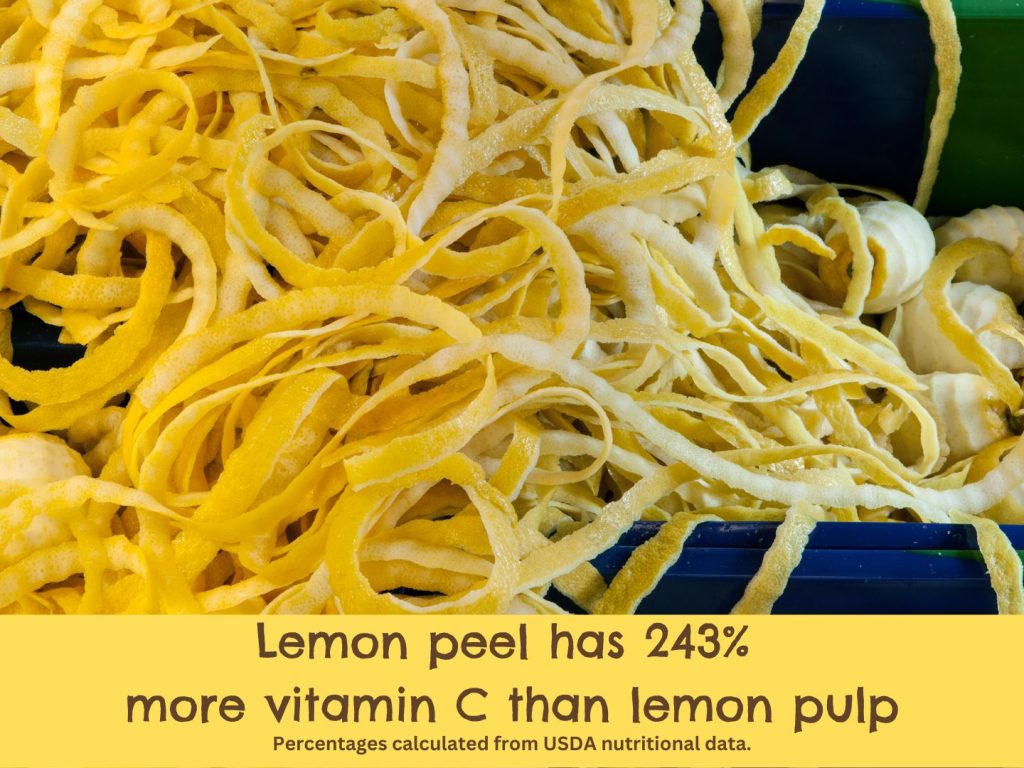
- Nutrient rich: Lemon peels are high in nutrients such as vitamin C, fiber, and various antioxidants. In fact, from the chart above, you can see that lemon peel has 243% more vitamin C than lemon pulp and 515% more calcium.[17]https://www.ncbi.nlm.nih.gov/pmc/articles/PMC6944645/
- Oral health: Lemon peels have natural antimicrobial and antibacterial properties which can help to combat bad breath, tooth decay and help prevent oral disease.[18]https://www.ncbi.nlm.nih.gov/pmc/articles/PMC3551112/
- Skin health: The antioxidants found in lemon peels can help to protect the skin from damage caused by free radicals, including:
- Weight loss: Some research suggests that compounds found in lemon peels may help to promote weight loss by increasing metabolism and reducing fat accumulation.[20]https://pubmed.ncbi.nlm.nih.gov/36558098/
Lemon peel extract exhibited better free radical scavenging abilities than vitamin C in studies on oxidative stress to heart and skin.
REFERENCE: Scientific studies on lemon peel benefits to heart and skin[21]https://www.ncbi.nlm.nih.gov/pmc/articles/PMC8131012/[22]https://www.ncbi.nlm.nih.gov/pmc/articles/PMC7874231/
Lemon Peels – Treasure, not Trash
Overall, incorporating lemon peels into your diet can offer a range of potential health benefits, but of course, if you have any allergies or medical conditions, always consult with your health advisors first.
Whenever using lemon peels for consumption, it’s best to use organic lemons, however, if not available, thoroughly wash the peels to help minimize exposure to pesticides or other harmful chemicals.
Lemon peels are a great way to add flavor, nutrients, and antioxidants to your diet. There are many ways to use them, so be creative and experiment!
You will find more on how to use lemon peels here. Oh… and on the topic of lemon… you may also enjoy this article on uses for lemon balm, one of our favorite herbs to grow for tea, tinctures and cooking.
Benefits of Lemon Peels and Eating the Whole Lemon!
Prefer a visual explanation and demonstration? This is helpful. Just 8:32 minutes (or less on 1.5x speed).

I’m LeAura Alderson, a garden, herb and plant enthusiast with a passion for discovering the many edible and medicinal benefits of the plants all around us, including the weeds, while transforming the land through regenerative permaculture practice. I am also a writer, editor and media publisher (now mostly retired due to replacement by AI), but which now allows more time to build our regenerative permaculture homestead farm.
References