


Horticulture Therapy Comes With Many Health Benefits
Yep. It can be that simple. Not one and done but more as a regular practice. Studies show that garden therapy — AKA horticulture therapy — can be a most beneficial solution for stress relief, anxiety and even depression. In fact, gardeners tend to be healthier, happier and live longer.
So it seems that it’s more than just ready access to the healthiest food on the planet in the form of garden-to-table fresh foods.
If you’re a gardener, then you already know about garden therapy benefits. Chances are your garden is already your happy place. Of course there are always exceptions to every generality, but given the natural course of life, studies show that gardeners do tend to live longer, healthier and happier lives.
Gardeners tend to be healthier, happier and live longer. The garden is their happy place.

Gardening Therapy Helps Us Get Through Covid-19
More people are considering gardening now than ever before. Not just for food but also for the peace of mind that comes from gardening and being out in nature. Coleman reflects on that in this brief video from our cattle panel greenhouse.
Gardening Therapy Performs Better than Occupational Therapy
A 2015 study revealed that Horticulture Therapy (HT)—aka gardening—got better results than standard Occupational Therapy (OT). Gardening decreased cortisol levels and depressive symptoms, more than the programs in which the OT group participated.[1]https://www.ncbi.nlm.nih.gov/pubmed/26030115
Had a rough day? Head to the Garden! Gardening is a healthy, therapeutic exercise that’s good for body, mind and soul.
Gardening provides stress relief, lowers cortisol (stress hormone) and cultivates a more positive outlook.
~2015 Study on alternative therapies in health and medicine

When You Don’t Have a Garden
We sometimes hear from folks who used to garden, but moved to a smaller home with less—or no—space. These displaced gardeners talk about how much they miss gardening. Others talk about fond memories being children in the garden with their parents or grandparents.
If you’re one of those who longs to garden, but have limited space, you could consider patio or balcony gardening. These days you can find all kinds of garden planters and plant towers good for indoor and outdoor gardening.
RELATED: Flowers for balconies and Patio Balcony Garden Ideas
Gardeners going through winter gardening withdrawals, make do by tending indoor plants. Even growing seedlings, sprouts and things like microgreens, provide gardening therapy that lifts the spirits.
One community Planting for Retirement community member, Becky Craft, is filling up her greenhouse with seed starts. In winter, she’s counting the days to spring, but meanwhile gets her “dirt fix” in the greenhouse.
If you want to start small with a greenhouse and are able to put in a little work you can make your own cattle panel greenhouse fairly simply.
I’ve gotta have my dirt fix every day… the smell of dirt… one of my favorite I’m a country gal to the bone.
~Becky Craft, market gardener
Gardeners are Healthier and Happier
Beyond gardening therapy from the soil, exercise, fresh air and nature, there’s the nutrition factor if you’re also growing food. Fruit and vegetable gardeners are likely to be healthier because of a steady supply of the freshest possible food on the planet. Certainly that’s one of the most important benefits of gardening. Others enjoy gardening for exercise and garden therapy for reducing stress, anxiety and depression.
It’s great that scientific and clinical studies are proving what gardeners already know: there are many more benefits to gardening than the obvious ready access to the freshest, healthiest foods possible.
Gardening is therapy. Even when we can’t be tending a garden, caring for indoor plants nurtures us as much as it nurtures them.
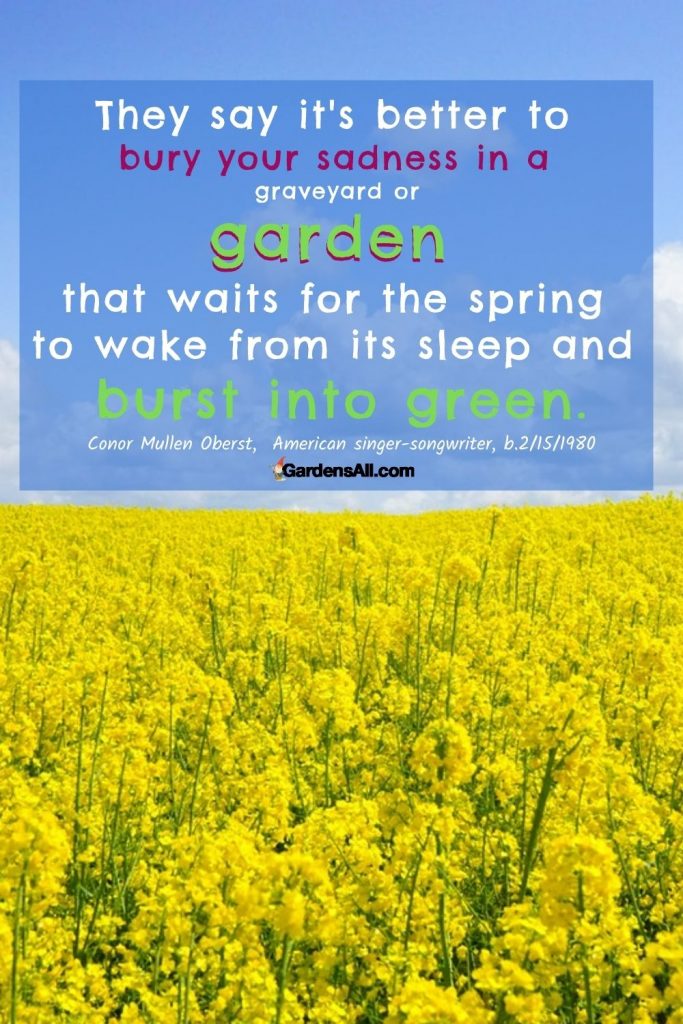
“They say it’s better to bury your sadness in a graveyard or garden that waits for the spring to wake from its sleep and burst into green.”
~Conor Mullen Oberst, American singer-songwriter, b.2/15/1980
Antidepressants in Your Garden Soil
Scientist have discovered a natural antidepressant in soil responsible for elevating serotonin, your happy hormone. These happy soil critters are microbes called called Mycobacterium vaccae, and have been found to mirror the effect on neurons that drugs like Prozac provide.
YES! They work as well as drugs but without the nasty side effects.
Besides making you happier and improving mental health, these antidepressant microbes boost your immune system and there may be more. Studies are underway on Mycobacterium for possible benefits to improving cognitive function and diseases like Crohn’s disease and rheumatoid arthritis.[2]https://www.gardeningknowhow.com/garden-how-to/soil-fertilizers/antidepressant-microbes-soil.htm
The Health Benefits of Gardening
- Gut microbiome is improved through contact with the soil and with organic garden fresh foods.[3]https://www.ncbi.nlm.nih.gov/pmc/articles/PMC6780873/
- Healthier diet[4]https://www.ncbi.nlm.nih.gov/pubmed/21680931
- Reduces stress[5]https://www.ncbi.nlm.nih.gov/pubmed/20522508
- Reduces depression[6]https://www.ncbi.nlm.nih.gov/pubmed/19999748
- More positive outlook[7]https://greatist.com/happiness/garden-improve-mental-health
- Provides exercise and cultivates an active outdoor lifestyle