
You can create a bird sanctuary for insectivorous birds that eat mosquitoes for natural pest control in the garden. From the trees and shrubs they inhabit, to the bugs they enjoy eating, with just a few tweaks you can roll out the welcome mat and they may come to stay awhile.
While some birds can be a nuisance in the garden, birds are an essential part of a healthy garden ecosystem. We enjoy feeding birds in winter. Not only is it pleasurable to bird watch the local bird community from our window, but it’s also nice to provide a good food source when food is scarce.
However, at the first sign of spring insects and green sprouts, we mostly take the feeders down. We don’t want the birds to get dependent on being fed and forget how to be birds foraging. In fact…
We need the birds to do what they do best: eat insects!
It’s the birds that keep our insect population under control. Now… keeping them away from the berries we don’t want them to eat… that’s a challenge with other solutions, including CD Suncatchers and what’s worked best for our blueberry patch. See how to growing blueberries.
Which birds eat bugs?
Birds that Eat Mosquitoes and Bugs
Excerpted from article by Kathy LaLiberte on Gardeners.com
Here we’ve curated a list of birds that eat bugs. Some of these may not be available in your area, so focus on those that are.
- Barn swallows: flying insects, such as mosquitoes, flies, flying ants and dragonflies[1]https://sciencing.com/birds-eat-mosquitoes-6620996.html
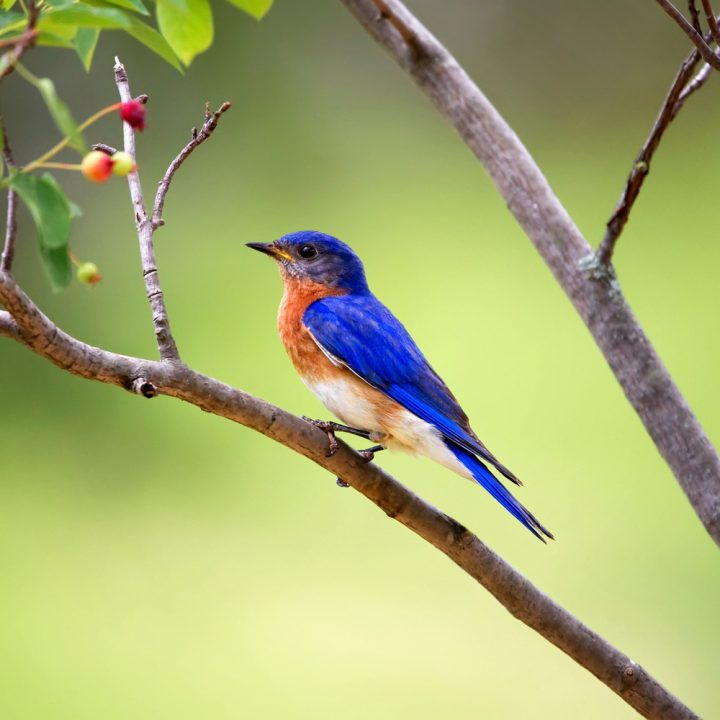
- Bluebirds: grasshoppers, crickets, beetles, larvae, moths
- Cardinals: beetles, grasshoppers, leafhoppers, stink bugs, snails
- Chickadees: aphids, whitefly, scale, caterpillars, ants, earwigs
- Eastern phoebes: wasps, beetles, dragonflies, butterflies, moths, flies, midges, cicadas, spiders, ticks, mosquitoes millipedes, as well as occasional small fruits or seeds.
- Grackles: eat fleas!
- Grosbeaks: larvae, caterpillars, beetles
- House wrens: mosquitoes, spiders, beetles, grasshoppers, crickets, and caterpillars.
- Hummingbirds: small beetles, true bugs, weevils, flies, gnats, mosquitoes, aphids, mites, leafhoppers, flying ants, parasitic wasps, and spiders[2]https://wildbirdsonline.com/blogs/news/hummingbirds-eating-insects
- Nighthawks: eat mosquitoes, queen ants, wasps, beetles, moths, mayflies, flies, crickets, grasshoppers, other insects, and a small amount of vegetation. However, they’re not inclined to neighborhoods… but perhaps for city gardens.
- Nuthatches: tree and shrub insects such as borers, caterpillars, ants and earwigs
- Oriole: caterpillars, larvae, beetles, grasshoppers, and mosquitoes
- Purple martins: beetles, mosquitoes, flies, dragonflies, and moths
- Red-eyed vireo: mosquitoes, butterfly larvae, beetles, cicadas, wasps, ants, grasshoppers, dragonflies
- Sparrows: beetles, mosquitoes, caterpillars, cutworms
- Starlings: eat fleas!
- Swallows: moths, beetles, grasshoppers, mosquitoes
- Titmice: aphids, leafhoppers, caterpillars, beetles
- Warblers: caterpillars, aphids, whitefly, mosquitoes
- Water Fowl – mosquitoes and other insects:
- ducks
- geese
- terns
- Woodpeckers – downy woodpeckers: larvae, beetles, weevils, borers, mosquitoes
SOURCES:[3]https://sciencing.com/birds-eat-mosquitoes-6620996.html [4]https://www.gardeners.com/how-to/attracting-bug-eating-birds/8103.html#

Don’t Poison the Birds!!!
When I see this list, it makes me sick to think of how we’ve used toxic pesticides in the past for the convenience of taking care of pest problems. Like so many people, we were thinking: “problem”… “solution”, and… the quicker the better.
We had a pest control company treat our home for years on an automatic subscription—but no longer. We had them inject poison to handle the carpenter bees that were tearing up the wood facia of our home. But now, if they don’t do natural methods, we won’t use their service. Instead, we…
Invite in the planet’s best natural pest control: birds!
Okay! So that’s a summary of best backyard birds for garden pest control. But if you want more, read on for a breakdown on how to attract these fine feathered garden friendlies.
As you scroll down, you’ll find the birds listed alphabetically with photos, with the full list of just the birds that eat mosquitoes at the end.
To poison insects, may also harm the birds that eat them.
Three Tips for Attracting Birds that Eat Bugs
First… you want to attract bugs the birds will eat. So…
- Don’t use chemicals, including lawn chemicals, to control insects – let the birds do their job and keep them safe without pesticides.
- Plant native species, especially those indigenous to your area.
- Don’t rake the leaves under trees as they’re home to insects birds love plus they’re an excellent source of nutrients for the trees.
SOURCE: [5]https://www.mnn.com/your-home/organic-farming-gardening/stories/how-to-attract-bug-eating-birds-to-your-garden
Invite the Birds to Move into Your Yard
Birds need the same basics that we all need. They need a place to call home that is protected from weather and predators. They need water nearby, extra food in winter and a few treats now and then.
However, there are many things you can do to help attract the best birds for your yard. What follows are some tips by breed of bird, to help you lay out the welcome mat for these insectivores to make their home near your garden.
If you have the bugs, you’ll have the birds, so long as you don’t use chemicals on them.
Barn Swallows
“Flying insects make up 99.8 percent of the swallow’s diet.”
~Flathead Audubon Society
A relative of the purple martin, barn swallows are agile acrobatic hunters of flying insects, including mosquitoes. Although, the barn swallow helps with mosquito control, they prefer larger insects for more benefit for their effort. That means they also consume some of your yard and garden pollinators, such as dragonflies.
However, while you may lose a few favorite dragonflies, barn swallows also eat flying ants and flies, in addition to mosquitoes. Not only will barn swallows eat some of the pesky flying insects, they’re also beautiful to look at and watch in flight.
Barn Swallows are low-flying precision hunters, performing delightful acrobatic flight patterns that show off their hunting skills and flying prowess. [6]https://sciencing.com/birds-eat-mosquitoes-6620996.html
So they’re worth having around.
A single Barn Swallow can consume 60 insects per hour or a whopping 850 per day.”
~Flathead Audubon Society
Barn Swallow Habitat – open habitats from fields, parks, and roadway edges to marshes, meadows, ponds, and coastal waters.
Barn Swallow Nests: Their nests are often easy to spot under the eaves or inside of sheds, barns, bridges and other structures.
Barn Swallows eat 850 insects/day, especially mosquitoes, gnats, and flying termites.
~SOURCE: