

Interview with Dr. Thomas Cowan’s Garden
Beyond his medial degree, Dr. Thomas Cowan has a tremendous wealth and breadth of knowledge on nature, nutrition and the life of plants. If you’re interested in growing for profit, you might enjoy the video interview where Dr. Cowan, talks about in-demand specialty crops for growers to consider. We even delve into the mystical, magical silent language and secret life of plants.
Dr. Cowan blends the best of traditional and holistic medicine in his former medical practice in San Francisco, and is the kind of doctor we’d love to find locally. We could spend days talking with and learning from Dr. Thomas Cowan!
FACT: Most medical doctors receive minimal nutrition training.
Medical Doctors Receive Minimal Nutrition Training
Several qualities distinguish Dr. Cowan apart from many traditional practitioners. Among these are that he is steeped in nutritional knowledge of plants.
Did you know that most doctors receive less than six months nutrition training? Some doctors say they received much less. This doesn’t make sense!
Dr. Cowan has deeply studied the research on our Paleolithic ancestors as well as the healthiest tribes, clans and ethnic groups of people around the world. Exposure to the world’s best research on diet and nutrition combined with the study of our ancestral diets reveals the nutritional wisdom of the ages.
The vast majority of human disease can be traced to poor nutrition. So why wouldn’t nutrition be a top priority for all medical professionals?!?
Pre-industrial dietary habits, reveal the foods we were meant to eat and how. Dr. Cowan’s discoveries led to what many gardeners already know: The best foods are the ones we grow and the more variety the better.
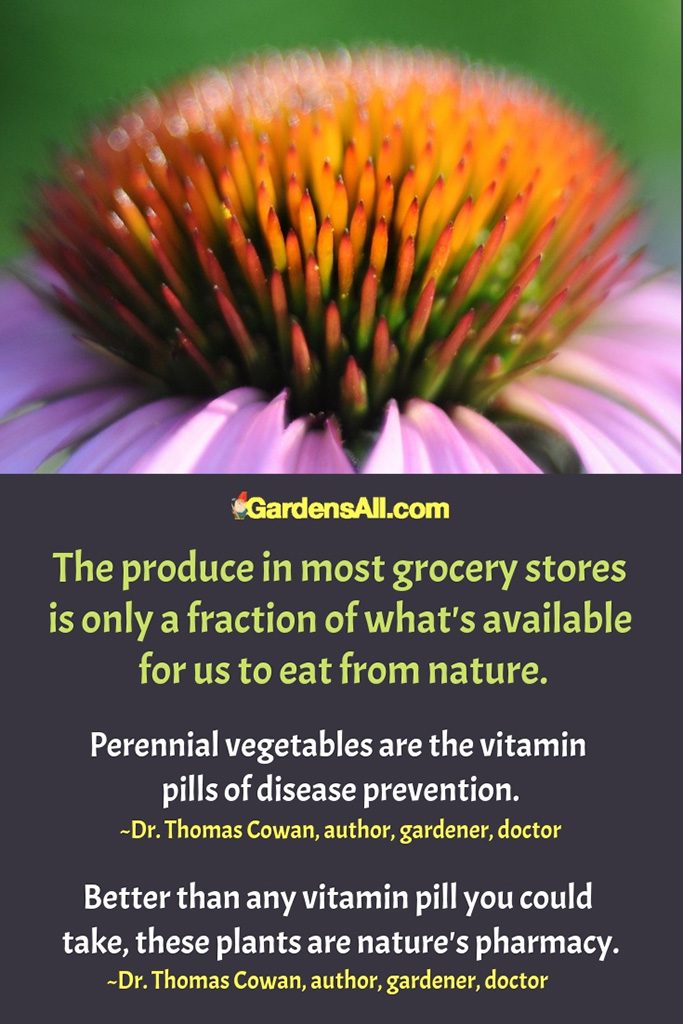
The produce in most grocery stores is only a fraction of what’s available for us to eat from nature.
Are You Getting Enough Nutrition?
Dr. Cowan’s journey to remedy this in his own diet has led him to grow all kinds of specialty crops and “exotic vegetables”. He’s passionate about creating nutrient dense supplemental foods that taste great. This mission has led him to create nutrient dense and flavor rich vegetable powders and seasoned salts for his family and that he now offers to the public.
Today’s diets require more nutrients to stay healthy, and Dr. Cowan and his family have created a business in order to share what they’re doing for themselves. They’ve created Dr. Cowan’s Garden to bring you more of the vegetable powders they use and recommend based on deep research and ongoing learning.
For When You Don’t Have Time
Most of us don’t have the time or ability to garden year round, hunt, wildcraft and food foraging. So how can we get closer to what nature intended for our bodies, especially given busy lives and so much processed foods?
In our conversation with Tom, he talks about how and what our bodies were designed to eat for optimal health. We thoroughly enjoyed this interview and hope you will as well.
Bonus for You!
And… there’s a bonus for the GardensAll audience at the end where you can get Dr. Cowan’s info packed book, How (& Why) to Eat More Vegetables, for free!
If Plants Could Talk…
In this interview you will learn about:
- Dr. Cowan’s modern Paleolithic journey
- The silent language and symbology of plants, including:
- How echinacea tells us what part to use and for what purpose
- What broccoli is about and for
- To take cabbage in moderation
- The three spheres of plants
- The three spheres of humans
- How plants are like upside humans
- What the healthiest people in the world have in common
- How our hunter-gatherer ancestors ate over 100 different vegetables per year / 15 different per day
- Why Dr. Cowan created vegetable powders
- How some modern vegetables have been bred to be almost toxic to humans
- The most healthy vegetables are perennials, which you can’t find at most grocers
- Some of the highly nutritious specialty perennial plants to grow, and some of the diseases they prevent are heal are:
- Ashitaba – angelica keiskei /Tomorrow Leaf – Angelica Family: celery-like in taste,twice as much manganese, magnesium, B6, etc., than kale.
- Okinawan Spinach – gynura bicolor[1]https://www.arthurleej.com/p-o-m-Jan13.html
- Longevity Spinach – gynura Procumben
- Tree Collards – brassica oleracea
- Chinese Yam – dioscorea polystachea (These have become invasive in areas of Appalachia)
- Sea Kale – crambe Maritima
- Egyptian walking onion – allium proliferum
- Miner’s Lettuce – Claytonia perfoliata
- Wild Ramps – Allium tricoccum
- Fiddleheads – Various varieties are edible[2]https://en.wikipedia.org/wiki/Fiddlehead_fern
- Black cumin seed powder
You’ll also learn:
- Some of the well researched proven health benefits of some of these amazing wild perennial vegetables
- Why Dr. Cowan doesn’t eat kale raw
- Some of the beneficial specialty Native American plants to grow, such as:
- Dandelion
- Cholla berries from cactus
- Wild mustard
- Chaga mushrooms
- Moringa Leaves
- Dr. Cowan’s Fourfold path to healing
Plants as Food and Medicine
Facts are out. Plants prevent and heal disease, and we need more of them in our diets. In fact, 15 different veggies per day… far more than the 3 minimum as outlined by the RDA.
“Perennial vegetables are the vitamin pills of disease prevention.”
Thomas Cowan, MD, owner, CowansGarden.com
Wild vegetables are lower in carbs and sugars and higher in phytonutrients, that prevent disease.
Dr. Cowan is looking for growers who can supply these plants for the powders they’re making. If you’re already growing any of these, and are interested in selling them, contact DrCowansGarden.com to begin the conversation.
If you’re seriously interested in growing one or more of these specialty crops for profit, we further expand on that in the next section.
“You don’t need lots… you need diversity.”
Dr. Thomas Cowan

“Better than any vitamin pill you could take, these plants are nature’s pharmacy.”
Dr. Thomas Cowan, retired physician, founder – Dr. Cowan’s Garden
Growing Specialty Cash Crops for Profit
Many in the GardensAll audience are interested in growing food for profit. For those, we’re including information on growing cash crops of specialty foods.
Dr. Cowan says it’s really hard to find wild, foraged, or grown perennial vegetables, and even more so, to find these already processed into nutrient dense powders.
“There’s a market out there for somebody to grow them.”
Dr. Thomas Cowan
How much can be made on these specialty crops is a bit up in the air because it’s such a new market. But this interesting and innovative company that’s one of Dr. Cowan’s Gardens suppliers might give us an idea.
The name of the company is Mikuni Wild Harvest.[3]https://www.mikuniwildharvest.com/ To give you an idea of how there’s more demand than supply…? It’s not unusual currently, for half of Dr. Cowan’s Garden products to be out of stock, and it’s not unusual for them to sell out an entire inventory the first day back in their store.
As a young company on the leading edge of doing powder supplements as they’re doing it, there are inevitable production issues to resolve as well, but the out-of-stocks will be greatly reduced when there are more growers to supply the demand.
You’ll see a similar issue with some of Mikuni’s supply, and also MarxFoods. As for prices, here’s an example of Mikuni’s prices for wild foraged foods…
Specialty Food Prices
- Wild Fiddle Heads – $15.95 per pound[4]https://www.mikuniwildharvest.com/
- Ramps – wild ramps for $19.95 per pound[5]https://www.mikuniwildharvest.com/
- Wild Morel Mushrooms – $44.95 per pound[6]https://www.mikuniwildharvest.com/shop/product/wild-morel-mushrooms/
- Wild Chicken of the Woods Mushrooms – $19.95 per pound[7]https://www.mikuniwildharvest.com/shop/product/wild-chicken-of-the-woods-mushrooms/
- Stinging Nettles – $67 per 2 pounds[8]https://www.marxfoods.com/fresh-stinging-nettles