
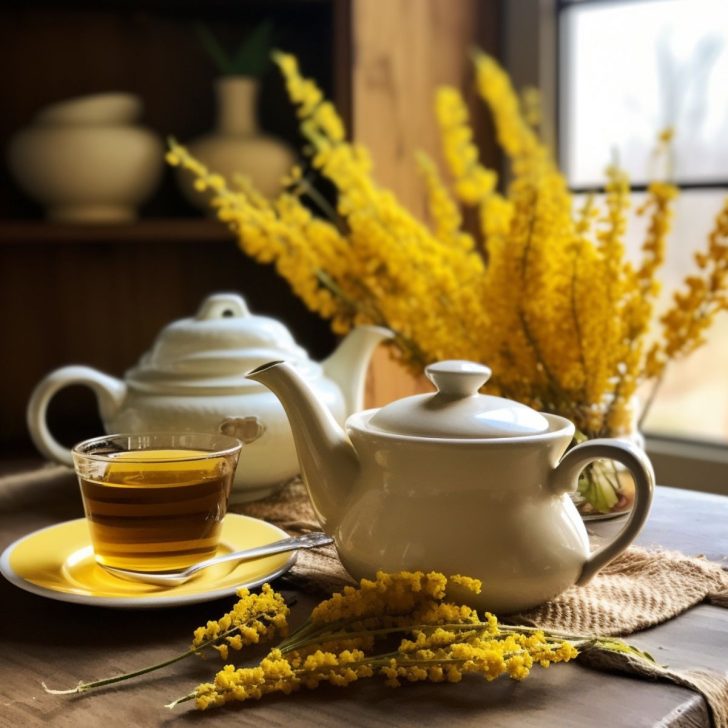
Goldenrod tea, derived from the goldenrod plant, (Solidago spp.) has been a staple in traditional medicine for centuries.
Typically found growing wild in meadows and roadside, the golden-yellow flowers of the stately Goldenrod beautifies yards and gardens alike. Beyond Goldenrod’s ornamental value, the leaves and flowers offer an array of health benefits mildly delivered when steeped as a tea.
Here, we skip briefly through the various advantages of consuming this herbal infusion.
Short List of Goldenrod Tea Benefits
- Allergies, (helps relieve seasonal allergies)
- Anti-inflammatory Properties
- Antimicrobial / Anti-inflammatory
- Diuretic Effects
- Digestive Aid
- Respiratory Relief
- Skin Health
REFERENCE: Study on Solidago’s Bioactive Polyphenols, In Vitro Antioxidant & Antimicrobial Potential[1]https://www.ncbi.nlm.nih.gov/pmc/articles/PMC6680997/
You can discover lots more in our article on proven goldenrod benefits, including many research references.
Goldenrod Tea For Allergies
Contrary to popular belief, goldenrod is not a primary cause of seasonal allergies. In fact, goldenrod tea can be beneficial for those suffering from allergies. The anti-inflammatory properties of the tea can help soothe allergic reactions, and its expectorant qualities can aid in clearing nasal passages.
Goldenrod anti-inflammatory properties can help those suffering from seasonal allergies.[2]https://www.ncbi.nlm.nih.gov/pmc/articles/PMC6680997/

Goldenrod Tea Side Effects – Are There Any?
While goldenrod tea offers numerous health benefits, here are some potential side effects to be aware of:
- Allergic Reactions: Some individuals, such as those allergic to plants in the asteraceae family, might be allergic to goldenrod. Reactions may include skin rashes from contact or congestion issues, however Goldenrod allergies are not a common problem.
- Interaction with Medications: Medicinal herbs may sometimes interfere with certain medications. For Goldenrod, that could include diuretics and blood pressure drugs.
- Pregnancy and Breastfeeding: It’s advisable for pregnant or breastfeeding women to consult a healthcare professional before consuming goldenrod tea.
Always consult with a healthcare provider before adding any medication or herbal remedy to your regimen. Some medications do not interact well with some herbs.
How to Make Goldenrod Tea
Goldenrod tea is simple to make and offers a somewhat nondescript but pleasant floral herbal flavor and a lovely golden hue tea and looks lovely in a glass teapot or steeping in an infuser cup.
The typical ratio of herbs to water are one teaspoon per eight ounce cup or dry herb, or one tablespoon fresh. You’ll learn to adjust according to your preference for milder or stronger teas.
We like to make stronger brews because it’s easy to add water if it’s too strong, than to add more herb once it has steeped. But you can increase the quantity for stronger tea and flavor or reduce for milder teas, for your “just right” cuppa herbal goodness.
Sweeteners
We usually don’t use sweeteners, preferring to enjoy and savor the subtle nuances of the herbs and herbal blends. When we do, which we tend to more so for iced teas, we prefer to use the healthier sweeteners, such as homegrown dried stevia leaves or honey.
Feel free to add your favorite sweetener, but just remember, that the less of that, the healthier your brew. One exception to that would be cold care teas, which can be more healthful with honey added, especially Manuka honey.
Ratio of Fresh Herbs vs Dried Herbs – One-to-Two
Dried to fresh herbs ratio is usually double the amount for fresh as dried, so 1:2, or 1 tsp. vs. 1 Tbsp.
You can use either fresh, dried herbs, or a blend of both when making your teas. Depending on the herbs your using, it may be flowers, leaves, calyxes, seeds, stems and/or roots. When using fresh herbs, use more if unchopped; less if chopped as you can get more in the measuring implement.
Basic Instructions for How to Make Herbal Tea
- Place a handful of fresh or 1-2 tsp. of dried herb, or 1-2 Tbsp. fresh herbs (whole or chopped) in a teapot or cup.
- Pour hot water over the herbs.
- Let the tea steep for about 5-10 minutes.
- Strain and enjoy. You can add honey or lemon for added flavor.
Some Favorite Goldenrod Tea Recipes
Simple Goldenrod Tea Recipe:
- Fresh or dried goldenrod flowers
Mint Goldenrod Tea:
You can blend herbal teas using equal amounts of each herb or more or less of your favorites.
- Fresh or dried goldenrod flowers
- Fresh mint leaves
Roselle Goldenrod Tea:
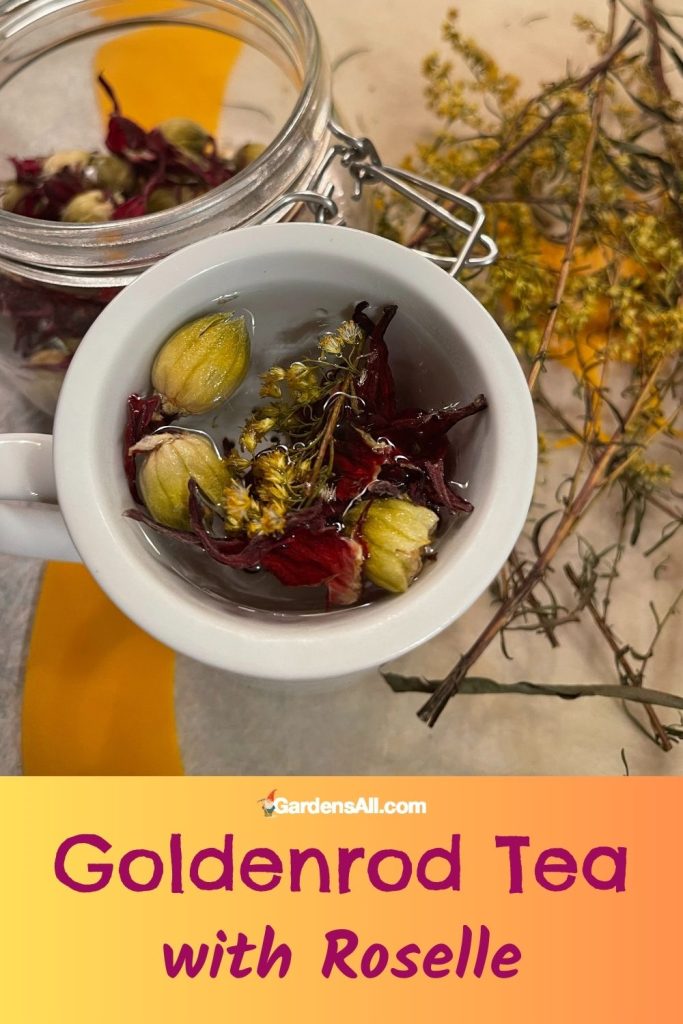
This one of our favorites, and I included some roselle fruit (seed pods) as well since they were freshly harvested. (You can see that in the photo below).
- Roselle (Calyxes and/or flowers, leaves, fruits pods and/or seeds)
- Goldenrod flowers and/or leaves
See Roselle Tea
Goldenrod and Chamomile Blend:
- Goldenrod flowers and/or leaves
- Chamomile flowers
- A hint of lemon zest or dried lemon peel
See Lemon Peel Benefits
Goldenrod and Elderflower Delight:
- Goldenrod flowers and/or leaves
- Elderflowers
- A slice of fresh ginger
See How to Make Elderberry Tea and also, Ginger Leaf Tea
Avocado Leaf Goldenrod Tea
- Goldenrod flowers and/or leaves
- Avocado leaves
- A touch of honey (optional)
See Avocado Leaves Uses and Benefits
Goldenrod Citrus Fusion:
- Goldenrod flowers and/or leaves
- Orange peel or slices
- Lemon balm leaves
See also, Uses for Lemon Balm
Spiced Goldenrod Blend:
- Goldenrod flowers and/or leaves
- Cinnamon sticks
- Cloves
- Star anise
You may also enjoy How to Use Cinnamon for Plants
Goldenrod and Rose Relaxer:
- Goldenrod flowers and/or leaves
- Rose petals
- Lavender buds
See also, Rose Petal tea, or Growing Lavender
Goldenrod Forest Mix:
- Goldenrod flowers and/or leaves
- Nettle leaves
- Pine needles (ensure they are from a non-toxic pine variety)
Banana Fig Goldenrod Tea
- Dried banana peel
- Dried fig leaves
- Goldenrod flowers
See How to Dry Banana Peels and also, Fig Leaves Tea Health Benefits
Goldenrod Longevity Tea
- Goldenrod flowers and/or leaves
- Longevity spinach (aka Gynura procumbens)
- Wild Violets Tea
Remember, when creating herbal tea blends, it’s essential to ensure that all ingredients are safe for consumption and sourced from reputable suppliers. Always consult with a healthcare professional if you’re unsure about any ingredient or its potential effects.
Enjoy the soothing and healthful benefits of goldenrod tea, and remember to always source your herbs from traffic free locations or reputable suppliers to ensure quality and safety.

I’m LeAura Alderson, a garden, herb and plant enthusiast with a passion for discovering the many edible and medicinal benefits of the plants all around us, including the weeds, while transforming the land through regenerative permaculture practice. I am also a writer, editor and media publisher (now mostly retired due to replacement by AI), but which now allows more time to build our regenerative permaculture homestead farm.
References
| ↑1 | https://www.ncbi.nlm.nih.gov/pmc/articles/PMC6680997/ |
|---|---|
| ↑2 | https://www.ncbi.nlm.nih.gov/pmc/articles/PMC6680997/ |