

Berries, blooms and autumn breezes reveal nature’s glory. Autumn is not solely about the leaves turning. There are many wonderful flowers that bloom in fall to add splashes of rich colors to autumn’s warm palette.
Fall is often as busy as summer gardening with fall garden maintenance, rotating beds, planting fall vegetables and winter crops.
Then there’s the ongoing harvesting and preserving of summer bounty vegetables and autumn fruits. But it’s also a time to look forward to fall flowers and colors and the unmistakable smell of fall in the air.
Our old friends, the perennial fall flowers return again, and of course we have to add a few annuals too. The ongoing garden maintenance is now a minimal task, which leaves a little extra time to admire the surroundings and some of the MANY wonderful fall flowers in bloom.
What a blessing that nature has provided treasures to love in each season.
List of Flowers That Bloom in Fall
First, we have a simple long list of fall blooming flowers, followed by photos and additional information on some of them.
- Amaranth, (Amaranthus caudatus) – Blooms in summer and fall.
- Aster – Blooms in late summer and fall.
- Azalea, fall blooming – This variety specifically blooms in fall, but other Azaleas bloom in spring.
- Butterfly bush – Blooms in summer and fall.
- Calico Aster – Blooms in fall.
- Camellia – Some varieties bloom in the fall, while others bloom in winter or spring.
- Chrysanthemums, Mums – Primarily known for fall blooming.
- Colchicum – Blooms in fall.
- Cosmos – Blooms in summer and fall.
- Dahlias – Blooms in summer and fall.
- Dianthur – Blooms in spring and early summer; some varieties rebloom in fall.
- Fuchsia, Hardy Fuchsia – Blooms in summer and can extend into fall.
- Golden Aster, Chrysopsis mariana – Blooms in fall.
- Goldenrod – Blooms in late summer and fall.
- Hardy Fuchsia – Blooms in summer and can extend into fall.
- Helenium, Helenium autumnale, aka Sneezeweed – Blooms late summer to early fall.
- Hydrangea – Blooms in summer; some varieties can last into fall.
- Japanese Anemone – Blooms in late summer and fall.
- Kale, Flowering Kale – Decorative foliage in fall.
- Knockout Rose – Blooms from spring to fall.
- Lantana – Blooms in summer and can continue into fall.
- Marigold – Blooms from spring to fall.
- Monkshood – Blooms in fall.
- Nasturtiums – Blooms from spring until the first frost in fall.
- Okra flower – Blooms in summer and can continue until the first frost in fall.
- Pansy – Blooms in spring and fall; can even bloom into winter in milder climates.
- Purple Beautyberry – Has tiny pink flowers in spring, but it’s primarily known for its fall berries.
- Dianthus – The best Dianthus for fall gardens are Telstar series or the Firewitch Cheddar Pinks bloom in fall.[1]https://www.premier-nursery.com/product/dianthus/#:~:text=They%20also%20love%20rich%2C%20well,in%20late%20summer%20and%20fall.
- Salvia, Sage (Salvia guaranitica) – Blooms in summer and can continue into fall.
- Sedum – Blooms in late summer and fall.
- Shrub Rose – Blooms from spring to fall.
- Spider lily – Blooms in fall.
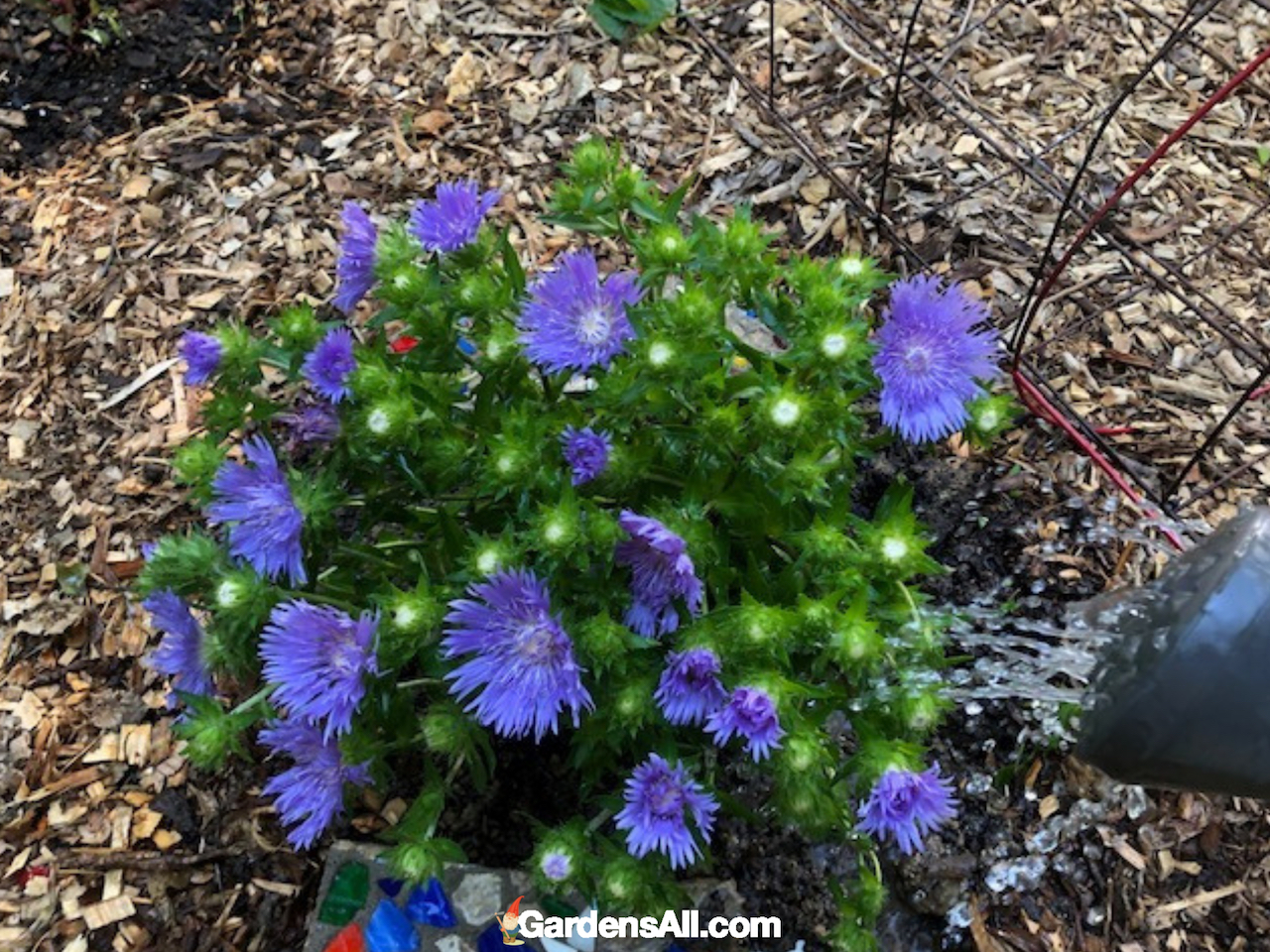
- Stokesia – Blooms in summer and can continue into fall.
- Sunflower – Blooms in late summer and fall.
- Sweet Alyssum – Blooms in spring, summer, and fall.
- Toad Lily – Blooms in fall.
- Zinnia – Blooms in summer and can continue into fall.
FALL FLOWERS IN BLOOM
Featuring some of the many beautiful fall flowers in bloom, and there are so many that we’re just getting warmed up. Nature is so grand and generous!!
Amaranth – The Tall and Majestic Edible Plant With Burgundy Flowers
We love our amaranth!! It’s adds tall beauty in color and shape to any yard and garden landscape. But Amaranthus is about more than looks, you can also eat it! From edible leaves and stems, to edible flowers and seeds, the entire amaranth plant is not only edible but high in protein and nutrients. In fact, you may be familiar with amaranth as a grain-like food similar to quinoa or buckwheat.
To really benefit from the Amaranth seeds, you need to a large crop, as they’re tiny and each plant scarcely yields enough for one serving. So while we harvested our amaranth plants for the seeds we probably won’t do that again because of the tiny involved versus the yield for our small patch.
However, we’re loving adding the leaves and flowers into salads for flavor and for the beautiful color it adds. See also, our article on Edible Flowers.
You can find more on growing amaranth here.

Azalea – Fall Blooming Azalea
The lovely Autumn Belle Encore Azalea blooms pale pink with splashes of vivid pink spots blooms from spring through fall.
An evergreen shrub, this pink-blooming azalea will look great all year around. In addition to year-round beauty, this hardy azalea is disease resistant, pest resistant, heat tolerant and can grow in full sun or partial shade.
You may also enjoy this guide on purple flowers.

Butterfly Bush – Purple Fall Flowers – Buddleia Davidii
Butterflies and people alike, love the sweetly scented and graceful purple fronds of the butterfly bush. The Buddleia davidii, are tall perennials with purple flowers, and are wonderful additions to the landscape, with blooms from late spring through fall.
And of course these are wonderful pollinator flowers for butterflies and bees.

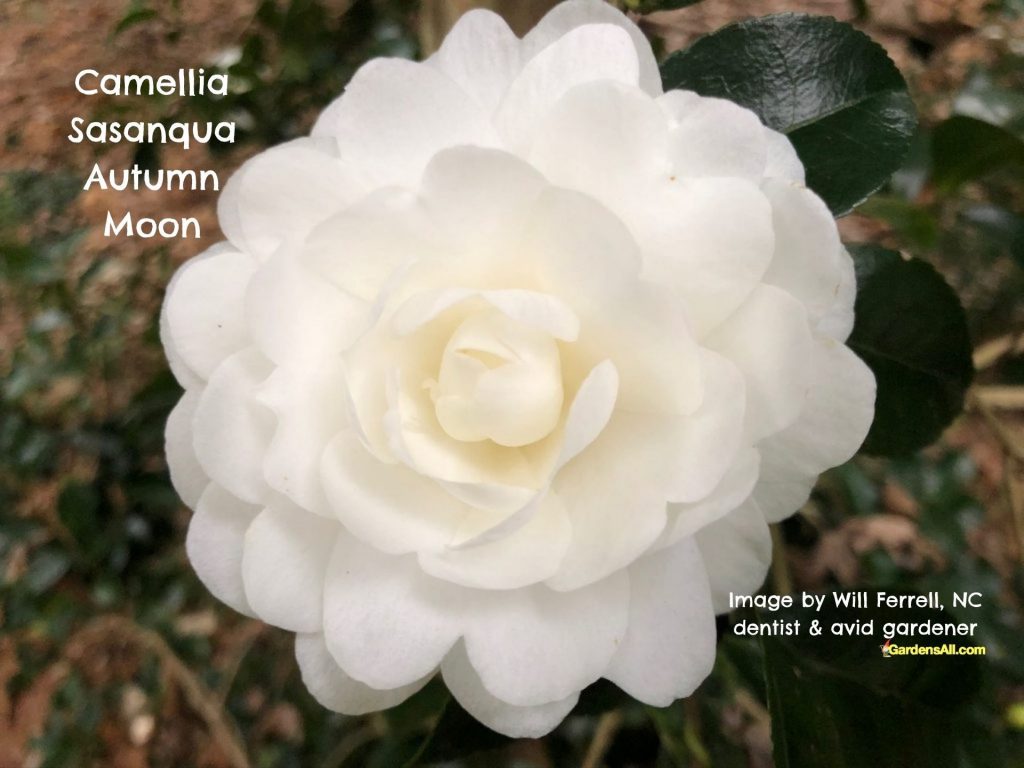
Camellia Sasanqua – Lovely Fall Flowers
The Camellia sasanqua is a grand landscape plant with generous blossoms. If you love tea, you can even dry the leaves and make your own green or black tea. You can find more information, video and images on the stately Camellia sasanqua here.




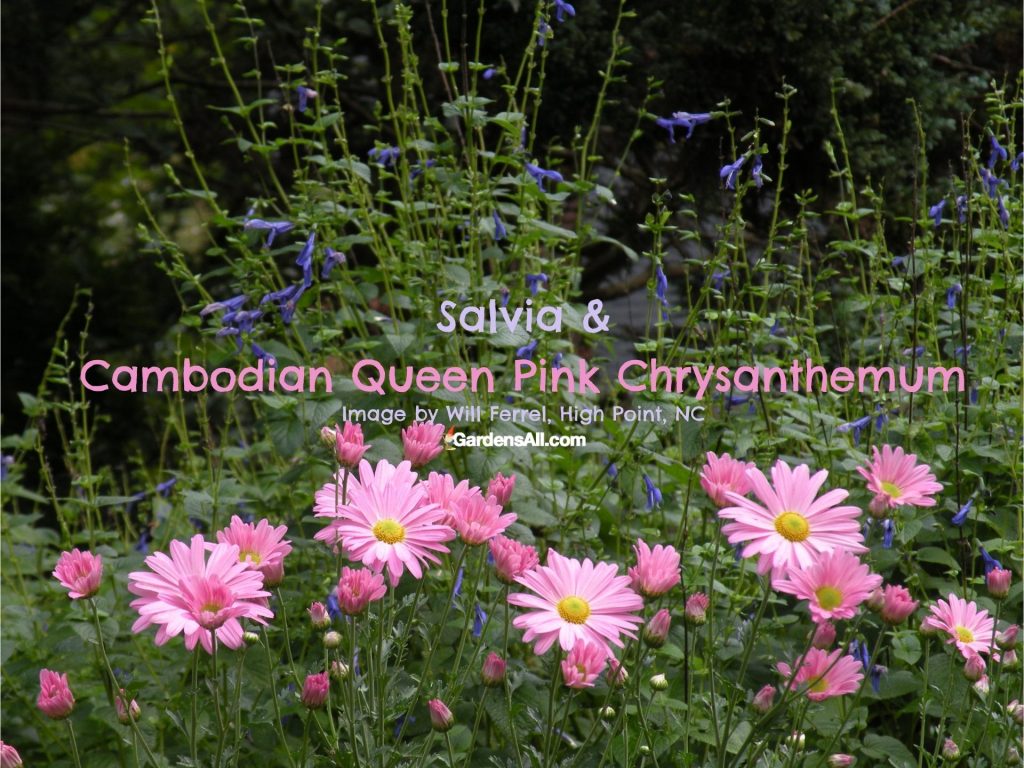
Chrysanthemum – Cambodian Queen Pink Mums

Japanese Anemone and Camellia Sasanqua Alabama Beauty

The Beautiful Knock Out Rose Bush for Perennial Fragrant Fall Flowers
Pictured here is one of the last brilliant blooming cycles of our Knockout Roses, Rosa radrazz.
Knockouts are often called a “landscape rose” because it can be used in many landscape settings that would otherwise be unfriendly toward roses.
We’ve been quite impressed with this special rose. It’s not very picky and keeps on growing and blooming, year after year, with little to no care from us.
Like a regular floribunda, the knock out rose flowers in prolific cycles and clipping the spent blossoms is not really necessary.
The Knockout Rose is a Great Landscape Plant
- Naturally resistant to disease
- Easy to grow
- Prolific blossoms
- Fragrant blossoms
- Two or more long blooming cycles
Check out this article for more on the perennial knockout roses.


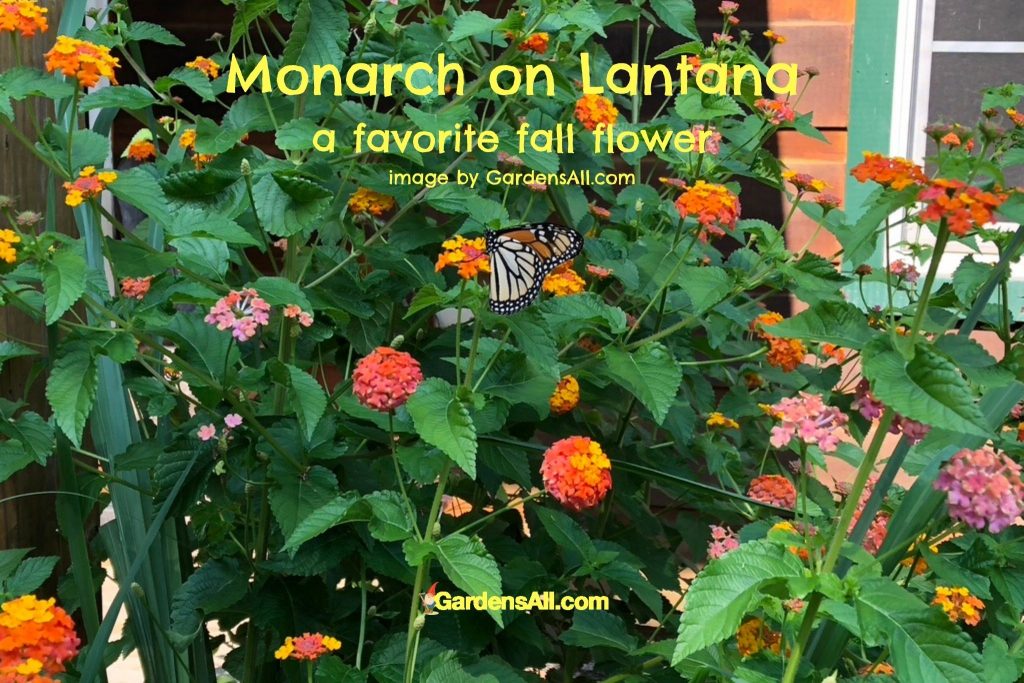
Lantana – Colorful Fall Flowers in Bloom
Monarchs and other pollinators savor the sweet nectar of the beautiful orange, pink and yellow blossomed lantana.
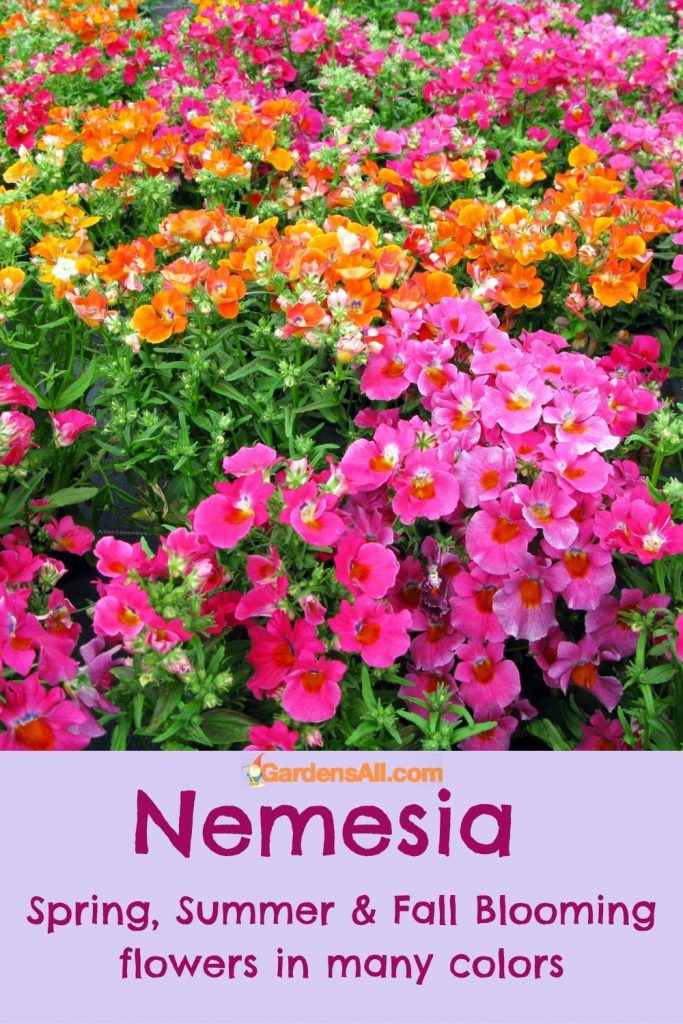
Nemesia Strumosa – Winter Blossoms in Zones 9-10
Nemesia strumosa, (Scrophulariaceae), is a tough little annual plant that blooms in winter in zones 9-10. This cheerful low-growing flower comes in various shades in white, red, pink, orange, and blue, making for a lovely colorful carpet for wintertime.
They reach to be about two feet tall and bloom in late winter, spring, and early summer at full maturity.
It is best to start Nemesia indoors but transplant them after last frost and when the plants are about 2″ tall, or you can buy young seedlings ready to plant outdoors. Nemesia prefers to move into its new home while still young.
The Nemesia plant is a symbol of friendship in many cultures.
Pansies, Multi-Colored Flowers Best in Zones 6-13
Pansies, also known as Viola wittrockia, a gorgeous hybrid flowers that come in vivid shades of white, purple, pink, red, blue, yellow, orange and in all kinds of beautiful variations.
This little plant tolerates an extensive range of cooler temperatures ranging from 40-70°F / 4-21°C.
Pansies are considered biennials. Luckily, they are prolific and produce many more seeds that may volunteer to come up independently.
Pansies can bloom for eight months of the year, from September until May, providing starkly beautiful and very vibrant colors for your garden. In significantly colder regions, though, pansies may not bloom in the wintertime.
While pansies grow easily from seed and can be started indoors or outdoors, they do take some time to mature; if you intend to begin your pansies indoors, do so about twelve weeks before your last frost date.
Garden centers love to grow pansies because they are easy to care for in a greenhouse, produce bright, unique flowers, and tend to be disease and insect resistant.

Philippine Violet, Barleria Cristata, Winter-Blooming in Zones 9-11
This funnel-shaped flower blooms in December and is an evergreen perennial shrub that grows best in zones nine through eleven but can typically survive in zones 8-12.
For more, see Flowers That Bloom in Winter.
Salvia Guaranitica – Purple Fall Blooming Flower

Stokesia – Stokes Aster
We got ours from our local Lowe’s Home Store, so check there or with your local nursery suppliers and departments, or you can order plants or seeds from Amazon.
Find more awesome purple flowers, and beneficial weeds with purple flowers
Toad Lily – Delightful Fragrant Fall Flowers
Toad lilies, Tricyrtis hirta, are another fall flowers favorite. These delicate and sweetly fragrant lilies come in various colors, grow to 30″ tall, are easy to grow and require little to no maintenance and yet they bloom prolifically from mid summer to autumn.
Toad lilies just keep on blooming. These orchid-like flowers grace our yard with fragrance and beauty and their fragile appearance belie their sturdy resilience.
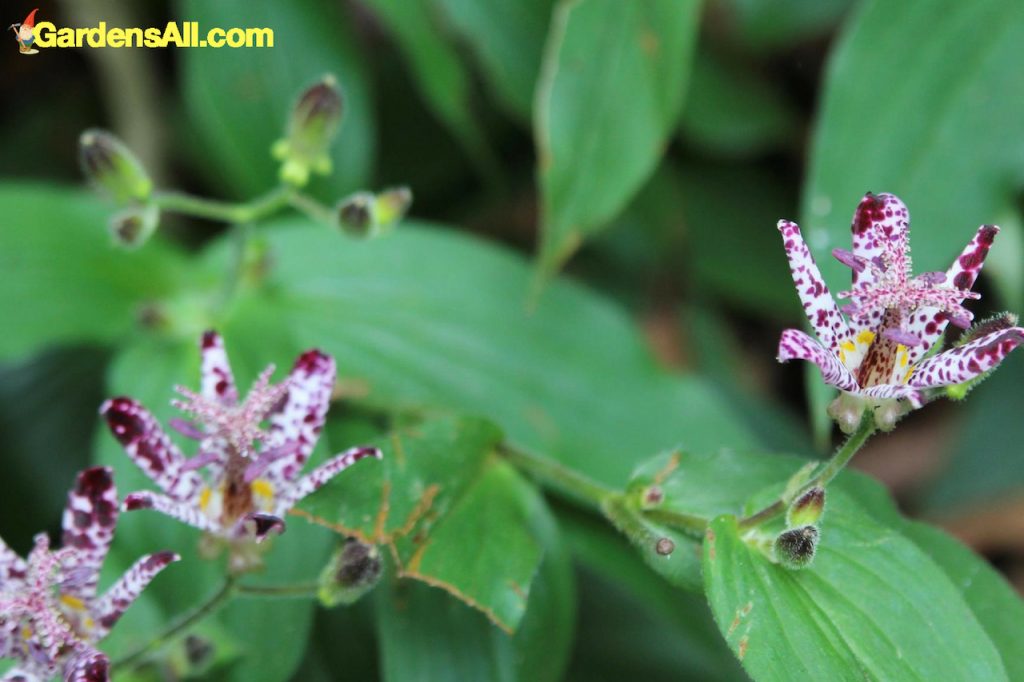
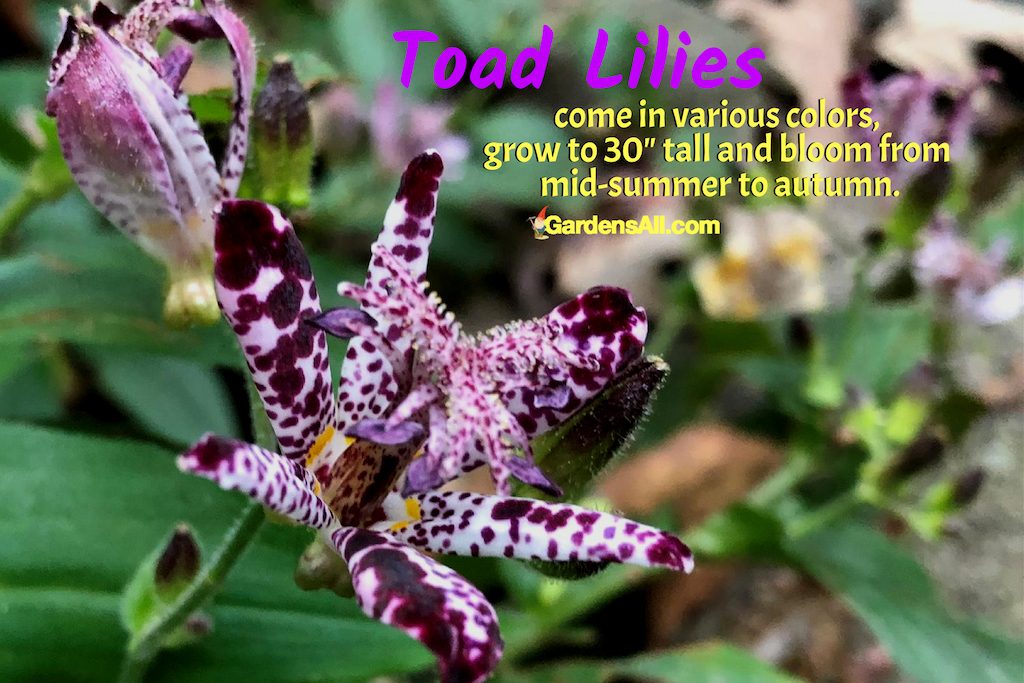
The toad lily blossom’s prominent stamen gives it a kind of passion flower look, and the shape and color of the blossoms are reminiscent of orchids. We love seeing these bright and cheery blooms when not much else is left to bloom.
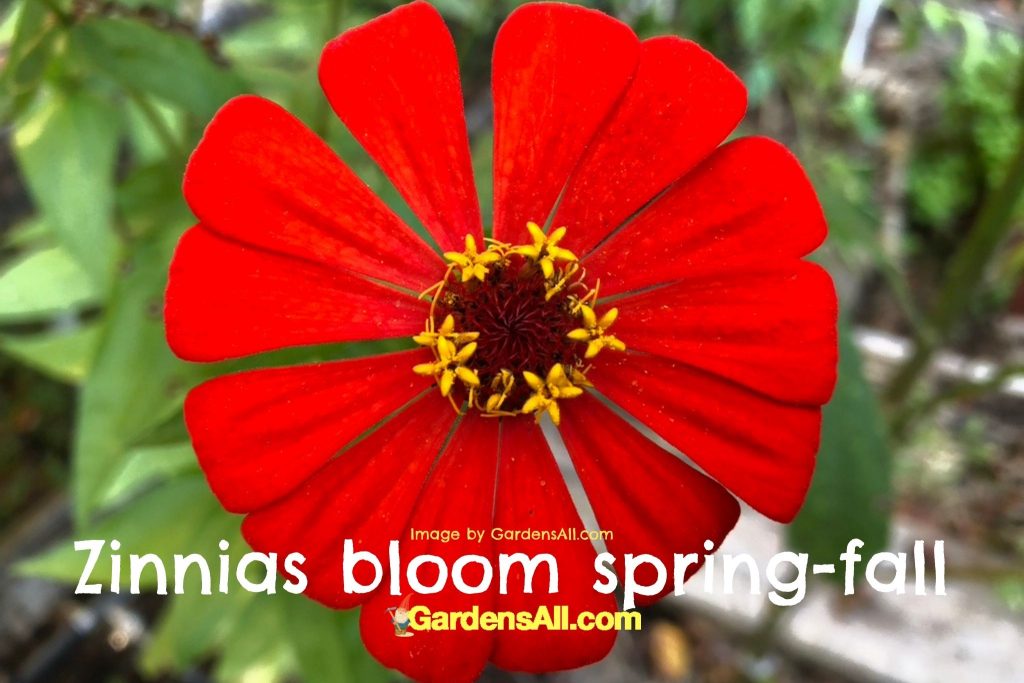
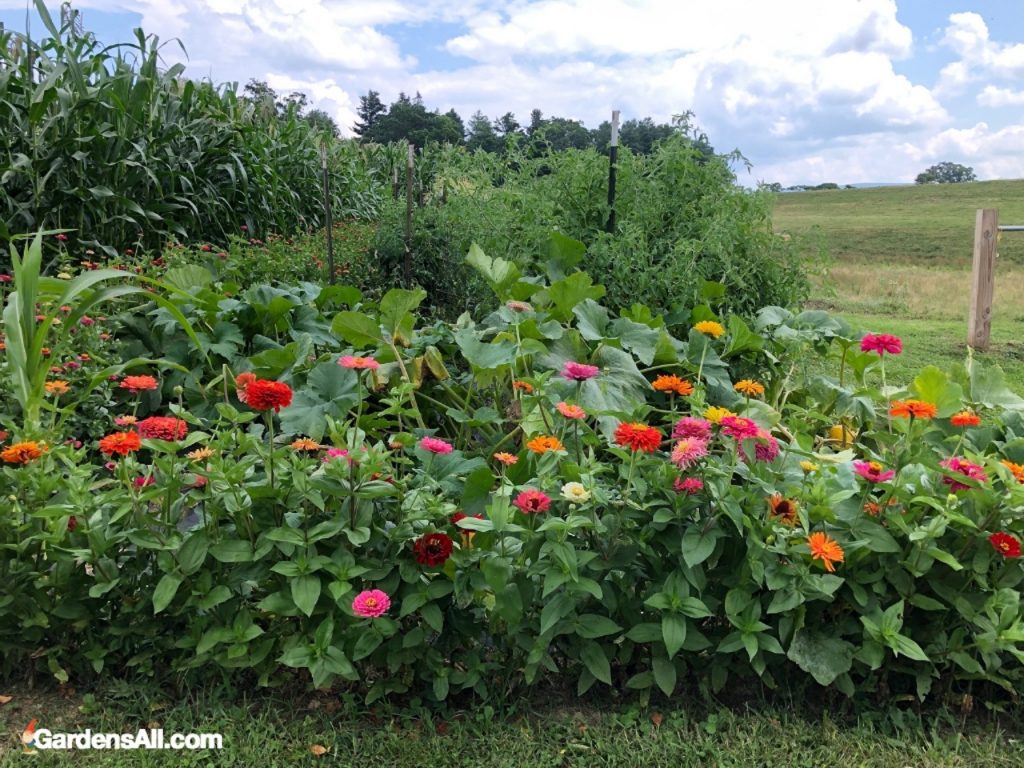
Zinnia – Hardy Blooms from Spring to Fall Frost
Great for cut flowers, zinnias are favored for their simple yet intricate beauty and resilient cheerfulness. Determined to grow as long as they can, zinnias are a welcome addition to any yard and garden landscape.



FALL BERRIES IN BLOOM
Fall berries deserve honorable mention in an article on fall flowers in bloom, for they also add their sprinkling of color to the fall and winter landscapes.
Red Dogwood Berries
The birds have gone crazy eating the dogwood berries, and the bright red berries add lovely color to the yard landscape. There for awhile, every other branch was aflutter with birds. They seemed to move through in shifts.
First came the brown thrashers, then the goldfinches and cardinals. Then came the robins. The goldfinches, in particular, look rather dashing this time of year, with a mellow yellow sheen of color flitting about.

Hollyberry Bush
One last beauty to share is that of our deciduous winterberry holly (Ilex verticillata).
The birds eat the holly berries after they’ve devoured other sweeter berries. Holly berries are stout and will last longer into winter. For now, our birds are flocking to the red dogwood berries. Once those are gone, they’ll turn more to the tarter holly berries.
The green leaved branches of the holly bush are rather open and shrub like, looking a bit like privet. The real showing is autumn when the red berries on the green background dazzles the beholder.
Holly berries sustain the birds when other food is scarce.

Speaking of Birds – About the Bird in the Feature Photo
The top feature photo is a goldfinch in front of a pot of salvia. The bird hit our window and was resting and recovering before flying away. We wrote more about that issue in this article on bird deflectors, which have helped considerably, though not entirely eliminated the occasional strike.
Keeping Leaves Off of Fall Flowers in Bloom!
Oh! And LEAVES!!! They’re beautiful on the trees and even on the ground but trying to keep them off the flowers, deck, drive and walkways is a daily chore in the woods where we live!!! if you’re interested, here’s our leaf blower comparison and competition.
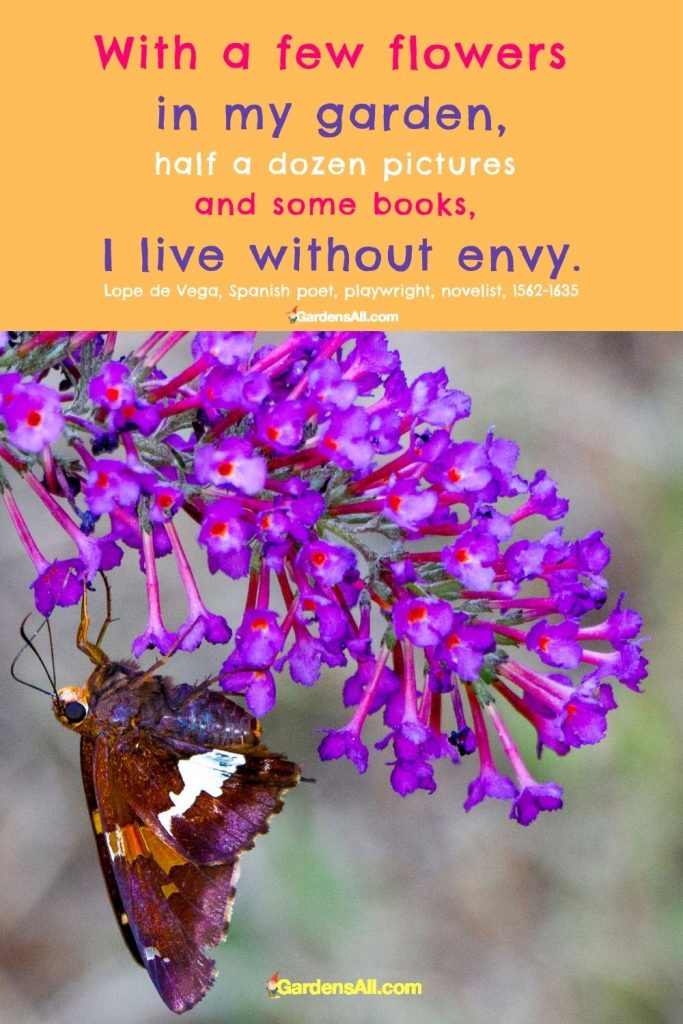
“With a few flowers in my garden, half a dozen pictures and some books, I live without envy.”
~Lope de Vega, Spanish poet, playwright, novelist, 1562-1635
Battery Powered Cordless Leaf Blowers
Living in the woods as we do, if we didn’t have a leaf blower we’d be raking leaves all day every day. If you also have a lot of trees, we did a side-by-side review of two leaf blowers.
We’re liking the battery operated leaf blowers best for several reasons, and you can see more about that as well as a video of our leaf-blower “race” and review here.
Bye Bye Birdies! It’s a Fall Farewell to the Hummingbirds
It’s always with a mix of gratitude and sadness when we make our last batch of hummingbird food. Gratitude for enjoying their presence in the garden, and sadness at seeing them go.
Around mid September in NC zone 7a, the number of hummingbirds decline as they depart for more temperate climes to the south. Then finally last two remaining—a female and a young male—left for warmer zones southward. What a joy they were to have humming around all summer, announcing their presence with the hum of wings and a periodic face-to-face buzz.
Hummingbird Video
We’ve enjoyed catching hummers with our trail cams, but this one was captured with an iPhone. While the little bird didn’t add a lot of color, she more than made up for it in cuteness. Hope she comes back to our little garden next year.
As always…
“May your gardens flourish and your harvests be bountiful, and when you look upon your little Eden, may you see that it is good.”
~Coleman Alderson, GardensAll.com
If you enjoy immersion in gratitude, you may also enjoy this article and gratitude quotes.
Tally hoe!


G. Coleman Alderson is an entrepreneur, land manager, investor, gardener, and author of the novel, Mountain Whispers: Days Without Sun. Coleman holds an MS from Penn State where his thesis centered on horticulture, park planning, design, and maintenance. He’s a member of the Phi Kappa Phi Honor Society and a licensed building contractor for 27 years. “But nothing surpasses my 40 years of lessons from the field and garden. And in the garden, as in life, it’s always interesting because those lessons never end!” Coleman Alderson
References