
Herbicide Free and Worm Friendly
We needed a natural garden weed control that’s cheap, natural, organic and effective without harming the environment.
Now we know weeding can be therapeutic and even enjoyable. Gardeners tell us they find it a relaxing garden therapy for else stress relief and annoyances. Besides which, gardeners just want to get out and play in the dirt. We get it. But come July, with a garden in full swing, we just don’t have time for that.
So we did some research and came up with a super simple natural garden weed control barrier. But first, the writer in Coleman had a little fun, likely fueled by a recent viewing of the interstellar show, The Expanse, that he and the kids thoroughly enjoying, (sprinkled with the Star Trek lingo of years past). 😊
If you want to go straight to “before you kill the weeds“, or “garden weed control“…
Coleman’s Extraterrestrial Musings
Gardener’s Log – Stardate: March 2019. In route to a multi-universe of possibilities. We seem to be approaching a wormhole that could possibly shred us in all directions.
Our prime directive informs us we must prioritize the Mission to boldly go where no gardener has gone before . . . Or something like that.
Before I break out into Klingon, let’s have a look at our situation on our home planet.
Spring Garden Cleanup
There’s always a full spring gardening to do list in early spring, and one of thoses that will save you time in the busiest garden season in midsummer, is to implement garden weed control early.
We’ve had to prioritize and to some extent, compromise our fantastic plans for this year’s gardens. As we’ve written before, such as in this “humble gardener” post, our problem is sunlight. Seasoned gardeners know — and beginning gardeners soon discover — that gardening is not a walk in the park.
We live in the woods and just don’t have enough open space for a large vegetable garden. And yes… we’ve already felled a few trees, limbed some with our cordless pole saw, and also had to hire professional arborists tree trimmers for some big tricky jobs.
So part of our winter and spring gardening cleanup tasks have involved cutting down dead trees and then cutting, splitting and stacking them for firewood. We heat our home and hot water with a water stove in winter, so it’s awesome to have so much free fuel around. It’s not free in labor but always a good workout and a good day’s work done to have a full stack of wood at day’s end.
But we love the woods and see these majestic trees as friends after over 30 years of living amidst them, so we prefer not to cut down more if there’s another way. So we’re working on better strategies overall between our resident property, versus the “upper garden” of our future residence with lots more open space.
Anyway, I digress, so back to the topic of garden weed control, which is another spring gardening task that — if done up front, will save you lots of time and stress. Come mid summer heat when the pests are attacking plants and mosquitoes are attacking you, plants need watering, pest control and harvesting, you’ll be glad the weeding is handled!
Before You Kill the Weeds
3 Things to Consider Before You Get Rid of Your Weeds
- What your weeds are telling you about your soil health
- Whether your weeds are edible, for food or tea
- Whether your weeds are beneficial for medicinal remedies
Blueberry Orchard Garden Weed Control
It was time to spruce up the blueberry patch!
Choking on Weeds
A most pressing item on our spring to-do list was to take care of our small blueberry orchard in the upper garden. Last year, time-challenged, we let the weeds and brambles slip in and they begin to take over, as they are wont to do and will given any time to! The weeds and woods will reclaim its turf!
Briars and Brambles
The brambles were mostly raspberry bushes, and a few of the rugosa rose bushes. Turns out the roses can be wicked invasive and very hard to deal with due to being extremely thorny. We’ve decided the wonderful large rose hips they produce may not be worth all the extra maintenance, so we’ll cut them back severely.

Orchard Facelift
We also needed to improve the overall appearance of the blueberry fencing.
Our original solution for keeping birds, deer and other varmints out of the blueberries was to install a cage made from PVC pipe draped all over with lightweight bird netting. It was relatively simple, and it worked.
However, the white PVC pipe wasn’t pretty and detracted from the scenic views. Plus, getting in under the netting for harvesting and maintenance presented some challenges, unless you’re hobbit sized. (What was I thinking 🤦🏻)?
Problems With Bird Netting
UPDATE: We’ve stopped using bird netting after having birds and good garden snakes get horribly caught up and entwined in the plastic mesh netting. We rescued several but didn’t get there in time for a couple others, and hated to see both scenarios.
So… we found another easier and better solution for the birds, as well as one for the deer!
Next: So time for an upgrade to the blueberry patch!

Dismantling the Netting and PVC Pipe Fencing
Dismantling the pipe system was our first task. After taking down all the netting, the 1 1/2 inch posts and cross pieces were quite easy to remove.
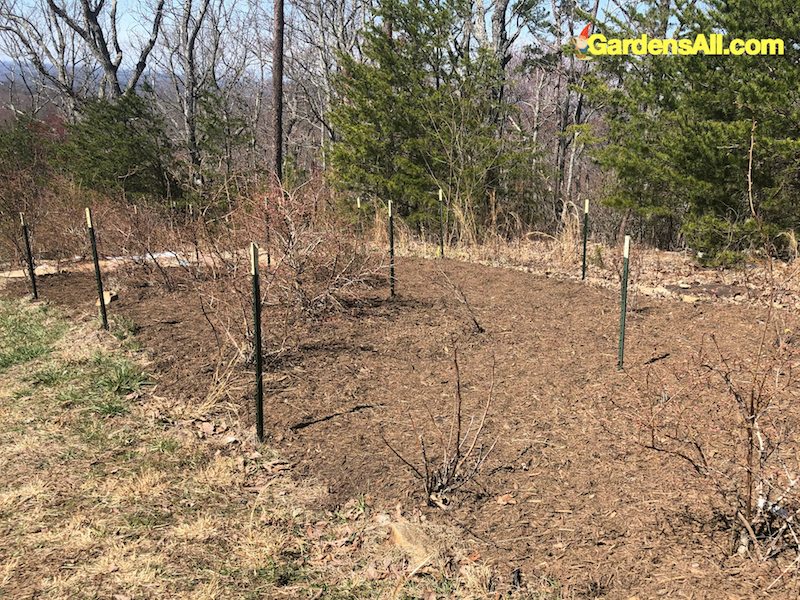
I’m so glad we didn’t glue the PVC together with cement! Instead, the support posts had been slipped over 6 ft t-posts and “dry fitted” into the connectors. We decided to let the green t-posts remain as they blended in fairly well with the landscape and yet define a perimeter. Besides which, they may come in handy for future fencing.
Easy and Inexpensive Temporary Orchard Fencing
This season snuck up on us… well… we’ve been uber busy too, so no time to build the enclosed screen structure before the blueberries are out this year. Besides that, we’d also like to see if we can get away without having to!
Instead, we’re going to wrap the perimeter and overhead with reflective tape for bird deflectors and perhaps hang CD suncatchers from the tape to spin and flash even more in the breeze . Hopefully that will be enough to thwart the wildlife this season .
We’ll keep you posted.
UPDATE: So we didn’t need the CD Rom Suncatchers! The reflective tape has worked beautifully to keep birds away from the blueberries and so simple to install!
GARDEN WEED CONTROL
When we planted our blueberry bushes in 2012, we used heavy duty weed barrier fabric. Over the years, successions of shredded bark mulch have created a thick layer of composted material that has invited runners and roots from all directions. Weeds and brambles were taking over.
Mulching on top of a weed barrier creates a whole other medium for weeds to grow. So mulching is not 100% weed free, but it’s definitely an improvement over no mulch, plus deep mulch gardening has additional beyond weed control.
While under no illusion that any organic or natural solution will achieve 100% weed control, the method we’ve chosen for our blueberry patch works quite well.
Our natural garden weed control barrier of choice for this year is cardboard.
Is Cardboard Safe for Garden Weed Control?
Surfing the various garden blogs and extension services, it’s no surprise that there are two basic camps of opinion:
- For cardboard use in the garden
- Against cardboard use for garden weed control
After investigating, we’ve decided to give corrugated cardboard a go and form our own conclusions. Here’s some of what we learned. By the way, when mentioning cardboard, it’s always the corrugated type that makes up most boxes.
Benefits of Cardboard for Natural Garden Weed Control
Folks who favor cardboard include no-till, sheet composting, layered bed lasagna gardening, and in some cases, permaculture gardeners.
PROS of Cardboard in the Garden
- No herbicide
- Attracts worms
- Composts into the soil
- Allows the soil to breathe
Is cardboard safe to use? We think so. Basically, cardboard is mostly paper.
“Someone in the industry gently explained that… ‘cardboard’; it’s a catch-all term used to cover a wide array of heavy duty paper-based products. He added that he was in the cardboard box business and was pleasantly surprised to learn that corrugated cardboard shipping boxes are very clean—just about all paper, no glues and no bleach.”
~Mike, GardensAlive.com
Negatives of Cardboard for Natural Garden Weed Control
Then, there are those who are against introducing a manufactured product containing glues, coatings, inks, and water resistant materials that may actually do more harm than good to the soil environment.
However, most cardboard boxes are mostly paper, and any glue for adhering the box flaps together is too small an amount to cause concern.
CONS of Cardboard Mulch
- Reduces water absorption
- Can impact exchange of soil aeration and gases
- Takes too long to break down (according to some)
Horticultural professor and researcher, Linda Chalker-Scott, PhD., is definitely not a fan of using corrugated cardboard as a mulch.
Putting down a layer of cardboard covers the soil “with a tough, relatively gas-and-water-impermeable material that will take some time to break down. It’s hardly a mulch that’s going to nurture soil life.”
~Dr. Linda Chalker-Scott, PhD, GardenProfessors.com
However…
Down Home Wisdom or Science Degree..?
If you enjoy wading into the thick of opposing opinions, you may want to read the entire blog article, and especially the comments. Dr. Chalker-Scott comes from a very science-based position and goes head to head with those who offer “anecdotal” type evidence. Many parallels to the “science versus experience” can be seen in the realms of gardening, natural healing, and nutrition.
Then, there’s this citation from the UK’s well-respected Garden Organic:
“It is quite safe to include cardboard such as cereal packets etc. The inks used these days no longer contain the harmful heavy metals that used to be a problem. Due to economic reasons the industry has converted to vegetable-based inks. The only material we do not recommend in an organic garden is the fireproof cardboard, as this does contain certain pollutants.”
~GardenOrganic.org.uk
Boots on the Ground in the Garden Say Cardboard is Okay
As for our use of cardboard as a weed blocker, we believe the pros outweigh the cons. Our own, albeit anecdotal experience, informs us that uncoated cardboard is an appropriate and effective tactic to use for weed control.
Our Findings in the Garden
The cardboard we laid out began breaking down within the first season. When we lifted up a corner here and there to peak at the soil health, we found it to be alive and thriving with earthworms, roly polys and likely healthy soil microbes by all appearances.
We topped the cardboard with a layer of free woodchip mulch, for a better appearance and did not have any problems with weeds.
Dumpster Diving for Free Cardboard
Then came the fun part: dumpster diving for large cardboard boxes. There are a number of pointers to mention
- Avoid fresh food boxes – food smells can attract animals and insects, and can also contain cockroach nestled within the corrugated spaces.
- The bigger the box, the fewer you need
- Pick flat boxes (or flatten them) for easy hauling of maximum bounty
- A sharp blade can quickly slice boxes as needed. Save your pocket knife blade by using:
- case cutters
- utility knives
- Most grocery stores stack and band their boxes so they’re not the best source, unless you drop by at night when the stocking crew is at work to select large lightweight dry goods boxes like paper goods, cereal and cracker boxes. The stocking crew may be glad to let you haul them away if it’s allowed by management.
- The best boxes tend to come from stores like:
- hardware
- furniture
- “dollar”
- coffee shops
- home stores
- Avoid heavily inked, shiny coated, or waxed cardboard, or the large double thick produce boxes
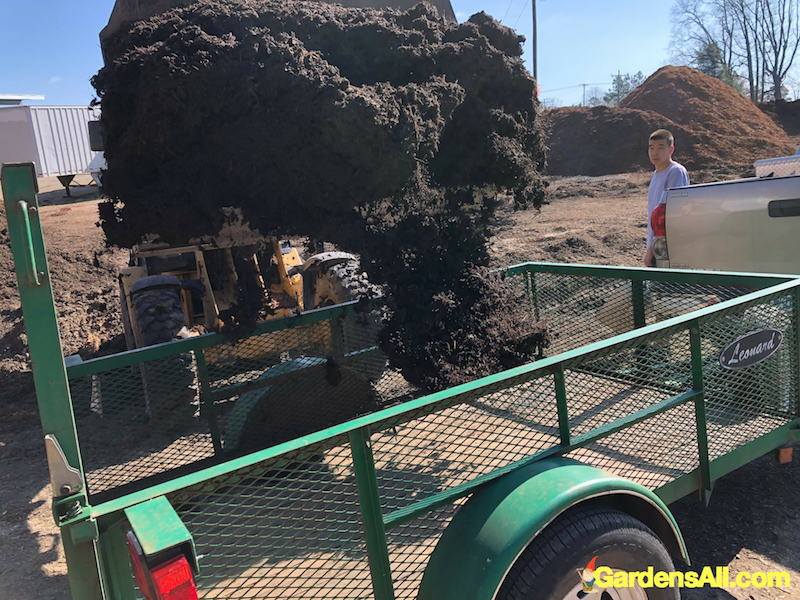
Having a pickup truck and a trailer, we were able to easily load boxes in the truck bed without truck bed tie downs and obtain a trailer load of “double ground” hardwood mulch at our local farm supply, if we didn’t already have a free chip drop). It’s much more economical to buy in bulk (cost us about $20/big bucket load) as opposed to buying the bagged stuff.
If you don’t have a pickup truck, you can probably have a truckload (or half) of mulch delivered for less than the equivalent amount in bags. You just need a spot for them to dump it.
How much mulch will you need? Find help for calculating mulch and free sources of wood chip mulch here.
Cardboard Weed Barrier
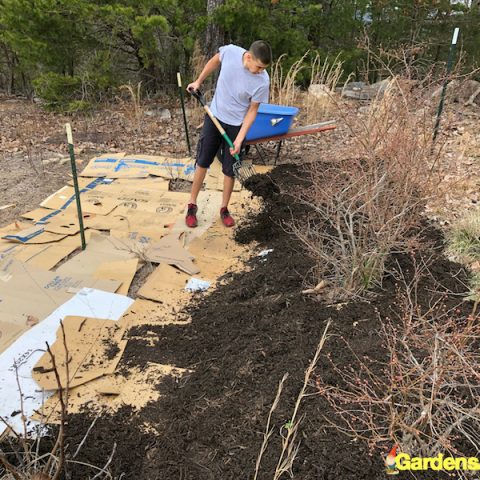
As you’ll see in the video below, we worked on a good sized area (~1,600 sf) starting at the top of the slope and layering the cardboard. It’s important to cover the top edge of each cardboard section with the bottom edge of the one above. Like shingles so that the flow of water will not cause issues.
Cardboard Weed Barrier Around Blueberry Bushes
For blueberry bushes in particular, we left the area around their root zone uncovered by cardboard, but still applied a generous layer of mulch.
Blueberry bushes tend to send new shoots up from their base area eventually forming fruit bearing canes, so we didn’t want to inhibit that process.
How to Lay Out a Cardboard Weed Barrier
Here are a few extra tips that should help this method along.
- Start at the lowest level and work your way up
- Overlap all seams, roof shingle style
- Keep boxes as flat and open as possible
- Rip off and discard any plastic package tape
- Use whole boxes flattened to reduce seams
- Moistening cardboard sections helps them lay flat and stay put
- Cover the seams with mulch before rolling a wheelbarrow there
- Wheel onto the completed sections to dump new mulch
- Adjust the cardboard sections to overlap seams
- Landscape staples might help, especially on slopes
- Water the mulched area with spray hose to allow soaking in
Though this job may seem specialized, these methods can be applied to practically any garden situation where weed control is needed.

Other Natural Garden Weed Control Options
- Thick layers of wet newspaper (not so readily available these days)
- Brown paper grocery bags – when store clerks ask you, “paper or plastic” choose paper and use them in the garden!
- Craft paper (in rolls)
- Landscape fabric weed blockers
- Mulch – AKA:
But hey… why miss out on the joys of dumpster diving?! 😉
The heavy duty fabric works great if covered in non-organic material like brick chips or stone. But, as mentioned earlier, the organic mulch eventually breaks down into a weed growing medium on top of the fabric.
Obviously, the cardboard will break up as well, but it’s cheaper stuff and we can re-apply it when the time comes in around 3 years, give or take one.
For more natural gardening, check out how to make organic compost and also organic pest control.
Feel free to join the conversation on the GardensAll Facebook page. Let us know your thoughts, preferences and experiences and we’ll gladly add them here.
Let’s keep on growing!


G. Coleman Alderson is an entrepreneur, land manager, investor, gardener, and author of the novel, Mountain Whispers: Days Without Sun. Coleman holds an MS from Penn State where his thesis centered on horticulture, park planning, design, and maintenance. He’s a member of the Phi Kappa Phi Honor Society and a licensed building contractor for 27 years. “But nothing surpasses my 40 years of lessons from the field and garden. And in the garden, as in life, it’s always interesting because those lessons never end!” Coleman Alderson