
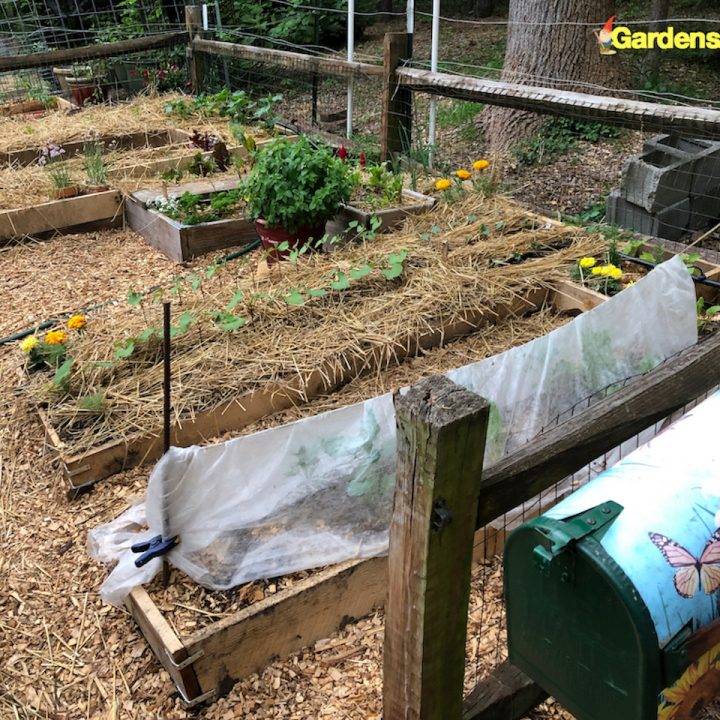
Every gardener eagerly anticipates the spring gardening season. As the temperature starts to rise, and mild days lure us outdoors, we ditch the indoors and get busy outside at the first warmer day. The promise of spring quickens our pulse, eager to get out there and plant something.
With new life bursting forth in vibrant colors from earth to sky, is ever a time of renewal of the yard and garden… and of the gardener’s spirits!
Spring flowers and shrubs, like the amazing flame azalea – an orange flower shrub, and redbud trees budding into blossoms never fail to lift our spirits. Or the very fragrant sweet box ground cover with simple white flowers that pack a powerful and delightful fragrance.
Plant lovers in spring are like kids in a candy store, bringing home new plants with almost every trip to town!
From Winter to Spring Gardening
As our regular readers know, we live in the woods out in the country with limited garden space, and right now, about half of our garden space is already occupied. How so? We’re fortunate to have carry-over winter vegetables from the fall planting through a fairly mild winter. Temperatures have rarely dropped below 20° F here in zone 7a so far this (and last) winter.
This winter we grew more winter crops with the aid of our cattle panel greenhouse and also products like frost covers. It’s been WONDERFUL to have fresh garden greens all winter, as well as microgreens, with the help of products like a simple heat mat and LED grow lights.
We still have many of the cole crops: broccoli, kale, Swiss chard, mizuna, arugula, and cabbage. Plus, we still have radicchio, corn salad, dandelion, and pansies.
A special bonus to winter gardening: all this bounty with very few weeds, no pests, and next to no watering! Now that is a gardener’s paradise!
This week we’re enjoying amazingly fresh green salads with most of the above greens. Great tasting, hardy greens (not like the wimpy stuff from the store), plus the best possible nutrients of organic garden-to-table produce.
Spring Gardening Showcases Color and Texture
There’s another wonderful feature: the color and texture of every leafy morsel adds visual appeal in shape and color. In fact, many of these spring plants are good enough for edible landscape gardens that even many HOA rules won’t mind.
And while it’s too early to plant tomatoes, you may be able to start growing them from seed indoors to be off to a running start when your soil temps rise enough to transplant them.
We love planting beauty in both our food and landscape gardens. Whether it’s form, texture, color, scent, or some other feature, the gardener’s palette holds endless possibilities. Here are some of our favorite vegetable varieties that may help with your garden planning.
“O wind, if winter comes, can spring be far behind?”
~Percy Bysshe Shelley, English Poet, 1792–1822

Colorful Spring Gardening Vegetables to Grow
The Cruciferous Vegetables – Brassica Family
- Beets – plant right after last frost
- Bok Choy – Purple Lady
- Broccoli – Premium
- Carrots – plant 2 weeks before last frost
- Cucumber – plant 2 weeks after last frost
- Collards
- Kale –
- Dinosaur – Lancinato
- Ornamental
- Red
- Scarlet
- Kalibos Cabbage
- Mizuna – Beni Houshi
- Potatoes – hearty – can withstand a few freezes
- Swiss chard – especially the richly colorful types like “Bright Lights‘
- Turnips
Swiss Chard in GardensAll Garden

Radicchio in GardensAll Garden

Broccoli in GardensAll Garden

Kalibos Cabbage in GardensAll Garden

Spring Gardening Greens to Grow in the Chicory Family
- Dandelion – Italiko Rosso*
- Radicchio – Rossa di Verona
- Endives – Batavian Full Heart
Italian dandelion (Cichorum intybus), It grows best in USDA plant grow zones 4-9, and is not a true dandelion but of the Chicory family commonly used in Italy for salads. The Italian dandelion leaves are similar in appearance and taste to the common dandelion, featuring larger, darker green leaves that grow more upright.
The common dandelion (Taraxacum officinale), grows best in zones 3-9, and is a powerfully healthy and healing plant, with edible, leaves, roots and flowers. Dandelion stems contain a white milky sap containing latex, which some claim to be edible and medicinal for the liver. There’s a little more on that in this article on edible weeds, but always do extensive research before consuming, and if in doubt, don’t!

Colorful Spring Plants for Beauty and Health
Colorful plants don’t only feed the soul and senses, they also feed the body special nutrients. We tend to favor the reds and purples. Any fruit or vegetable with purple or red contain an extra measure of antioxidants. These anthocyanins protect our cells from the ravages of aging, cancer, stroke, and heart disease.
RELATED: Growing blueberries
Variety not only spices up your garden, but color assortments also provide a wide range of nutritional benefits. Remember the rainbow plate as recommended for a balanced nutrient rich diet? A rainbow garden transforms color and beauty into a colorful plate of delicious and nutrient rich food to grace plate and palate!
Naturally, many of these cool season vegetables are well-suited for late-season planting as well, able to carry through the winter weeks and months with a bit of protection. Some actually taste better after a frost or freeze.
Eat the Leaves Too!
Cabbage and Broccoli not ready? Eat the leaves! Harvest the green leaves of broccoli, cabbage, cauliflower, and other cruciferous vegetables for delic