
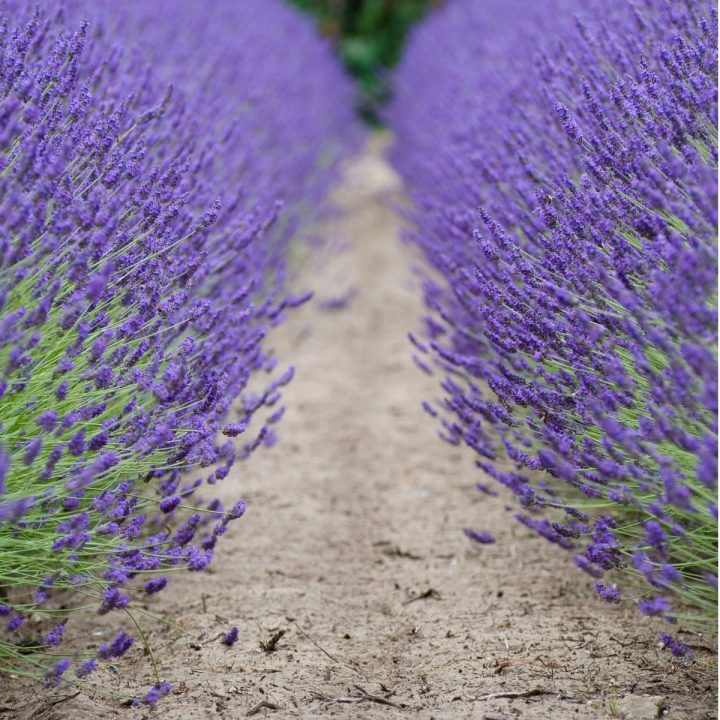
And What Are the Best Lavender Growing Conditions?
So is lavender a perennial or annual plant?
Depending on the USDA hardiness zone where it is planted, lavender can be a perennial or an annual plant. It’s a common consideration actually, that many annual plants may be perennials in their ideal growing climate.
Does Lavender Come Back Every Year?
Yes, if lavender is a perennial plant if it is planted in USDA zones 5a through 9a.
Lavender grown in zones 9b and up may not survive the heat of the summer. If grown in zones 4b or below, lavender may not survive the cold winter and would then have to be planted as an annual.
Even if it is grown in appropriate lavender growing zones (5a through 9a), the plant can still act as an annual if its preferred growing conditions are not met. Let’s talk about that.
Does Lavender Need Full Sun or Shade?
Does lavender need full sun to grow? Usually, it does, but that can vary depending on your local climate.
For instance, at the sign for our subdivision, there’s a patch of lavender that’s growing well. Even though it is somewhat shaded by a tree heritage variety river birch and some knockout rose bushes, as well as the subdivision’s stone sign. However, these are all on the north side of the lavender. The plant is completely open to the west/southwest direction, where it gets around 8 hours of sunlight throughout summer.
How Much Sun Do Lavender Plants Need?
If grown in hardiness zones 9a or below, lavender needs full sunshine, or mostly full. It can tolerate a little shade, so long as it gets a minimum of six (preferably eight) hours of bright, direct, unfiltered sunlight.
Lavender grown in USDA hardiness zone 9b or greater may tolerate slightly more shade, especially in extra hot weather. Lavender needs warm but dry soil. If you have an exceptionally hot, wet, or humid summer, you might lose a few lavender plants, or they may fail to thrive.
Lavender needs a minimum of 6 hours of sunlight, and grows best in full sun
Lavender Doesn’t Like too Much Water or Humidity
If you live in a humid area, space your plants out a bit to improve airflow and increase their odds of survival. Lavender survives drought well, but overwatering or cold or soggy soil is usually a death sentence for the plant. Wet roots lead to root rot, fungal disease, or both.
That’s what happened to our first lavender plant. We planted it in our hugelkultur bed but it was in a section with too much shade a moisture and died before we could salvage it.
Signs of Lavender Root Rot
The same thing happened to our Meyer lemon tree. The leaves falling off and/or turning yellow. With the lavender, the leaves withered and darkened to gray.
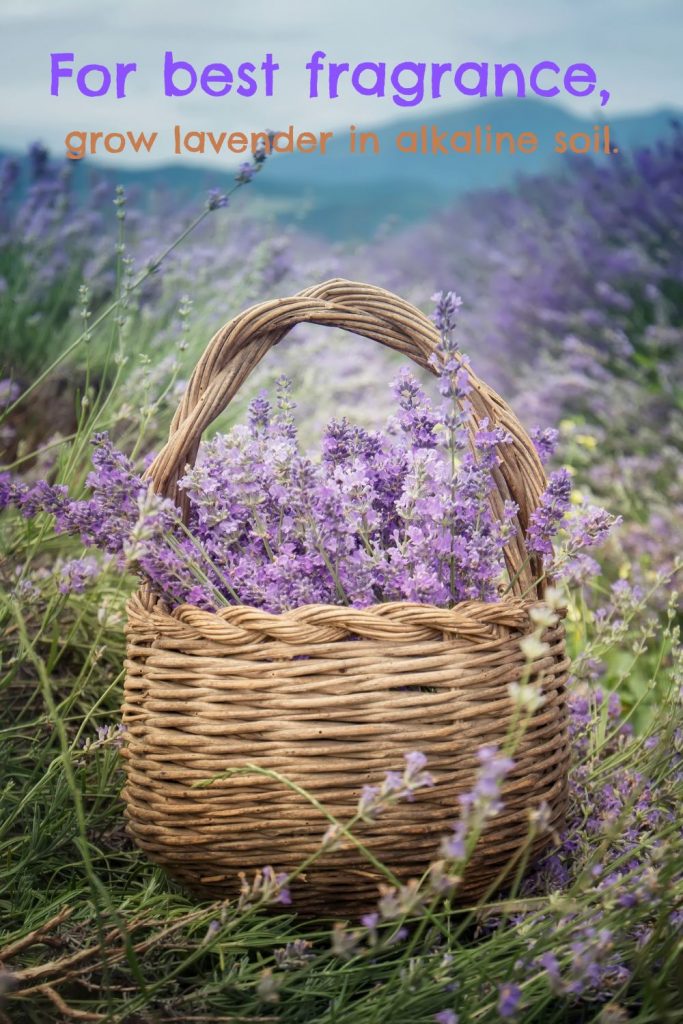
For optimal lavender growing conditions, place your lavender plants in zones 5a to 9a, in full sunlight, in well-draining, warm soil that stays relatively dry. To improve the intensity of the flowers’ fragrance, you should aim for alkaline soil that is nutrient-poor and very dry during harvest.
Dry soil concentrates the oils of the lavender bloom, making it smell better and stronger.
If you want to fertilize your plant, do so when you first transplant it into the garden from a nursery pot, then leave it alone. After that, to fertilize once a year is enough.
Overwhelming the plant with food or fertilizer after the blooms start to come on will weaken the plant and the aroma of the flowers and leaves.
For homemade fertilizer, check out our articles on compost tea and also organic compost.
For maximum lavender fragrance, grow lavender in alkaline soil and do not over-fertilize.
The Best Time of Year to Plant Lavender
Plant lavender in the spring, after the risk of frost is gone. It doesn’t matter if you are growing your lavender from seed, purchasing seedlings, or growing from a cut propagation; you need to plant it during the warm months, in between your first and last expected frost dates of the year.
In considering first and last predicted frost dates, remember that these are predictions based on averages. That means there are always exceptions to the mean.
You can use it for planning and planting but then you just have to be a diligent and agile, ready to spring into action if you need to apply frost covers to protect tender plants and save them from an unexpected freeze.
Last Average Frost dates for Zones 5 – 9a
- 5 – May 15th
- 6 – May 1st
- 7 – April 15th
- 8 – March 20th
- 9a – February 17th
First Average Frost Dates for Zones 5a and 9a
- 5a – October 15th
- 6 – November 1st
- 7 – November 15th
- 9a – December 1st
For more on growing lavender and making lavender oil here, and good luck with your lavender. It’s a truly wonderful plant with so many wonderful uses and benefits.


We are an online gardening publication sharing all things garden related! Including urban farming, family gardening, homesteading, gardening for profits, and more. We’re all about growth!