

It’s super easy to make DIY homemade greens powder from your garden harvests. More than that, you can also make great use of edible weeds, greens and flowers that you might not enjoy as much as food.
We love kale, but our friend, community member, and co-host for our Planting for Retirement group, Shannon Schofield, says that although she hates kale, she’s growing it.
Shannon dries her kale and then grinds it into a homemade greens powder, which she then puts into everything so that she’s getting her vitamins without even noticing the kale taste and texture that she doesn’t like.
Powdered garden greens is a great way to help picky eaters get their quota of vital nutrition. You can “hide it” in just about any recipe that’s not white. 🌿 😊 🌱
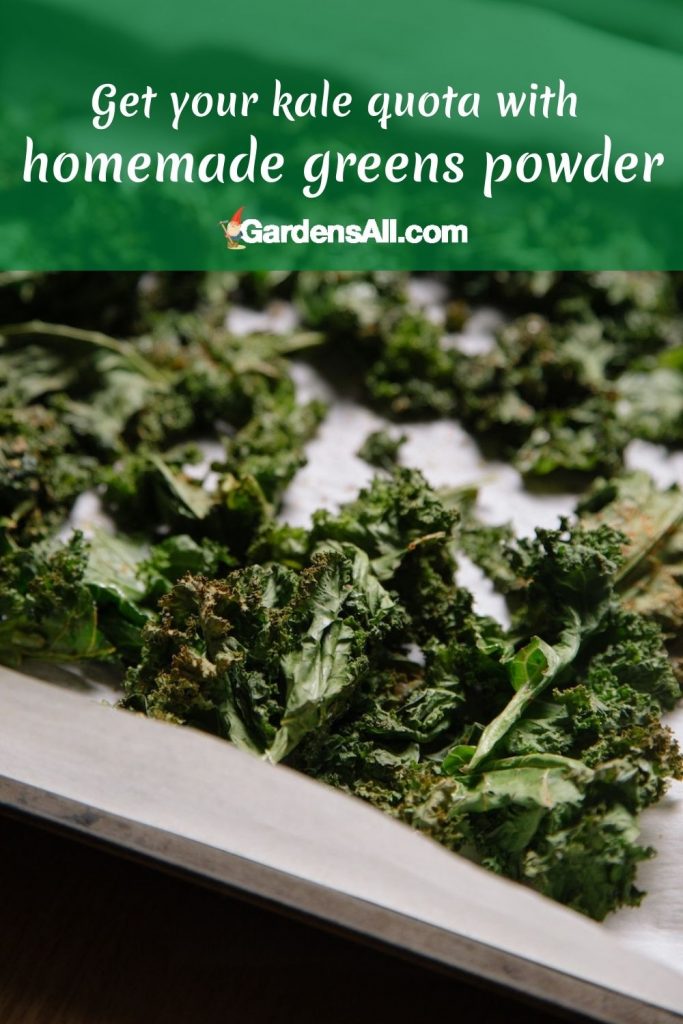
Homemade Greens Powders
Drying and Powdering Garden Goodies
Fresh from the garden is the best way to enjoy the freshest and healthiest food on earth. However, we also need to store our foods so that abundant harvests won’t go to waste, and so that we’ll have a pantry full of garden fresh preserved foods to last through the winter.
It’s easy to make your own dried and powdered herbs for culinary and nutritional benefits, and we know many of you are doing this.
We love that we can actually make our own “supplements” by drying and/or powdering herbs and vegetables.
Dehydrating and powdering is a great thing to do with some of the extra greens, including weeds you can eat. It’s also a good way to make use of edible plant leaves that may not be your favorites in salads, such as those with slightly fuzzy textures like radish leaves.
Dried herbs, leaves and veggies, especially in powders, can then be added — and hidden for picky eaters — in practically anything.

Save Money and Make Your Own Nutritional Powders
Greens powders for shakes, smoothies and green juices range in price from $1.13/oz to as much as $4.35/oz, and equates to an average price of $1 per serving.
Now naturally, those super greens powders are concentrated and often have dozens of different foods in them, so they’re bound to be more nutrient dense that what we might make at home. However, the slow drip method of enjoying herbal infusions in your water throughout the day can add up, plus the sipping method allows for greater metabolic assimilation.[1]https://www.shape.com/healthy-eating/diet-tips/how-to-absorb-more-nutrients-food
And if you like sweeteners, then toss in a few stevia leaves, which provides additional nutrients and health benefits but none of the damage attributed to sugar.
Uses for Powdered Greens, Veggies, and Herbs
- Breads / baked goods
- Capsules – (you can even fill your own empty vitamin capsules with your own mixture of nutritious dried plants)
- Casseroles
- Green juice
- Salad dressings
- Smoothies
- Soups
- Vegetable stock
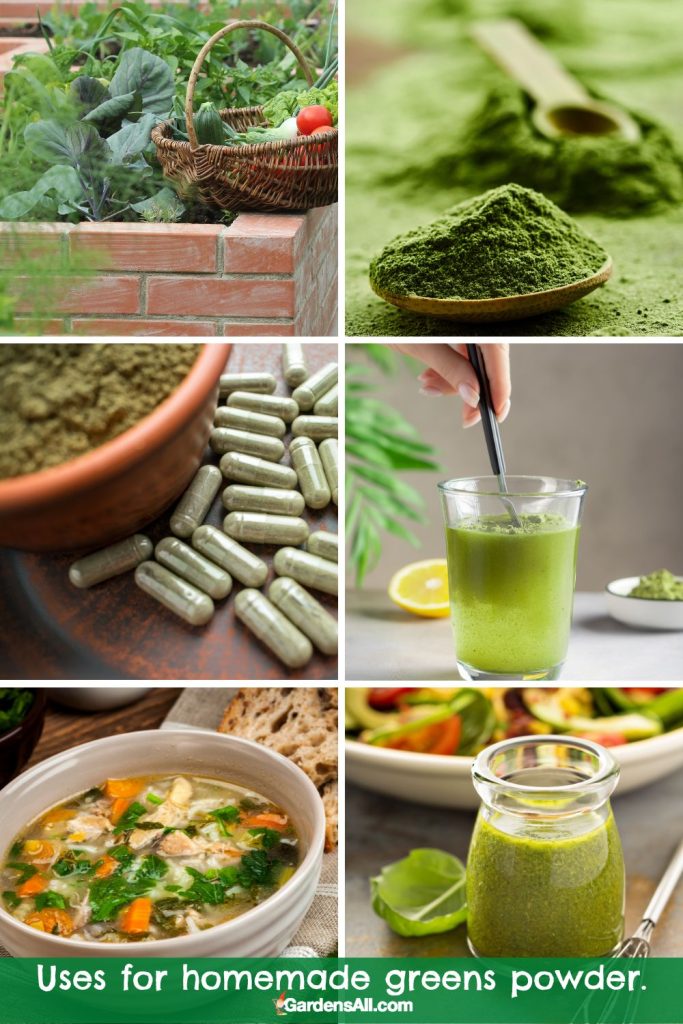
Homemade Greens Powder Saves Money and Improves Health
These leaves, weeds, and other edibles, especially those not as favored for foods are a great way to make use of more of nature’s abundance. Infusions add a little interest to plain water while providing a steady “drip” of nutrients, making your own — vastly better for you — “vitamin water.”
Years ago when bottled vitamin waters came out we thought it was a great idea and bought them on the spot. However, while enjoying the drink, we turned the bottle around to read the label and were shocked at the high sugar content. Not only high in sugar but many of the store bought “vitamin waters” actually contain the worst of sweeteners, in the form of high fructose corn syrup (HFCS).
But it’s easy to make your own! One of our dreams is to grow GardensAll to a level of success that will allow us to have our own test lab (or at least to farm that out periodically), in order to test the actual nutrient value of foods in various forms. But until then, we figure that herb and plant infused waters have more nutrients than plain water, (which we also enjoy), and are grateful for some good well water.
Homemade Vitamin Water
Vitamin Water From Homemade Greens Powder
Just dump a tablespoon of your homemade greens powder into your water bottle, shake it up and you’re ready to go. If you don’t care for the grainy feel of the powder in your water, the you can accomplish the same benefits using dried greens.
Homemade Vitamin Water From Dried Leaves
The dried leaves have many uses including adding to teas and infusions.
For instance, we add tea bags and tea balls to a pitcher of water to slow steep overnight or in the morning and then sip on it throughout the day. Or you can infuse it more quickly by adding boiling water to steep for a few and then adding cool or chilled water for summer. In a pinch (or moment of laziness), I’ll toss a tea bag or two into my water glass or water bottle. The same teabags can stay in my glass or bottle all day, and still impart some flavor and benefits even after multiple refills.
Easiest Way to Make Your Own Super Greens Powder Blends
Whether we’re making our favorite egg bake breakfast, a garden salad, soup or even nachos, we like to make use of whatever is on hand that needs using. We’re not picky eaters and find that so many different vegetables work great in so many ways, and there are many ready substitutes for when you don’t have your usual ingredient for something.
The same principle applies with DIY greens powders. All leafy green vegetables, plus wild edibles and also herbs are nutrient rich plants that work great for powdered greens.
There are two approaches to getting a variety of greens blends. The one best for you depends on your style and approach to things, such as whether you like to be more precise and specific, or if you like more the kitchen sink approach with a pinch of this and a dash of that.
Each way has its advantages and disadvantages. See which way sounds more like your style.
The Organized Way to Make Homemade Greens Powders
Dehydrate like greens with like and store that individual dried and powdered plant in its own airtight and well labeled and dated jar. Arrange these alphabetically in your pantry, and using one or more together in your various uses.
There are several advantages to one type of green per jar. It will give an idea of which ones you’re using most and so help you to know which ones to be sure to grow, dry and powder in subsequent seasons.
You’ll also be able to compare taste preferences. E.g., one day you might go for the kale powder in your salad dressing and the next time try broccoli greens and then notice any differences in flavor and preferences, if any.
The ultimate storage jars recommended (and proven) to extend shelf life of herbs and vegetables, and preserving your greens powders, is the violet colored Miron jars. Or copy-cat versions of Miron jars from Amazon.
The Casual Cook Approach to DIY Greens Powders
Dehydrate whatever edible weeds and garden greens are ready for harvest. Powder them together, and store in an airtight jar. Label and date it, and add the ingredients if you like so you’ll remember which blend it is.
This approach provides a pre-blended seasoning mix. You can also use these blended greens powders in recipes that call for soup stock, adding a tablespoon per 16 ounces of water, or to taste. If using for soups, you’ll need to add salt separately, or else you can create blends that already include salt.
Greens powders make great seasoned salts as well, so keep that in mind as you have fun experimenting. You might want to track your favorite blends and then turn those into seasoned salt and vegetable soup stock powder.
Greens Powders for Smoothies, Green Juice and Baking
For greens powders that you’ll be using for baking, smoothies and green juices, you can also add in dried fruits such as blueberries, goji berries, apples, pear, pineapples, as well as nut flour or ground nut meal. Keep in mind using the denser items like nut flours for denser foods such as smoothies and baked goods.
We recommend starting with a good base of greens, then try adding one fruity item into that at a time. See how you like it in your foods and beverages, and continue exploring and experimenting from there.
Best Greens Powders for Salad Dressings, Soups and Casseroles
These beg for savory and herb rich flavors, so for this use you’ll want to be sure to include your favorite salad dressing herbs and soup stock flavors. This can even include dried and ground mushrooms that were raw or cooked and dried before grinding
Best Appliances for Powdering Dried Herbs
There are a number of ways to ground up dried veggies into powder. If they’ve been properly dried to the point of crispness, they should easily turn to powder with a little help from a handy appliance.
Favorite Appliances for Grinding Dried Foods
- Vitamix blender – using the dry grains container
- Food processor – we get the best results for powders from the mini food processors over the full size ones
- Spice & coffee bean grinder – these yield great results for about the same or less cost than mini food processors
How to Make Greens Powders
- To dehydrate vegetables, place close together but in a single layer in your choice of appliance:
- Food Dehydrator at 100-125 – read more on best food dehydrators
- Freeze dryer – these are large and very expensive, but if you have the budget and space, they’re real workhorses
- Oven – place on parchment paper on a cookie sheet and place in oven on any of these options:
- warming setting works well if you have that
- lowest baking setting (convection helps if you have that). If minimum temp is over 125°F, check and stir often to be sure the herb doesn’t burn.
- Drying rack of choice hung outdoors, preferably in the sun, or indoors where there’s good airflow. Drying rack options include ahanging rack or this stackable screen rack
- Run until dry, so any time listed is approximate, so you’ll want to monitor it and check it every hour (that you’re awake) after the first couple of hours. Timing will depend on the item density and the heat used and can be anywhere from 2-24 hours. With our electric dehydrators here are some of our average times:
- 4 hours on items like Lacinato kale; chard, spinach, longevity spinach and beet greens
- 24 hours for marigolds
- 12 hours for calendula blossoms (these have a lot of oil but they’re thinner than marigolds so faster drying
- 8 hours for herbs that are denser with oils such as rosemary and lavender; parsley for much less, such as 2-4 hours
We’d love to hear what greens and things you’re drying and powdering.
For some of the best quality organic powdered greens of all kind, check out our favorite by Dr. Cowan’s Garden.
Other Refreshingly Healthy Water Beverages With Fresh Garden Goodies
- Cucumber Lemon Water – add herbal infusions to this
- Watermelon Smoothie – great with mint such as lemon balm
- Raw Chocolate Smoothie – a great place to hide those greens for the picky eater
Medicine and food abound all around!
“Better to hunt in fields for health unbought, than fee the doctor for a nauseous draught.”
~John Dryden, English poet, playwright, 1631-1700

Our Greens Powders
A GardensAll Facebook community member asked:
“What are some of your favorite things to add it to?”
To which we replied:
Most recently, we’re mainly making teas out of the leaves we dry. When we do powder the leaves, we favor squash leaves and okra leaves that are nutrient rich but not our favorites to cook of all the many options. Also longevity spinach, sweet potato, bean and pea greens. We also harvest and dry more in fall before pulling out the plants.
While the tender leaves are reported to have more flavor and nutrition, we figure the older ones still have plenty of nutrients and drying them to powder helps remedy the old and tough part.
It’s easier to just toss the old leaves into the compost when you pull out the plants and we do that too, but save the best of the leaves to dry because they have nutrient and fiber value too.
See more edible leaves of vegetables and fruits as well as edible tree leaves.

I’m LeAura Alderson, a garden, herb and plant enthusiast with a passion for discovering the many edible and medicinal benefits of the plants all around us, including the weeds, while transforming the land through regenerative permaculture practice. I am also a writer, editor and media publisher (now mostly retired due to replacement by AI), but which now allows more time to build our regenerative permaculture homestead farm.
References