
Wood Rot for Your Raised Garden Plot
What’s hugelkultur when would you use it, and how do you say it anyway?
Pronounced something like: Hoogle-culture, or Hoogle-cul-tour, this centuries old method of raised garden beds, has migrated to the west and been eagerly adopted by permaculture fans and those with problem soil and terrain.
Who tends nature’s garden? Who is out in the forests and fields adding soil amendments and fertilizer? Just Mother Nature of course.
Modeled after Mother Nature’s example, Hügelkultur (also spelled huegelkultur), translates from German as “hill culture”). Using wood and wood rot along with other natural debris, these elevated garden beds are especially beneficial for those living in or near wooded areas.[1]https://www.appropedia.org/Hugelkultur
Hugelkultur raised garden beds are the cheapest and most natural form of gardening.
Plant it and Leave it. Well Almost.
Practiced in German and Eastern European societies for hundreds of years, hugelkultur utilizes just three ingredients—like nature—to create an incredibly fertile environment for gardening: wood, soil and mulch.
Brought to North America by Sepp Holzer, an Austrian permaculture expert, this natural form of gardening is becoming increasingly popular because of its nature-friendly, low maintenance, commons sense approach to permaculture gardening. [2]https://en.wikipedia.org/wiki/H%C3%BCgelkultur
We started a couple hugelkultur beds last year, and were impressed enough that we’re planning for more. It’s perfect for us because we live in the woods with ample access to hugel bed makings, and some of our garden areas are rocky with poor soil. We also lead very busy lives running multiple businesses, so this low maintenance gardening method is a perfect fit for us. We’re eager to see if we’ll have less trouble with moles in the hugelkultur because they sure tore up some of our row beds this past season. [3]https://www.gardensall.com/the-ultimate-raised-garden-bed-permaculture-with-hugelkultur/
Our hugelkultur beds are our best producers so far.
~GardensAll.com
2022 UPDATE: There is one main vulnerability that we’ve discovered with our hugelkultur. If you want to skip straight to the hugelkultur disadvantages, you can find those cons nere.
Here’s a small illustration to help get your head into the concept if it’s new to you (sharper visuals of these appear below).

from his site, RichSoil.com. See larger, clearer versions below.
Hill Culture – Modeled After Mother Nature
These nature-modeled gardening methods can be incorporated into virtually any kind of land area. However, hugelkultur is especially conducive to areas near natural woods with ready access to wood and vegetative debris which is the foundation of a hugel bed.
Benefits of Hugelkultur Beds
There are many benefits of this method of gardening, and we love making good use of the many natural resources around us for creating these.
Pros of Hugelkultur
- Hugels are beneficial for land that may be hard to garden or farm
- Beneficial for hilly or dry land
- Constructive use of decomposing natural materials
- Hugelkultur often eliminates the need for watering
- Hugelkultur conserves water
- Increases the surface area for growing
- Improves the growing medium
- Increases crop yield with each passing year
- Sets up a natural biodynamic ecosystem over time, that includes natural predators to pests attracted to hugels
Hügelkultur replicates the natural process of decomposition that occurs on forest floors.
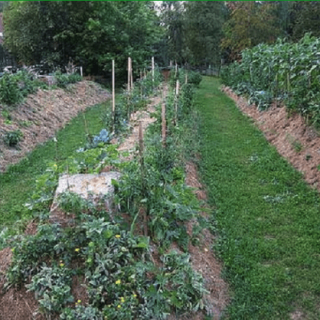
Cover image from a Sepp Holzer Hugelkultur garden.[4]https://www.seppholzer.info/huegel-culture-design/
Disadvantages of Hugelkultur
Our hugelkultur bed started off great, then diminished in production.
Apparently, it became a great place for voles and moles to hang out. 

 How about you? Have you had similar problems with your hugelkultur?
Cons of Hugelkultur
- Looks messy
- Not as attractive as constructed raised beds
- Attractive to pests like:
- voles and moles, without any barrier to access
- termites
- carpenter ants
- Can take time and patience to achieve a balanced ecosystem
RELATED: Find more on raised beds that include pest protective barriers.
How to Make Hugelkultur Permaculture
Permaculture is about designing in accordance with nature, using plants and processes that keep on producing, growing and improving over time, rather than the garden beds that have to be re-tilled and replanted year after year.
Think of the woods and the richness of forest soil. Hugelkultur raised garden beds are designed to mimic the process of how topsoil is formed in the forest. Beginning with digging a pit and loading it with logs, branches, rocks, and layered over with soil and organic materials, the super mounded raised bed improves over time as the materials below break down and all the lovely microbes, and other lively critters join the party in creating a very lush growing environment. It considerably speeds up how forests make rich soil.
Here are a couple videos about our project. In the following gardening videos, Coleman Alderson mentions planting perennials like asparagus and dandelions (yes, planting “weeds”!) along with Jerusalem Artichokes. Further research warned us about setting out the Jerusalem Artichokes due to their tendency to take over. So we planted rhubarb, chicory, sorrel, onion sets, scallions, and the wonderful multi-purpose plant, calendula, with its medicinal benefits and defense against garden pests.
At the end, you’ll see our Mid-Summer update at the end of this series.
Hugelkultur Part 1: Building Our Bed, What to grow, and Log Layering
Hugelkultur Part 2: End Result, Layers Diagram, and Tips for Growing
Hugelkultur Part 3: Update Tips, & Overview
Hugelkultur Photos
So how did it all turn out? It’s thriving without any effort.
Ours hugel is now about 5 years old and we’ve never had to add anything else to it. That’s worth repeating. We built it one year and have perennial plants coming up year after year without needing to do anything except a little weeding (if you want to). This permaculture method of no-till, no-water, low maintenance gardening holds many benefits.
SPRING 2022 UPDATE: As nearby trees have grown, they started shading out our hugelkultur garden, so the asparagus, calendula and lavender were no longer thriving.
So we’re growing dandelions, which of course, grow anywhere, and very much looking forward to enjoying more salads, flowers and dandelion tea, for the many dandelion benefits of this magnificent plant!
