

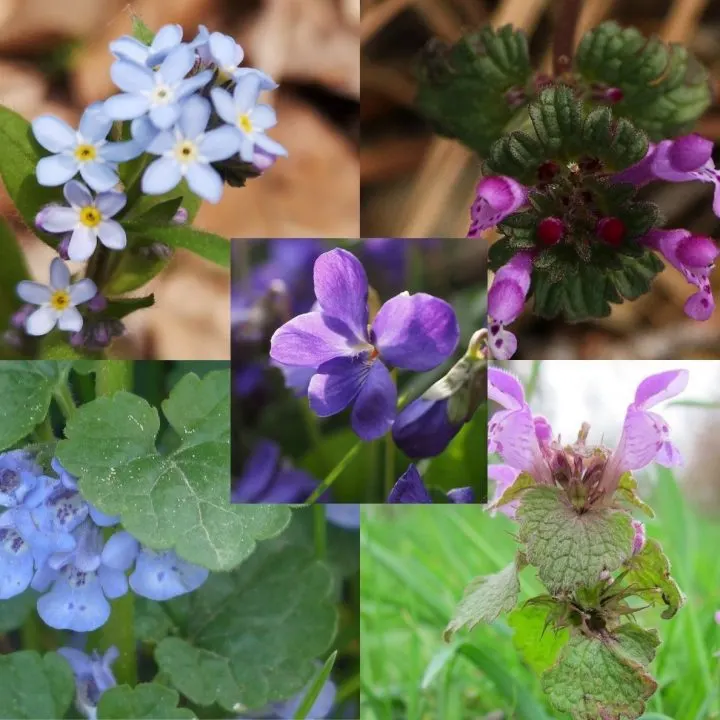
You may have found this article because you’re looking to identify pretty weeds with purple flowers on your nature walk, or perhaps you’re looking at whether to love — or remove — those purple blooms from your yard or garden.
In this article we will look at some common wildflowers and weeds with purple flowers, including their uses and benefits, to help you decide whether to keep them or pull them out.
One GardensAll Facebook community member commented to say that “These are wildflowers, not weeds.” Yes, so true!
And as we said in our reply:
“We so agree! It’s just that some consider them weeds, (especially if they don’t want them in their lawns!), and look it up online using that term to identify the wildflower. So we went with that title for this article to help people find these wonderful wildflower plants and some of their benefits beyond beauty and bee food!
So for this article we’re using the commonly cited quote about weeds:
Weeds are just plants that grow wherever you don’t want them to.
~various authors/various versions
Gardeners and Weeds… Do You Love ’em or Leave ’em?
There are primarily four different attitudes amongst gardeners when it comes to weeds, including that some see them as weeds and others see them as wildflowers and wonderful little plants.
Which best describes your relationship with yard and garden weeds?
- Some find weeds an aggravation to deal with
- Some ignore the weeds altogether
- Others enjoy weeding for a kind of stress release gardening therapy
- And then there are those who see the weeds as another garden plant with benefits
Weeds With Benefits
Indeed, some weeds and wildflowers have tremendous nutritional value, like dandelions or chickweed. Others are pretty to look at, with cheerful blooms.
Each gardener must weigh the beauty and benefits of the specific species against the harm it might cause to other plants. To help you do that, we include information on any edible and medicinal benefits of these weeds with purple flowers.
Some of what you learn may cause a double take and rethinking on whether they’re weeds to get rid of or plants to make good use of. Either way and whatever you decide is best for you and your garden, we hope you enjoy the journey of discovery and find something useful for you.
We’d love to hear from you on anything you’re doing to use (or get rid of) weeds with purple flowers (and others)!
What Harm Do Weeds Cause?
You might wonder why you would bother pulling up edible weeds or those with beautiful bright blooms. But some of those pretty weeds with purple flowers may cause your plants not to thrive.
However, others say that weeds provide nutrients for other plants.
We’ll touch on both scenarios in this article.
4 Ways Weeds Can Impact Garden Plants
Here are reasons to cull the weeds from your garden, according to the University of Minnesota Extension Office.[1]https://extension.umn.edu/planting-and-growing-guides/controlling-weeds-home-gardens
1 – Weeds Rob Your Soil of Vital Nutrients
Weeds are fighting for survival like all living things and have gotten really good at surviving. Some say that weeds can deplete your soil of nutrients. Because of this, they will thrive while your flowers or vegetables may fail to flourish.
2 – Most Weeds Are Invasive
If you don’t remove these pesky plants, they can quickly spread and overtake your cultivated plants. In addition to invading garden beds and lawns, they also choke out plants in containers or raised beds.
Most weeds are hardy survivors, whereas many of our cultivated plants are not. In fact some weeds are considered survival food, not only because we can find and forage it for food but also because they are hardy and resilient plants.
Some of these weeds our ancestors brought to America for a reliable food source, such as dandelion. And yes, they are invasive but dandelions benefits are many as they’re edible and highly nutritious and medicinal.
3 – Weeds Deplete the Water Your Plants Desperately Need
During the growing cycle, especially when “making” vegetables or flowers, your plants need water. Weeds feel free to “share” the water from your plants, depriving them of the essential moisture.
While it is true that weeds will compete for water, they also actually help the soil retain moisture and fortify nutrients.
4 – Some Weeds Grow Tall and Wide Enough to Shade and Crowd Your Plants
Some weed species grow tall, others creep along the ground and spread like grass.
Those species that climb vertically can outgrow your garden plants. This causes two potential problems:
- BLOCKS SUNLIGHT: Your plants need the sunshine to thrive. If weeds shade them, they will not get the light that they require.
- BLOCKS AIRFLOW: As the weeds crowd your plants, it blocks the flow of fresh air. This crowding means that your soil might have difficulty drying out after it rains. Eventually, your plants might become prone to molds, mildew, or disease.
But there are so advantages to many so-called weeds and wildflowers. As the popular saying goes:
“A weed is just a plant that’s growing in the wrong place.”
~unknown
Are Weeds Beneficial to the Soil?
There are actually a number of benefits to weeds. When it comes to yards and gardens, weeds and wildflowe
Many are edible weeds that also have medicinal value. But beyond nutrients for human, animals and pollinators, many weeds are actually beneficial to the soil and to gardens. Here’s a list of some of the benefits of weeds for soil.
Benefits of Weeds for Soil, Yards and Gardens
- Shallow roots prevent soil erosion
- Fertilize the soil by composting nutrients back into the soil
- Weed roots:
- aerate soil
- open pathways for rain
- provide space and food for microbes and worms
- deep taproots bring nutrients up to surface soil
- Attract beneficial insects
- Help retain moisture
- Weeds reveal the health of your soil
- Many backyard weeds are edible and medicinal.
A great book on the benefits of weeds is Weeds, Guardians of the Soil by Joseph Cocannouer
WEEDS WITH PURPLE FLOWERS
Now that you know some of the pros and cons of yard weeds, let’s identify some common weeds with purple flowers. Once you know what species you have in your garden, you will be able to decide whether you should remove them or use them!
List of Weeds With Purple Flowers, Benefits Included!
We’re in the process of updating this list and adding more information. For now, the plant names that are underlined in the plants list below are linked to expanded information and images, should you wish to jump to any of those.
- Bee Balm (Monarda fistulosa): This plant has antibacterial properties and can be used to treat infections and soothe sore throats. See more bee balm uses here.
- Catnip: While many cultivate this mint by growing catnip for their cats, it is also a widespread weed with many beneficial use for humans!
- Cornflower / Purple Coneflower (Echinacea purpurea): This herb is well-known for its immune-boosting properties and is used to treat colds, flu, and other infections.
- Forget-Me-Nots, (Myosotis sylvatica), perennial
- Ground Ivy
- Purple Dead Nettle, (Lamium purpureum): This annual weed is high in antioxidants and can be used to treat inflammation and pain.
- Wild Bergamot (Monarda fistulosa): This herb is used to treat headaches, stomach problems, and insomnia.
- Red Clover (Trifolium pratense): This plant is used to treat skin conditions, such as eczema and psoriasis, as well as respiratory problems.
- Milk Thistle (Silybum marianum): This weed is known for its liver-protective properties and is used to treat liver problems.
- Morning Glory, (Ipomeia purpurea),
- Henbit (Lamium amplexicaule): This herb can be used to treat respiratory infections and soothe digestive problems.
- Purple Loosestrife (Lythrum salicaria): This plant has astringent properties and can be used to treat diarrhea, as well as mouth and throat infections.
- Self-Heal / Selfheal or Heal-All / Healall, (Prunella vulgaris), perennial
- Thistle:
- Common Thistle, (Cirsium vulgare)
- Milk Thistle, (Carduus nutans), biennial
- Wild Geranium, (Geranium maculatum), herbaceous perennial[2]https://wp.stolaf.edu/naturallands/forest/ephemerals/wildgeranium/
- Wild Violets, (Viola odorata, Violaceae), perennial
5 COMMON WEEDS WITH PURPLE FLOWERS

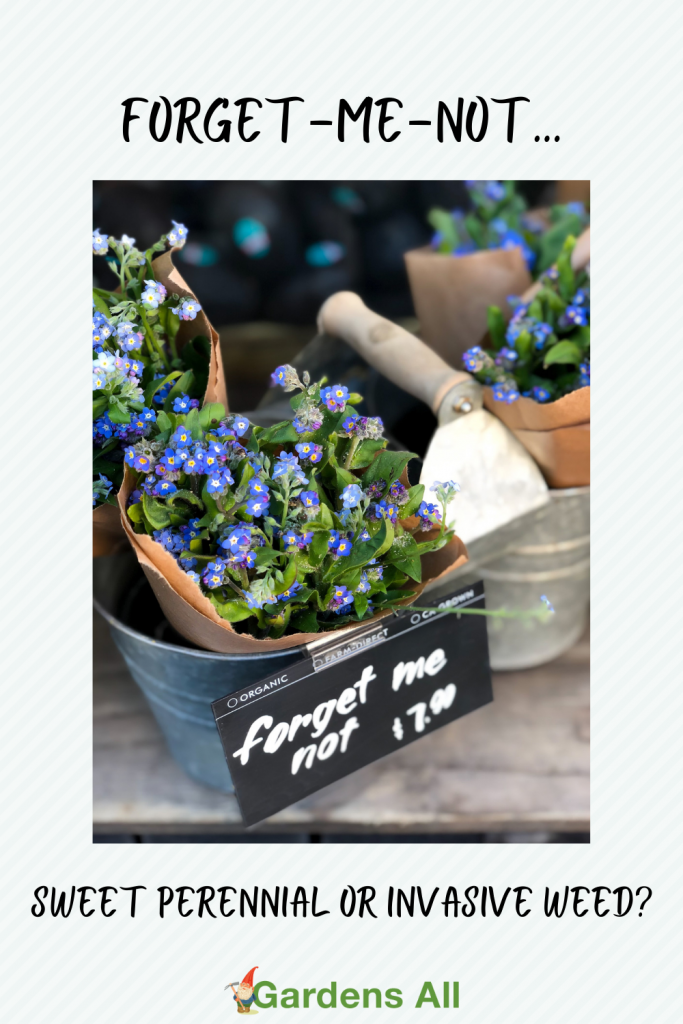
1 – Forget-me-not (Myosotis sylvatica), perennial
Do gardeners count the forget-me-not among weeds with purple flowers or as a border planting? The truth is—it can be either!
Many gardeners cultivate forget-me-not in natural areas or as border plantings because they are so easy to care for. However, once planted, it can grow out of control and take over your garden and even creep into the grass.
Forget-me-nots are a short-lived perennial best grown as an annual and can be grown as a biennial by planting seed in the ground in mid-summer for blooms the following year.
~NC State Extension
The Myosotis sylvatica species prefers well-drained but consistently moist soil and grows in conditions from partial shade to full sunshine. Because it grows so vigorously in the midwestern states, many extension agencies in that region list it as a weed.
Forget-me-nots have blue to purple, nicely rounded petals with a yellow center. While they are lovely to behold, they are aggressive growers.
If you cultivate forget-me-nots in a natural area or shade garden, deadhead blooms aggressively. This proactive approach will allow you to grow them but prevents them from going to seed and taking over your entire landscape. Another option is to grow them in pots only, but still remove blossoms before seeds drop in case any escape the boundaries of the pot.
Myosotis sylvatica translates as “Mouse Ear of the Woods.” Properly they are Wood Forget-Me-Nots.
~Green Deane, EatTheWeeds.com
Are Forget-Me-Nots Edible?
Yes, considered an herb, this weed’s purple flowers are edible in moderation, and often candied for decorating cakes and candies.
Forget-Me-Not Flower – Edible Uses
- Candied for cakes, pastries and candy – blossoms
- Fresh blossoms:
- in salad
- edible, decorative garnish for that gourmet touch to dress up foods
- added to teas
- Dried to add beauty and sweetness to tea blends
Do Forget-Me-Nots Have Medicinal Use?
Yes, in limited and careful use. Some varieties of the Myosotis plants are toxic, so best to use only under expert guidance especially when considering for internal use.
Forget-Me-Not Medicinal Benefits
- Astringent in poultices
- Volatile oils used as diaphoretic to induce sweat
NOTE: Some varieties are toxic and thought to cause liver damage, so always best to consult expert guidance.
SOURCE: US Forest Service
2 – Ground Ivy (Glechoma hederacea, perennial)
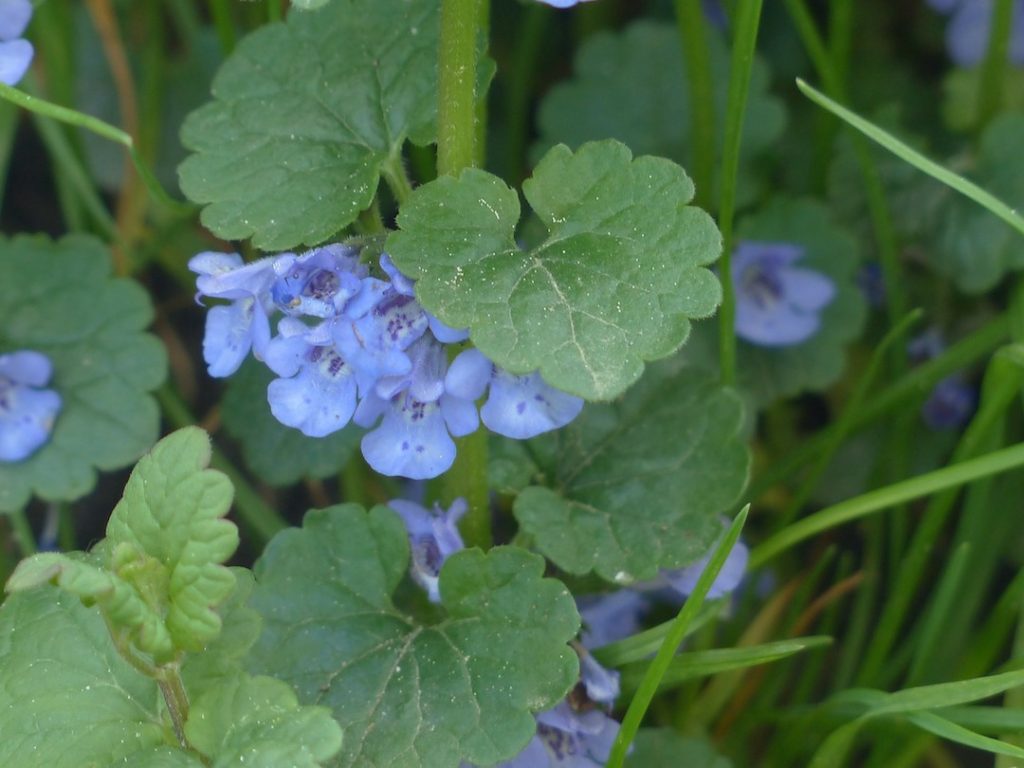
Also known as ‘creeping Charlie’, ground ivy is a distant relative in the mint family (Lamiaceae). Like their minty cousins, this ivy is an aggressive grower that survives in most weather, soil types, and even the abuse of cutting it with a lawnmower.
Ground ivy forms a low carpet that spreads vigorously across the garden or grass. Left undisturbed, it will deprive your garden of all the nutrients and damage your flowers.
The weed is herbaceous and the light purple flowers emerge in late spring to early summer. The blossoms feature small, lobe-shaped petals that form a head of four lobes.
Ground ivy is, indeed, a weed with purple flowers, and most gardeners prefer not to cultivate it! It is very unfussy and grows everywhere from the floodplains to the mountains, in moist, partially shaded areas.
During the summer heat, ground ivy will go dormant for a short time, which is an excellent time to try to rid your garden of it! Or… after reading about the edible and medicinal benefits, you may want to look at this plant through the lens of a garden crop or addition to your herbal remedies patch.
Is Ground Ivy Edible?
Yes! The leaves and flowers of ground ivy are edible and cook much like spinach and can be used however you enjoy spinach. Ground ivy has a mild sage and mint-like taste.
For the home brewer this plant is well worth foraging for during spring. It lends an aromatic bitterness and also has renowned abilities to clarify ale, for which it was once popularly used.
Ground Ivy Edible Uses
- Ale for home brewers (clarifies ale)
- Pie – E.g., Wild Garlic and Ground Ivy Tourtière (Holiday Pork Pie)
- Salads (flowers and leaves)
- Soup or broth
- Stuffing mixes
- Tea
Does Ground Ivy Have Medicinal Benefits?
Yes! As with dandelion and ramps, nature has provided some of its most potent nutrient dense and medicinal foods in spring to help us cleanse and detox.
So while many people despise the invasive nature of ground ivy, it may be a plant worth a second glance for all the man benefits it holds. Once again, as with the dandelion, well known for its health benefits, nature made these plants hardy and readily available for us to use, for a reason.
In fact, we’re purposefully growing dandelion.
Ground Ivy Medicinal Benefits
- Anticatarrhal – (reduces inflammation of the mucous membranes)
- Anti-inflammatory – (contains tannins & flavonoid)
- Antiseptic (contains terpineol)
- Arthritis & joint pain
- Astringent (contains rosmarinic acid, tannins & flavonoid)
- Bladder infections
- Bladder stone & kidney stones
- Diarrhea
- Diuretic
- Expectorant (mild)
- Hemorrhoids
- Lung problems: coughs bronchitis
- Menstrual problems
- Stomach problems
- Tinnitus
- Vulnerary – helps heal wounds
Rub the crushed leaves of ground ivy over nettle stings (and other mild skin irritations) for soothing relief.
~SOURCE: Permaculture.co.UK
SOURCES: RXlist.com; Permaculture.co.UK

3 – Henbit (Lamium amplexicaule, annual)
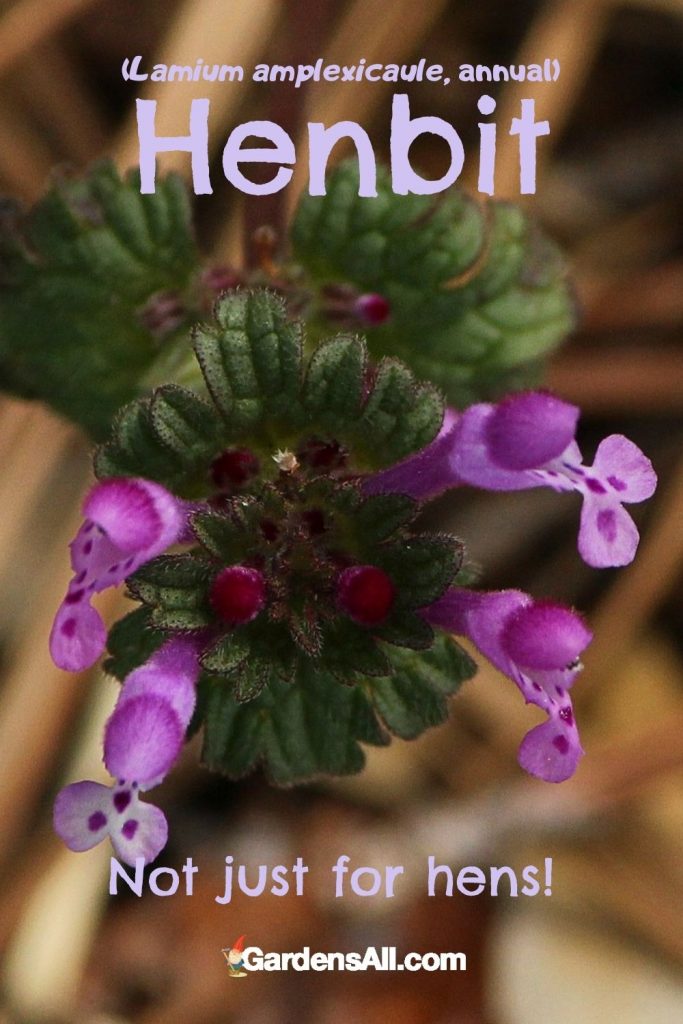
Henbit, another member of the mint family, closely resembles purple dead nettle.
Henbit Flowers Appearance
The flowers bloom purple, pink, or white, and form in the same tubular formation as purple dead nettle. However, the plant is droopier and lower in stature than Purple Dead Nettle.
Henbit attracts pollinators, including hummingbirds, bumblebees and honeybees.
Preferred Growing Conditions of Henbit
You’ll find henbit thrives most in sun and loamy soil in moist areas, so can often be found growing around ponds or water features. If you have turtles in your pond, you will see soon that Henbit is a favorite meal for them.
Henbit takes its name from the seeds, which chickens enjoy eating as they drop to the ground. But if you don’t have any hungry turtles or chickens to feed, you’ll want to either make use of it yourself, or get rid of it asap.
Is Henbit Edible?
Yes! Henbit leaves, flowers and stems are edible and can also be used as an edible ground cover plant. Contributing writer, herbalist, Jennifer Capestany wrote more about henbit in this article on edible yard weeds.
Henbit Edible Uses
- Leaves cooked or raw, similar to spinach
- Salads – adds beauty and nutrients served raw in salads:
- leaves – green heart shaped leaves for lovely shape plus nutrients
- flowers – add lovely purple color
- Flowers similar to other edible flowers, including as:
- garnish to decorate foods
- teas – dried or fresh
Does Henbit Have Medicinal Benefits?
Yes! The leaves, stems and flowers of henbit are used medicinally.
Henbit Medicinal Benefits
- Medicinal uses of Henbit
- Antirheumatic – rheumatism
- Diaphoretic – producing perspiration
- Febrifuge – reducing fever
- Laxative
- Stimulant
You can find more on the edible and medicinal benefits of Henbit here, including links to the scientific studies and also folk uses of henbit.
Henbit is good for turtles and chickens, and also for people!
4 – Purple Dead Nettle (Lamium purpureum, annual)
Another common weed with purple flowers is the Purple Dead Nettle, aka Red Dead Nettle. This aggressive, fast-growing annual blooms purple, pink, or white from mid-spring into the summer season.
This sturdy plant resists insects, pests, and disease and grows in a range of conditions from partial shade to full sun. All it needs is sunshine and a little water to invade your lawn completely.
Some gardeners hesitate to eradicate this weed for one compelling reason—it attracts essential pollinators like bumblebees and honeybees.
The flowers of Purple Dead Nettle form in groupings of four petals that form in a tubular shape. The leaves grow downward in a cone shape and might have a purplish hue to them.


Is Purple Dead Nettle Edible?
Yes! Purple deadnettle is a nutritious edible with medicinal benefits in its leaves and purple flowers that are a little sweet. Purple deadnettle can also be added as you would any other leafy green or herb. The leave and flowers can be dried for tea.
Purple Dead Nettle Edible Uses
- Salads
- Smoothies & green juice
- Soups
- Dried for tea
Is Purple Dead Nettle Medicinal?
Yes! Some gardeners and foragers remove nettle manually, wash, then dehydrate the leaves and flowers to brew nettle tea. While purple dead nettle is not as well known as stinging Nettle for medicinal purposes, it has a similar flavor and is safe to consume, and is definitely a weed with benefits!
Purple Dead Nettle Medicinal Benefits
- Antibacterial
- Anti-inflammatory
- Antifungal
- Astringent
- Diuretic
- Diaphoretic
- Poultice for cuts & wounds
- Purgative
SOURCE: GrowForageCookFerment.com

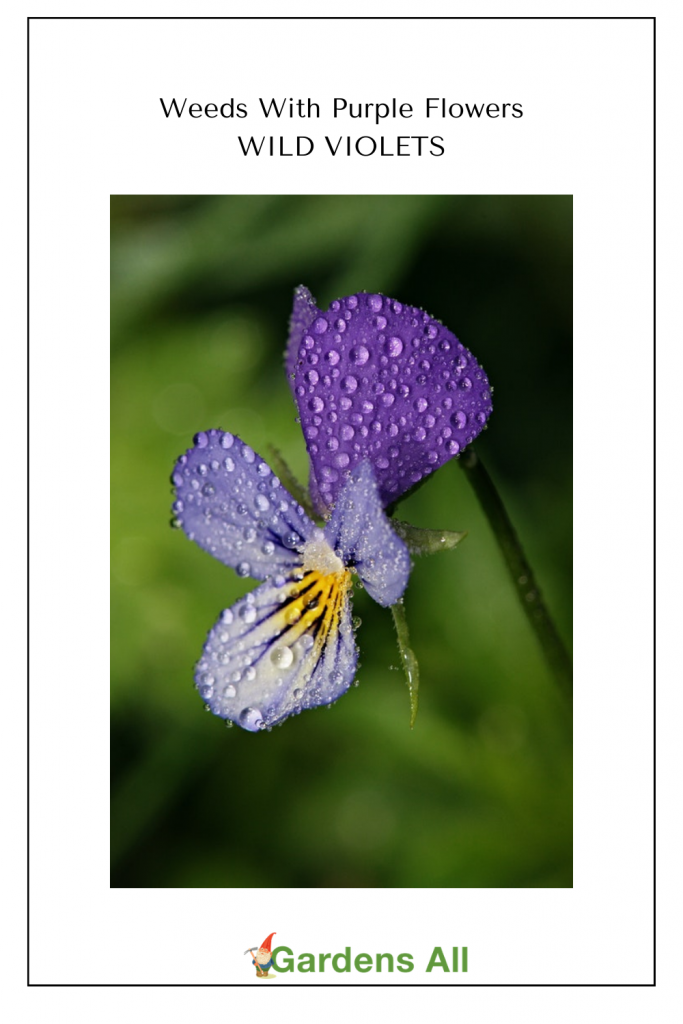
5 – Wild Violets (Viola odorata, Violaceae), perennial
Wild violets are lovely to look at as they creep across your lawn. But you will see quickly that they can take over your entire yard if you don’t remove them.
You might have one of several species from the Viola genus on your hands. Regardless of the specific violet, Penn State University Extension department offers the following warning:
Wild violet (Viola) is an aggressive weed, spreading into non-infested areas via underground stems called rhizomes.
~Penn State University Extension agency
First, What is a Rhizome?
Rhizomes are the thick, branching roots, which spread quickly and give birth to even more plants! These purple flowers emerge early in the season, and they continue to multiply throughout the summer months.
Wild Violet Flower Shape and Appearance
Look for the lovely, heart-shaped petals that appear in five-petal clusters. Don’t let the delicate petals fool you! They are waiting to take over your entire lawn and garden!
Despite the name, the flowers can be more than violet in color. You might also find them in yellow, white, blue, or light purple.
Removing them manually might be futile because parts of the roots remain behind and continue to grow despite your efforts. Be diligent and brutal if you remove these by hand! What to do with them after you pull them…? Up next!
Are Wild Violets Edible?
Yes! The leaves and flowers of wild violets are edible. Since wild violets are some of the first wildflowers to appear in early spring, they’re just in time for making candied violet flowers for use on spring wedding cakes.
As with forget-me-nots, wild violet flowers are often candied for decorating cakes and confections. Wild violet blossoms also serve as a lovely garnish for a summer salad or a tall glass of sweet or herbal tea.
Wild violet leaves are edible and can be used raw in salads or cooked like spinach. These heart shaped leaves can also be added to soups as a thickener. You can dry the leaves and flowers for making tea.
If you harvest spring flowers from any of the weeds with flowers, be sure to leave more than half on the plant for the bees. In fact, a good rule of thumb is to leave ~80% of leaves and flower from each plant.
Make a glass of purple dead nettle tea and top it with violet flowers and a few stevia leaves for a sweet touch to a spring tonic tea.
Edible Uses for Wild Violets
- Candied blossoms for baking and confections
- Salads – add leaves blossoms to a garden greens mix
- Soups – leaves as greens and helps to thicken soup and broth
- Vegetable casseroles – leaves
- Tea – blossoms & leaves, fresh or dried
SOURCE: Green Deane of EatTheWeeds.com
Wild violet leaves and flowers are edible. Use the leaves as you would spinach, and the flowers as you would other edible flowers for salads, teas, garnish and candied for cakes and confections.
Do Wild Violets Have Medicinal Benefits?
Yes! Both the leaves and flowers of wild violets have medicinal properties.
Wild Violets Medicinal Uses
Viola odorata, Violaceae
- Anti-inflammatory, cooling, and soothing
- Antioxidant
- Blood cleanser
- Compress
- Infused oil
- Poultice
- Salve for:
- abrasions
- dry or chafed skin
- eczema
- hemorrhoids
- insect bites
- varicose veins
SOURCE: ChestnutHerbs.com
For more on wild violets benefits, including scientific studies validated many of the traditional medicinal uses, you may also enjoy our article on wild violets tea.

How to Remove Weeds Without Chemicals
Many extension agencies advise that each of these weeds with purple flowers (let’s be honest, most weeds, period) are challenging to remove.
If you prefer organic methods, here are some ways to try ridding your garden or grass of these invaders.
Natural and Organic Weed Control
Our Favorite Method for Getting Rid of Unwanted Weeds
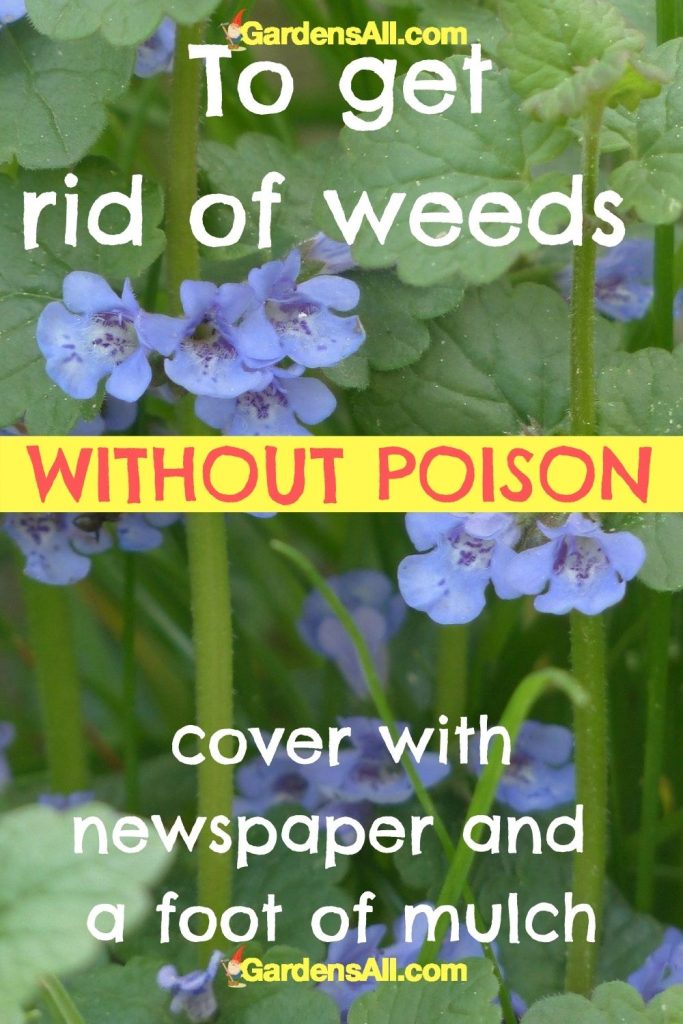
- Cover with newspaper
- Cover that with a thick layer of wood chip mulch to about 12″ deep
This is especially good for treating weeds around other plants that you wish to protect without exposure to chemicals. We prefer to wait until after the main spring flowering time to give the pollinators plenty of early spring foods before then smothering out these plants.
For more on how to implement natural weed control that’s free and easy.
Additional Ways to Get Rid of Weeds
- MANUAL REMOVAL: Using a weed fork, spade, or another tool, remove the entire plant and all of the root that you can grab. Many of the plants described in this article seed prolifically, so you will need to make this a routine.
- DEADHEADING BLOOMS: If you want to wait out the plant’s lifecycle, you can deadhead the blossoms before they go to seed. This process takes longer, but it can be very effective if you have the patience to wait it out! This method works with annuals but not the perennial weeds with purple flowers.
- WHITE VINEGAR WEED KILLER — Mix:
- 1 gallon white vinegar
- 1 cup Epsom salt
- 2 Tbsp. of dish liquid in a sprayer. We really like our battery powered sprayer for such tasks.
- Spray the weeds liberally with the solution. The vinegar and salt will remove moisture that the weed needs to survive while the dish soap beads up. It traps the moisture so the plant cannot reabsorb it.
- This works particularly well if you apply it during the hottest part of the day.
HOWEVER, this white vinegar concoction can also harm beneficial creatures like frogs and lizards, so use judiciously,
Now that you know if you are looking at a lovely plant or weeds that might overtake your garden, you can decide what’s next.
In some cases, people see the value in attracting bees… or as edibles and medicinal plants. But most often, gardeners decide to get rid of these weeds with purple flowers (as lovely as they might be), at least around the garden to protect your landscape and garden plants.

Weeds With Purple Flowers in Grass
While many want to get rid of the weeds in their lawns, others welcome the wild with flowers for pollinators. Still others recognize the edible, medicinal and preventive benefits of edible weeds you can eat and use for home remedies, like the marshmallow plant, and antifungal herbs like dandelion benefits.
The wonderful world of plants is amazing and miraculous. Please don’t kill the w
eeds just because it’s in your lawn. Learn about it and harvest it to put it to good use, or… leave it in your lawn for the bees and butterflies and when it gets too tall, you can just mow it like grass for a lush dark green carpet with character… a fresh and natural lawn❣️
You may also enjoy meeting Sweet Betsy Trillium, an early spring woodland plant with burgundy flowers and variegated leaves.

Hi! My name is Deborah Tayloe. I’m a full-time freelance writer and blogger. I blog about my favorite things: gardening, cooking, and DIY. I live in a very rural area called Bertie County, North Carolina. Here, I have plenty of open space to pursue my gardening habit. I’m a regular contributor to GardensAll and publish my own blog, DIY Home & Garden.
References