

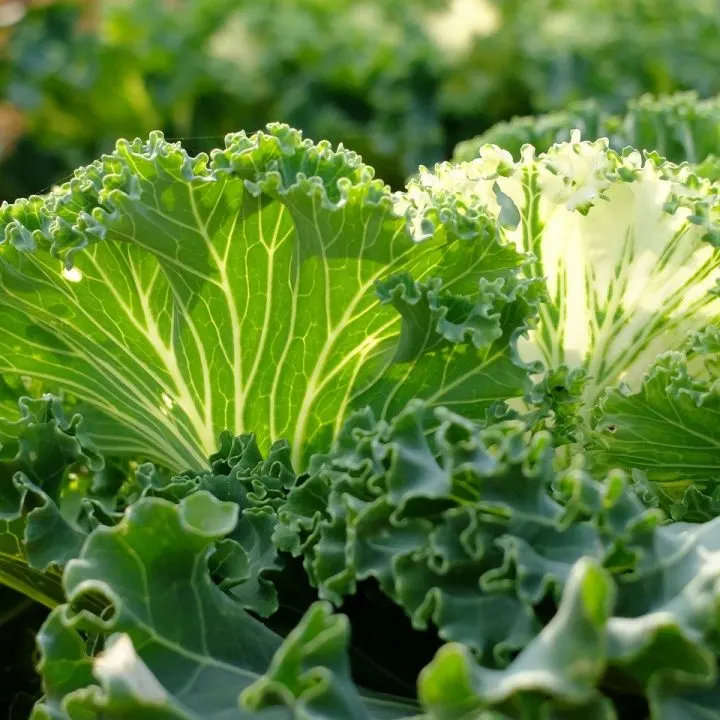
Most edible plants are gifts that return to you more than it costs to buy and grow them. Perennial vegetables are the gift that keeps on giving, season after season and year after year.
Annual crops are planted each season, whereas perennial crops are planted once and keep coming back year after year.
When planning your vegetable garden for the new year, consider making space for more than your usual favorite annual plants. Perennial vegetables of North America — and beyond — include herbs, and flowers, and of course, fruit and nut crops. These are amazing plants that yield the greatest return on investment, (ROI), for you plant it once and enjoy it for years to come.
When we first started growing blueberries, we were amazed to learn that they can produce for up to 30 years or more. The harvest from each plant will pay for itself in the first year of production. Thereafter, they just keep on giving, year after year.
We began in earnest a couple years ago to grow more perennial food crops. For starters, we selected “Ebony Knight” asparagus along with tree collards. We also planted, by seed and transplant, an entire patch of dandelion, and expanded our raised beds to include Walking Stick kale, and Walking (Egyptian) Onions.
Our chives, lemon balm, rosemary, sage, and thyme have come through many winters so far as they reemerge with fresh foliage come spring.
All plants are faring well into our Zone 7A December along with some choice selections of winter annuals: lettuce, radicchio, mizuna, kale, Swiss chard and perpetual spinach. With proper care and frost covers, the annuals should carry on into spring. Nothing beats a fresh garden salad served up in January!
Here’s why a gardener will want to plant more perennial vegetables.
Benefits of Perennial Vegetables
Established Perennial Plants Are Low Maintenance
- No annual planting or annual tilling
- Virtually indestructible despite neglect
- More resistant to pests, diseases and weeds
- Less watering and weeding
- Lower impact on the environment due to less maintenance input
Perennial Vegetable Crops Produce More as They Grow
- Increased harvests from year to year
- Expand the harvest season
- Produce during the off season for annuals
- Many perennial vegetables have edible leaves and flowers.
- Some perennial crops are prolific and the more you harvest, the more they produce
Perennial Vegetables Build the Soil
- Root system anchors soil for erosion control
- Draw up more nutrients into the topsoil
- Encourages good types of fungi
- Improves organic matter
- No tilling to disturb the soil microbiome
More Benefits of Perennial Crops
- BENEFICIAL INSECTS – a perennial crop can provide a place for beneficial insects to hide and reside
- RESISTANT – most perennial crops are more resistant to pests, disease, drought and even weeds.
- ABUNDANT – the more you harvest a perennial crop the more it tends to produce
You may not realize it, but you might be growing perennial crops that you’re treating like annuals. Potatoes are one form, and even a tomato can be grown year round as a perennial, depending on your location.
But for the cold weather, blights and other pests, annual rotations are necessary, which can render some perennials to be more like annuals. Natural perennials most gardeners treat as annuals include the brassicas like broccoli and kale. When these plants bolt and come into flower we usually call it quits. But there are other options.
Perennial Vegetables to Grow in Zone 7A
These are the perennial vegetables and herbs we’re growing in USDA growing zone 7A.
- Artichoke / Globe Artichoke – Cynara cardunculus var. scolymus
- Asparagus – Asparagus officinalis
- Chives – Allium tuberosum
- Collards – Brassica oleracea var. viridis
- Dandelion – Taraxacum officinale and related Chicory species
- Garlic – Allium sativum
- Garlic Chives – Allium tuberosum
- Kale – Brassica oleracea spp.
- Horseradish – Armoracia rusticana
- Jerusalem Artichokes aka Sunchokes – Helianthus tuberosus
- Radicchio – Cichorium intybus L
- Ramps – Allium tricoccom
- Rhubarb – Rheum x cultorum, AKA wild leeks
- Sorrel, French Sorrel – Rumex acetosa, primarily used as an herb in cooking and to accent salads and soups
- Tree Collards, AKA: ‘Walking Stick Kale’, or Tree Kale – Brassica oleracea acephala
- Walking onions – Allium × proliferum
- Watercress – Nasturtium officinale
Common Perennial Herbs – listed alphabetically
- Comfrey – Symphytum officinale
- Lavender – Lavandula stoechas L. – a favorite perennial herb for aromatic, cosmetic and therapeutic benefits, (learn how to make lavender oil).
- Lemon Balm – Melissa officinalis* –
- Mints and Mint Family e.g. Agastache, Monarda species, Chocolate, and Catnip. – Mentha spp.*
- Oregano – Origanum vulgare L. – a perennial herb with edible and medicinal benefits
- Rosemary – Rosmarinus officinalis L – another perennial herb with culinary, cosmetic and medicinal benefits
- Thyme – Thymus vulgaris – a favorite perennial herb native to Eurasia, another favorite culinary herb with medicinal benefits
*Some invasive species such as mints need their own special space or planting in containers.
Perennial Edible Trees of North America
Most people in the US and North America don’t usually think of trees when it comes to perennial crops other than fruit and nuts. However, in many parts of the world, such as India, Malaysia and the Philippines, it’s common to step out into ones yard and pluck some moringa, tamarind and other tree leaves to go into the pot of chicken soup.
Many fruit tree fruits are used as vegetables if eaten when green, such as papaya, plantain (bananas) and mango. The citrus tree leaves and also the berry bush leaves can be dried and used as herbal tea, and the dried fruit is also often used to create tea blends along with the leaves.
Opening up to some of the many less common foods to grow, especially perennials, will help with food security for your family. As others discover what you’re doing, more will also do it such that entire generations are awakened to the many, many benefits available from Mother Nature.
Edible Trees and Shrubs to Know for Survival Food (and Medicine)
- Beech, American, Fagus grandifolia –
- inner bark is edible,
- leaves, when young and soft
- nuts:
- edible roasted with skin removed, (contains a poison called fagin)[1]http://www.jodrugs.com/toxicologies/3598-plants-fagus.aspx[2]https://practicalselfreliance.com/foraging-beech-nuts/
- pressed for oil
- seeds are sweet and edible and can be eaten or crushed into a butter.
- Birch, Betula pendula & Betula lenta:[3]https://www.americanforests.org/magazine/article/edible-trees-foraging-food-forests/
- inner bark is edible:
- raw
- boiled
- ground into flour
- essential oils have medicinal and healing properties
- inner bark is edible:
- Linden, American, Tilia americana – Northeastern US & Midwest US:
- flowers
- leaves, young
- sap
- shoots
- Linden, Little Leaf, Tilia cordata – Northeast & Central North America:
- leaves, young
- buds
- shoots
- Maple, Acer[4]https://www.americanforests.org/magazine/article/edible-trees-foraging-food-forests/ –
- bark, inner:
- cooked
- raw
- leaves, young
- sap for water and syrup
- seeds
- bark, inner:
- Moringa – leaves
- Mulberry, Morus rubra – Northeastern US:
- mulberries (fruit) – many uses similar to blackberries and raspberries
- leaves, only young curled leaves – added to soups and salads
- shoots – only young and tender shoots
- Rose of Sharon, Hibiscus syriacus – Originally from China; now global:
- flowers – fresh in salads; dried for tea
- leaves – fresh in salads and sandwiches; mucilaginous properties good for thickening soups and sauces; dried for tea
SOURCES: EarthPlanet.org
You can find more on edible tree leaves, bark and blossoms here.
Perennial Vegetable Growing in Popularity
One of the easiest perennial edibles we’re adding to our garden this year is “Purple Tree Collards” (Brassica oleracea var. acephala).
There are green leaf varieties, but the purple is tastier, more tender plus adds a nice touch of color to the gardenscape.
You can read more on tree collards here.

Perennial Vegetables by Grow Zone
Below is a list of perennial vegetables in accord with their US Hardiness Zones. It is an abbreviated list derived from the “Bible” on the subject entitled Perennial Vegetables by Eric Toensmeier . All plants listed below are available for purchase online.
There are fewer edible plants that can survive the colder climates of North America as perennial crops. But we’ve included a list of perennial nutritious crops that can survive cold climates with some protection.
Perennial Vegetables for Zones 1 to 3
- Daylily, Hemerocallis spp.,
- Rhubarb, Rheum x cultorum
- Sunchoke, AKA Jerusalem Artichoke, Helianthus tuberosus,